HbA1c Normal Range by Age: Full Chart & What Your Number Means
HbA1c Normal Range by Age: Full Chart & What Your Number Means
Your report says "HbA1c" followed by a number and a percent sign, and you are not sure whether to be relieved or worried. It is one of the most important numbers in diabetes care — and one of the most misunderstood.
This doctor-reviewed guide gives you the full HbA1c chart, explains whether the normal range changes with age, and shows the diet, lifestyle and Ayurvedic steps that traditionally support healthy blood sugar.
Key Takeaways
- HbA1c reflects your average blood sugar over the past 2–3 months, not just the day of the test.
- Normal is below 5.7%, prediabetes is 5.7–6.4%, and diabetes is 6.5% or above.
- The diagnostic cut-offs are the same at every age — but the target your doctor sets can be looser for older adults.
- HbA1c can read falsely high or low with anemia, certain haemoglobin conditions, pregnancy or recent blood loss.
- Diet, daily movement, weight and sleep move this number more than almost anything else.
What Is HbA1c?
HbA1c — glycated haemoglobin — measures how much sugar has attached itself to the haemoglobin in your red blood cells. Because those cells live for about three months, the test gives a reliable average of your blood sugar over roughly 8–12 weeks.
That is its real strength: a single fasting sugar can be thrown off by last night's dinner or a stressful morning, but HbA1c smooths all of that out into one trend-line. It is reported as a percentage.
HbA1c Normal Range: The Full Chart
Here is the standard interpretation used by the American Diabetes Association (ADA) and followed widely in India:
| Category | HbA1c level | What it suggests |
|---|---|---|
| Normal | Below 5.7% | Healthy blood sugar control |
| Prediabetes | 5.7% – 6.4% | Higher risk; a window to act early |
| Diabetes | 6.5% and above | Diabetes range (confirmed on repeat/with other tests) |
A quick, direct answer for a featured-snippet-style search: a normal HbA1c is below 5.7%. Between 5.7% and 6.4% is prediabetes, and 6.5% or higher indicates diabetes. A diagnosis is usually confirmed with a repeat test or alongside a fasting/random glucose.
HbA1c to Average Blood Sugar (eAG)
It can help to see your HbA1c as an everyday sugar number (estimated average glucose):
| HbA1c | Approx. average sugar (mg/dL) |
|---|---|
| 6% | ~126 mg/dL |
| 7% | ~154 mg/dL |
| 8% | ~183 mg/dL |
| 9% | ~212 mg/dL |
| 10% | ~240 mg/dL |
Does the HbA1c Normal Range Change With Age?
This is the question behind most "HbA1c by age" searches, so let us be clear: the diagnostic ranges above do not change with age. A reading of 6.5% means diabetes whether you are 25 or 75.
What does change with age and health is the target your doctor asks you to aim for once you already have diabetes:
- Many non-pregnant adults: a general target of below 7%.
- Younger, otherwise healthy people: sometimes a tighter target if it can be reached safely.
- Older adults, or people with several conditions or a high risk of low-sugar episodes: a looser target such as below 7.5–8%, because avoiding dangerous lows matters more.
Only your doctor can set the right personal target for you — it balances control against safety.
HbA1c vs Fasting and Random Blood Sugar
These tests answer different questions, which is why your doctor often uses them together:
- Fasting blood sugar: a snapshot after 8 hours without food. Normal is generally below 100 mg/dL.
- Random/post-meal sugar: a snapshot at any time or after eating.
- HbA1c: the 2–3 month average — the best view of overall control.
For a fuller breakdown of daily sugar numbers, see our guide to understanding blood sugar levels.
What Can Make HbA1c Falsely High or Low?
HbA1c is reliable for most people, but a few things can skew it, which is why doctors read it in context:
- Iron-deficiency anemia can push HbA1c higher than your true average.
- Recent blood loss, blood transfusion, or conditions that shorten red-cell life can lower it.
- Certain haemoglobin variants (such as some thalassemia traits, which are relevant in parts of India) can interfere with the test.
- Pregnancy changes how blood sugar should be assessed, so different tests are used.
If your HbA1c and your home sugar readings seem to disagree, tell your doctor — it is worth checking why.
Signs Your HbA1c May Be High
Many people with a rising HbA1c feel fine, which is exactly why screening matters. When symptoms do appear, they include increased thirst, passing urine more often (including at night), unexplained tiredness, slow-healing cuts, blurred vision, frequent infections, or tingling in the feet. Any of these is a reason to get tested rather than wait.
The Ayurvedic Perspective
Ayurveda describes diabetes-like conditions under madhumeha, part of the broader prameha group of disorders linked to disturbed Kapha and meda (fat tissue) and weakened agni (metabolic fire). The classical emphasis is on diet, daily activity and metabolism-supporting herbs rather than any single quick fix.
Herbs traditionally used in Ayurveda to support healthy blood sugar and metabolism include:
- Vijayasar (Pterocarpus marsupium): a classical herb long associated with metabolic wellness.
- Gudmar / Gurmar (Gymnema sylvestre): its Hindi name means "sugar destroyer"; traditionally used to support healthy sugar metabolism and reduce the craving for sweet taste.
- Methi (fenugreek) seeds: a common kitchen remedy traditionally used to support balanced sugar levels.
- Jamun (Indian blackberry) seed: traditionally valued for metabolic support.
- Karela (bitter gourd) and Haldi (turmeric): everyday foods with a long traditional role in metabolic wellness.
These herbs are traditionally used to support healthy blood sugar as part of a wellness routine. They do not cure or reverse diabetes, and they are never a replacement for prescribed medication or insulin. If you take diabetes medicine, talk to your doctor before adding any herb, because combining them can push sugar too low.
Practical Steps to Support a Healthy HbA1c
1. Build a lower-glycaemic plate. Swap some refined carbs (maida, white rice, sugary chai) for whole grains and millets (bajra, jowar, ragi), more vegetables, dal and a little protein at each meal. The fibre slows the sugar rise.
2. Walk after meals. Even a 10–15 minute walk after lunch and dinner helps blunt the post-meal sugar spike — one of the simplest, most effective habits.
3. Watch portions, not just foods. Two rotis instead of four, a smaller bowl of rice, fruit instead of juice. Quantity moves HbA1c as much as choice.
4. Protect your sleep and manage stress. Poor sleep and chronic stress raise blood sugar through stress hormones. Aim for regular, adequate sleep.
5. Move toward a healthier weight. For many people, losing even a modest amount of weight meaningfully improves HbA1c.
6. Take medicines as prescribed. If your doctor has prescribed tablets or insulin, these are the foundation — lifestyle works alongside them, not instead of them.
For more everyday ideas, see best foods for diabetics and our natural ways to manage blood sugar.
HbA1c and Your Kidneys
Here is why this number matters beyond diabetes itself: a high HbA1c over years is the single biggest driver of kidney damage in India. High sugar slowly injures the tiny filters in the kidneys, which is why people with diabetes are advised to get an annual kidney check (urine albumin plus creatinine/eGFR). Keeping HbA1c in your target range is one of the most protective things you can do for your kidneys. Read more on the diabetes and kidney connection.
When to See a Doctor
See your doctor if your HbA1c is 5.7% or higher, if you have symptoms like excessive thirst, frequent urination or unexplained weight loss, or if you have a family history of diabetes and have not been tested recently. If you already have diabetes, review your HbA1c with your doctor every 3–6 months and ask what your personal target should be. Do not change or stop prescribed medicine on your own.
How Cureayu's Madhumeh Har Fits
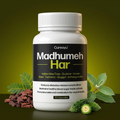
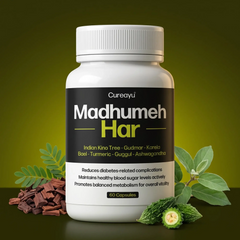
If you are building a routine to support healthy blood sugar alongside your doctor's plan, Madhumeh Har is formulated with traditional metabolism-supporting herbs such as those described above, intended to help maintain already-healthy blood sugar levels as part of a balanced lifestyle.
To be honest with you: a supplement is a supporting player here. It does not treat, cure or reverse diabetes, and it is not a substitute for prescribed medication, insulin, or regular monitoring. Please talk to your physician before starting it — especially if you already take diabetes medicine, since combining treatments can lower sugar too much.
FAQ
Q1. What is a normal HbA1c level?
A normal HbA1c is below 5.7%. From 5.7% to 6.4% is prediabetes, and 6.5% or higher indicates diabetes, usually confirmed on a repeat test or alongside a blood glucose test.
Q2. Does the normal HbA1c range change with age?
No. The diagnostic ranges are the same at every age. What can change is the target your doctor sets once you have diabetes — older adults or those at risk of low-sugar episodes may be given a looser target such as below 7.5–8%.
Q3. What HbA1c is good for a diabetic?
For many non-pregnant adults with diabetes, a general target is below 7%, but this is individual. Your doctor decides your target based on your age, other conditions and risk of low sugars.
Q4. Can HbA1c come back to normal?
Prediabetes can often be brought back toward the normal range with diet, weight loss and activity. In established diabetes, HbA1c can usually be lowered and kept in a healthy target range with the right plan, though it is managed rather than considered "cured." Discuss your outlook with your doctor.
Q5. How often should HbA1c be tested?
Typically every 3 months while control is being adjusted, and every 6 months once stable. People with risk factors but no diabetes are often screened once a year.
Q6. Can Ayurvedic herbs lower HbA1c?
Herbs like Gudmar, Methi and Vijayasar are traditionally used to support healthy blood sugar as part of a lifestyle routine, but they do not cure diabetes and should never replace prescribed medicine. If you take diabetes medication, use them only with your doctor's knowledge, because the combination can push sugar too low.
Written & medically reviewed by Dr. Istuti, BAMS — in-house Ayurvedic physician at Cureayu, focused on metabolic, kidney and men's-health wellness. Dr. Istuti reviews every health article for medical accuracy and compliant, patient-first guidance.
Medically reviewed on October 13, 2026.
Disclaimer: This content is for educational purposes and is not a substitute for professional medical advice. Consult a qualified physician before starting any supplement, especially if you have a kidney/prostate condition or take medication.
Internal links: Understanding Blood Sugar Levels · Best Foods for Diabetics · How to Reduce Sugar Level: Home Remedies · Diabetes & Kidney Connection · PDP: Madhumeh Har
Disclaimer: Educational content, not a substitute for professional medical advice. Consult a qualified physician before starting any supplement.