Irregular Periods: Causes & Ayurvedic Remedies
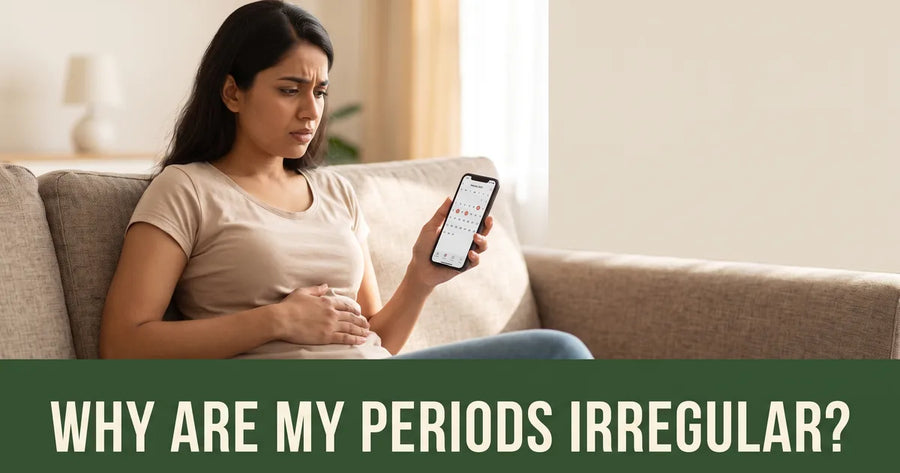
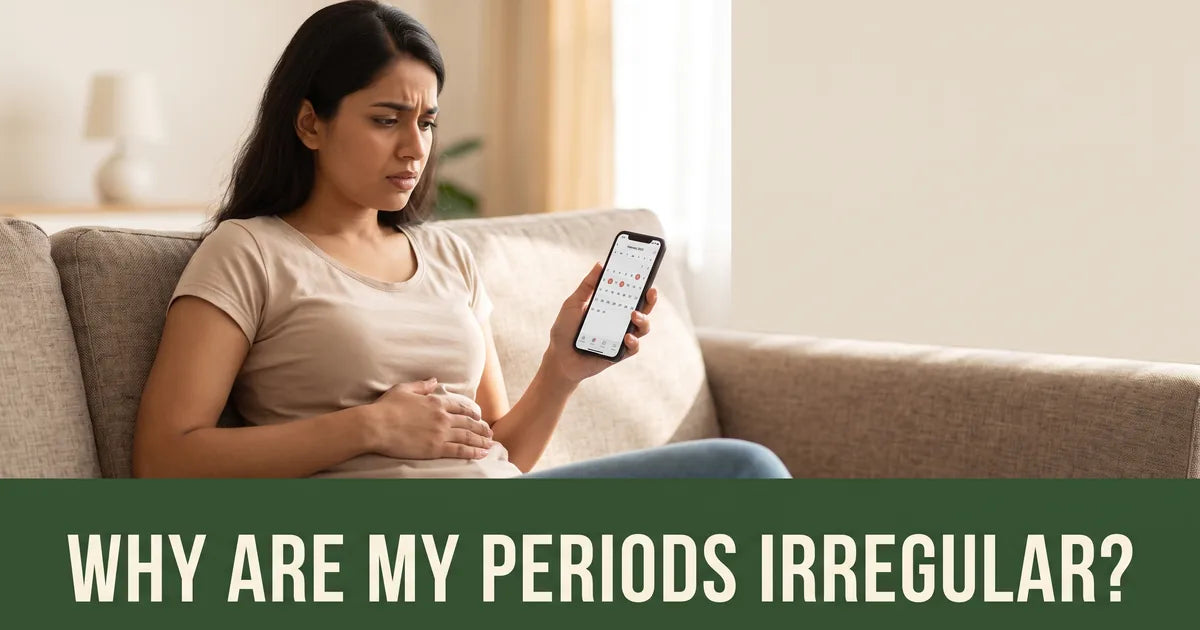
A period that arrives two weeks late, then early the next month, or skips altogether, is one of the most common reasons women reach out — and one of the most worrying, because the cycle feels like a monthly report card on your health.
Most of the time an irregular cycle is your body responding to stress, weight changes, or a hormonal shift — and it can often be steadied with the right routine. This guide explains the usual causes, what Ayurveda traditionally does to support a regular cycle, and the signs that mean you should see a doctor.
Key Takeaways
- A “normal” cycle is anywhere from 21 to 35 days; the occasional off-month is common. A pattern of missed, very late, very frequent or very heavy periods is what deserves attention.
- The commonest causes are stress, sudden weight change, thyroid imbalance, PCOS/PCOD, and natural transitions (adolescence, post-pregnancy, perimenopause).
- Ayurveda views irregular cycles largely as an apana vata and pitta imbalance, traditionally supported with herbs like Ashoka, Shatavari and Lodhra, plus diet and routine.
- Lifestyle is powerful: steady sleep, managed stress, gentle movement and a nourishing diet often do more than any single remedy.
- See a doctor for very heavy bleeding, periods more than ~3 months apart, severe pain, or bleeding between periods.
What counts as an “irregular” period?
A menstrual cycle is counted from the first day of one period to the first day of the next. Textbook average is 28 days, but anything from 21 to 35 days is considered normal, and cycle length naturally varies a little month to month.
Your period is reasonably called irregular if you notice:
- Cycles shorter than 21 or longer than 35 days, as a pattern
- Missing three or more periods in a row (when not pregnant)
- A big change in flow — much heavier, lighter, or lasting much longer
- Unpredictable timing you cannot plan around
An occasional late or early period after a stressful month or a trip is usually nothing to worry about.
Common causes of irregular periods
1. Stress and sleep
High, ongoing stress raises cortisol, which can disturb the hormones that trigger ovulation. Exam season, work pressure, grief, or poor sleep can all delay or skip a period. This is one of the most common and most reversible causes.
2. Weight changes and crash diets
Both rapid weight loss and significant weight gain affect oestrogen levels. Very low body fat (from over-exercising or under-eating) is a frequent cause of missed periods, especially in younger women.
3. PCOS / PCOD
Polycystic ovary syndrome is one of the most common hormonal causes of irregular or missed periods in Indian women, often alongside weight gain, acne or extra facial hair. If this sounds familiar, it is worth checking with a doctor. Read more in our guide to PCOD ke lakshan (PCOS symptoms in women).
4. Thyroid imbalance
Both an under- and over-active thyroid can throw the cycle off. A simple thyroid blood test is often part of the work-up for irregular periods.
5. Natural life stages
Cycles are often irregular in the first few years after periods begin, after childbirth and during breastfeeding, and in the years approaching menopause (perimenopause). This is expected rather than a problem.
6. Other causes
Certain medicines, coming off hormonal contraception, and some medical conditions can also play a role — another reason a doctor’s review matters when the pattern persists.
The Ayurvedic perspective
Ayurveda calls the menstrual cycle rajahsrava or artava, and sees healthy monthly flow as governed mainly by apana vata (the downward-moving energy that controls elimination and menstruation) and pitta (heat and transformation, linked to the blood). Irregularity is usually read as apana vata going out of rhythm — often aggravated by stress, irregular routine, poor digestion (agni) and inadequate nourishment of rasa and rakta dhatu.
The traditional aim is therefore to settle vata, cool excess pitta where needed, strengthen digestion, and nourish the tissues so the cycle has a steady foundation.
Herbs traditionally used for women’s cycle support
- Ashoka (Saraca asoca) — the classic “women’s bark” of Ayurveda, traditionally used to support healthy menstruation and uterine tone.
- Shatavari (Asparagus racemosus) — a nourishing, cooling rasayana traditionally used to support hormonal balance and overall female reproductive wellness.
- Lodhra (Symplocos racemosa) — traditionally used in formulas for menstrual regularity and comfort.
- Ashwagandha — traditionally used to help the body cope with stress, which indirectly supports a steady cycle.
Read more about Shatavari benefits for women. These are supportive herbs, used within a wellness routine — not a treatment for a diagnosed condition like PCOS, which needs proper medical care.
Practical steps to support a regular cycle
Small, consistent habits usually matter more than any one remedy:
- Keep a steady routine (dinacharya). Regular sleep and meal times help regulate the hormones behind ovulation. Aim for 7–8 hours of sleep.
- Manage stress actively. Daily pranayama, a short walk, yoga, or even ten minutes of quiet breathing can lower cortisol. Yoga poses often suggested for cycle health include baddha konasana (butterfly) and supta baddha konasana.
- Eat nourishing, warm food. Include iron-rich foods (green leafy vegetables, dates, jaggery, beetroot), healthy fats (ghee, nuts, seeds), and enough protein. Avoid long gaps and crash dieting.
- Move, but don’t over-train. Gentle, regular activity helps; extreme exercise with under-eating can stop periods.
- Warmth and simple home measures. Many women find a warm compress and foods like ajwain or ginger-infused water soothing around their period.
- Track your cycle. A simple app or diary helps you (and your doctor) spot the real pattern.
When to see a doctor
Please book a check-up if you have:
- Bleeding that soaks through a pad or tampon every hour for several hours, or large clots
- No period for 3 months or more (and you are not pregnant)
- Periods closer than 21 days apart or lasting longer than 7 days
- Bleeding between periods or after intimacy
- Severe pain, or new symptoms like rapid weight change, acne or excess hair growth
- Any bleeding after menopause
These can point to conditions that are very treatable when caught early — so this is about peace of mind, not alarm.
How Cureayu Kulvardhak for Women fits
If you want classical women’s-wellness herbs in one convenient daily routine, Cureayu Kulvardhak for Women combines traditionally-used herbs to support hormonal balance and reproductive wellness — as part of a healthy lifestyle, not as a cure for any condition. Many women pair it with Shatavari for extra nourishment, and those specifically managing PCOD may look at Cureayu PCOD Wellness with their doctor’s input. Whatever you choose, give it time, keep up the lifestyle basics, and check in with your physician if your cycle stays irregular.
Frequently Asked Questions
How late can a period be before I should worry?
An occasional delay of a few days to a week, especially after stress or travel, is usually normal. If you miss three periods in a row (and are not pregnant), or the irregularity becomes your usual pattern, it is worth seeing a doctor.
Can stress really stop my periods?
Yes. High or prolonged stress raises cortisol, which can suppress the hormones that trigger ovulation and delay or skip a period. It is one of the most common and most reversible causes.
Which Ayurvedic herb is used for irregular periods?
Ashoka, Shatavari and Lodhra are the herbs most often named in classical texts for women’s cycle support. They are traditionally used to support healthy menstruation — not as a treatment for a diagnosed condition. Choose them with a practitioner’s guidance.
Are irregular periods a sign of infertility?
Not necessarily. Irregular cycles can make timing conception harder and sometimes point to a treatable cause like PCOS or thyroid imbalance, but many women with irregular periods conceive. If you are trying for a baby and your cycle is irregular, see a doctor sooner rather than later.
Can diet and yoga alone fix irregular periods?
For stress- or lifestyle-related irregularity, steady sleep, balanced nutrition and gentle yoga often help a great deal. If an underlying condition is involved, these support but do not replace medical care.
Is it safe to take women’s wellness herbs every day?
Generally these nourishing herbs are well tolerated, but if you are pregnant, breastfeeding, on hormonal medication, or managing a condition, check with your doctor before daily use.
Written & medically reviewed by Dr. Istuti, BAMS
Dr. Istuti is Cureayu’s in-house Ayurvedic physician (Bachelor of Ayurvedic Medicine and Surgery), with a focus on women’s wellness, hormonal balance and evidence-aware Ayurveda. She reviews every Cureayu health article for accuracy and compliance.
Medically reviewed on 6 October 2026.
Disclaimer
This content is for educational purposes and is not a substitute for professional medical advice. Consult a qualified physician before starting any supplement, especially if you have a kidney/prostate condition or take medication.
Sources
- MedlinePlus (U.S. National Library of Medicine) — Menstruation and menstrual irregularities.
- American College of Obstetricians and Gynecologists (ACOG) — Abnormal uterine bleeding.
- Charaka Samhita and Bhavaprakasha Nighantu — classical references for Ashoka, Shatavari and Lodhra.

Disclaimer: Educational content, not a substitute for professional medical advice. Consult a qualified physician before starting any supplement.