Anxiety (Ghabrahat): Symptoms, Causes & Ayurvedic Relief
Anxiety (Ghabrahat): Symptoms, Causes & Ayurvedic Relief
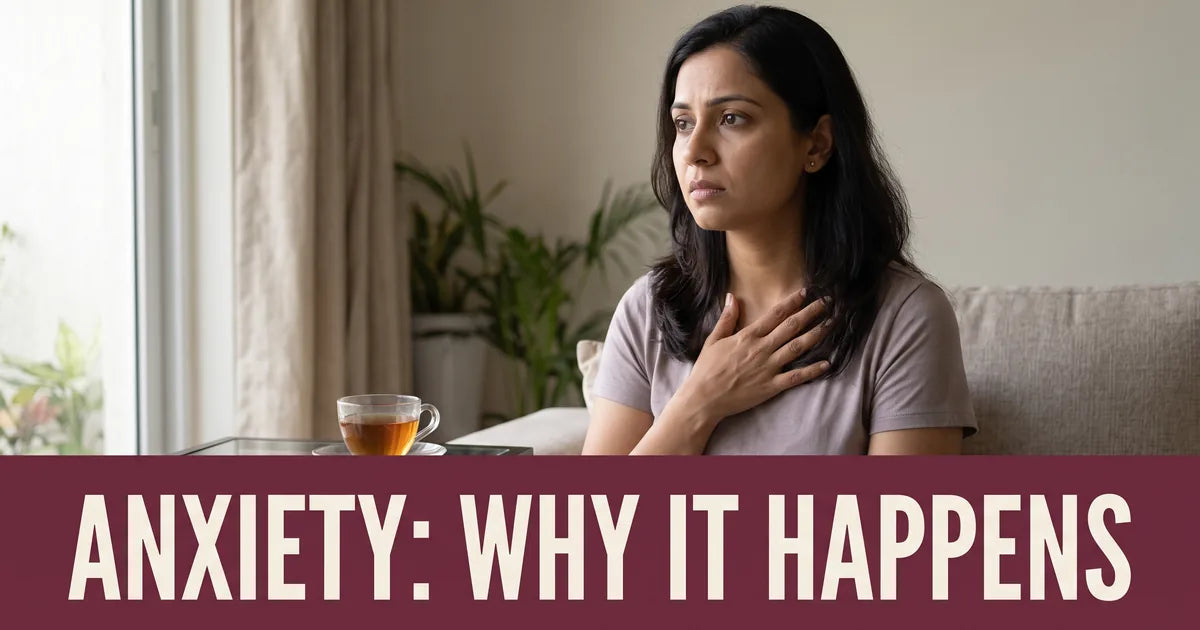
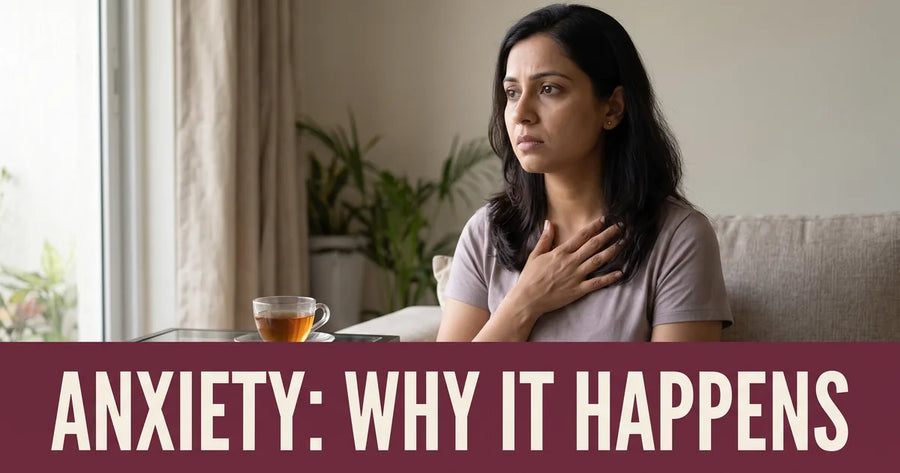
That tight feeling in the chest, the racing thoughts at 2 a.m., the "ghabrahat" that rises for no clear reason — anxiety is one of the most common things people quietly live with, and one of the least talked about at home. If your heart races, your mind won't switch off, or you feel restless and on edge, you are far from alone.
This doctor-reviewed guide explains what anxiety actually is, the symptoms to recognise, why it happens, and the calming diet, lifestyle and Ayurvedic steps that are traditionally used to support a steadier mind — plus the clear signs it is time to see a professional.
Key Takeaways
- Anxiety is the body's normal "alarm system" firing too often or too strongly — occasional worry is healthy; it is the constant, out-of-proportion version that wears you down.
- Common signs include a racing heart, restlessness (bechaini), a tight chest, overthinking, poor sleep and a churning stomach.
- Triggers are usually a mix — stress, sleep debt, too much caffeine, blood-sugar swings, thyroid issues and life pressures.
- Ayurveda links anxiety to aggravated Vata and leans on calming, grounding herbs such as Ashwagandha, Brahmi and Jatamansi, traditionally used to support a calm mind.
- Simple daily steps — routine, breathing, less caffeine, movement and sleep — help most; persistent or severe anxiety deserves professional care.
What Is Anxiety?
Anxiety is your body's natural stress response — a burst of alertness meant to protect you from danger. In short bursts it is useful. It becomes a problem when the "alarm" keeps ringing even when there is no real threat: the worry is constant, feels out of proportion, and starts to affect your sleep, work, appetite or relationships. In everyday Hindi this is often described as ghabrahat or bechaini — a restless, uneasy, "something is wrong" feeling.
Anxiety is common and very human. Recognising it is the first step; it is not a weakness or a character flaw.
Symptoms of Anxiety to Recognise
Anxiety shows up in the body as much as the mind. Common signs:
Physical:
- Racing or pounding heart (dil ki dhadkan tez hona)
- Tight chest or shortness of breath
- Restlessness, fidgeting, unable to sit still (bechaini)
- Churning stomach, nausea or frequent loose motions
- Sweaty palms, trembling, dry mouth
- Tiredness and tense, aching muscles
Mental and emotional:
- Constant overthinking or a mind that won't switch off
- A sense of dread or that "something bad will happen"
- Trouble concentrating
- Irritability
- Difficulty falling or staying asleep
Everyone feels some of these occasionally. It is the frequency, intensity and impact on daily life that separates ordinary worry from anxiety worth addressing.
What Causes Anxiety?
Anxiety rarely has a single cause — it is usually several things stacking up:
- Ongoing stress: work, money, exams, family or health worries that never fully switch off.
- Sleep debt: poor or short sleep makes the brain far more reactive the next day.
- Too much caffeine: excess chai, coffee or energy drinks can mimic and worsen anxiety's physical signs.
- Blood-sugar swings: skipping meals or sugar-heavy eating can trigger shakiness and unease.
- Hormonal and thyroid issues: an overactive thyroid, for example, can closely mimic anxiety — which is why a check-up matters.
- Stimulants, alcohol and some medicines: these can set off or amplify symptoms.
- Temperament and life events: some people are naturally more sensitive; major life changes can tip the balance.
Because the causes overlap, the most reliable relief usually comes from addressing several of them together rather than looking for one switch to flip.
The Ayurvedic Perspective
Ayurveda understands the mind through the doshas, and places anxiety, restlessness and racing thoughts largely in the realm of aggravated Vata — the principle of movement, which when disturbed becomes erratic, fast and "ungrounded". The classical aim is to calm and ground: warmth, routine, nourishment and stillness.
Alongside lifestyle, Ayurveda traditionally uses a group of calming, restorative herbs (described as medhya rasayana — supportive of the mind):
- Ashwagandha — a classic adaptogen, traditionally used to help the body cope with everyday stress and support steadier energy and sleep.
- Brahmi — traditionally valued for supporting calm focus and a settled mind.
- Jatamansi — classically used as a calming, grounding herb to support restful sleep.
- Shankhpushpi and Tagar (Indian valerian) also appear in classical formulations for a peaceful mind.
In Ayurveda these herbs are traditionally used to support a calm, balanced mind as part of a wellness routine. They are not a cure for any anxiety disorder and are not a replacement for professional mental-health care or prescribed medication.
Practical Steps That Help (Everyday)
Small, consistent habits do the heavy lifting with anxiety:
- Anchor your day with routine. Regular wake, meal and sleep times "ground" an anxious nervous system — exactly what Ayurveda recommends for Vata.
- Breathe slowly. A few minutes of slow, long exhales (or simple anulom-vilom pranayama) can calm a racing heart in the moment.
- Cut back on caffeine. Try fewer cups of chai/coffee, and none after late afternoon; notice the difference over a week.
- Move your body daily. A brisk 20–30 minute walk, yoga or any activity you enjoy is one of the most reliable natural calmers.
- Eat regular, balanced meals. Avoid long gaps and sugar crashes; include warm, nourishing, home-cooked food.
- Protect your sleep. A wind-down routine, a dark room and screens off early make the next day far steadier.
- Stay connected. Talking to someone you trust lightens the load — isolation feeds anxiety.
- Warm oil self-massage (abhyanga) in the evening is a traditional, grounding Vata-pacifying practice many find soothing.
When to See a Doctor
Everyday anxiety usually eases with the steps above. Please reach out to a doctor or mental-health professional if anxiety is persistent (most days for weeks), severe, or stopping you from working, sleeping or living normally; if you have panic attacks, a constantly racing heart, or unexplained weight changes (which may point to a thyroid issue worth testing); or if you ever have thoughts of harming yourself. Asking for help is a sign of strength, and effective support is available — this is a sensitive area, and a professional can guide the right care for you.
How Cureayu's No Stress Fits
If you are putting together a calmer daily routine, Cureayu No Stress Capsules bring together traditional calming herbs such as Ashwagandha and Brahmi, intended to support a relaxed mind and help the body cope with everyday stress as part of a balanced lifestyle.
To be honest with you: a supplement is a supporting player, not a treatment. It works best alongside the routine, sleep, movement and breathing habits above — and it does not replace professional care for ongoing or severe anxiety. Please talk to your physician before starting any supplement, especially if you take regular medication.
FAQ
Q1. What are the main symptoms of anxiety?
Common signs are a racing heart, a tight chest, restlessness (bechaini), constant overthinking, a churning stomach and trouble sleeping. Everyone feels some of these at times — it is when they are frequent, intense and affect daily life that anxiety is worth addressing.
Q2. Ghabrahat aur bechaini kyun hoti hai?
Ghabrahat aksar kai cheezon ke milne se hoti hai — lagataar stress, kam neend, zyada chai/coffee, khaane ke beech lamba gap (sugar swings), aur kabhi thyroid jaisi health problem. Isiliye sirf ek cheez theek karne ke bajay routine, neend, kam caffeine aur breathing — sab par saath mein dhyan dena sabse accha asar deta hai.
Q3. Which Ayurvedic herbs are used for anxiety?
Ayurveda traditionally uses calming, grounding herbs such as Ashwagandha, Brahmi, Jatamansi and Shankhpushpi to support a settled, balanced mind. They are traditionally used for wellness support — not a cure for any anxiety disorder, and not a replacement for professional care.
Q4. How can I reduce anxiety naturally?
A regular daily routine, slow breathing or pranayama, 20–30 minutes of daily movement, less caffeine, balanced meals and good sleep help most people. Staying connected to people you trust matters too. Persistent or severe anxiety should be discussed with a professional.
Q5. When should anxiety be treated by a doctor?
See a doctor or mental-health professional if anxiety lasts most days for weeks, is severe, includes panic attacks, or interferes with sleep, work or daily life — or if you ever have thoughts of harming yourself. Help is available and effective.
Written & medically reviewed by Dr. Istuti, BAMS — in-house Ayurvedic physician at Cureayu, focused on wellness, mind-body balance and compliant, patient-first guidance. Dr. Istuti reviews every health article for medical accuracy.
Medically reviewed on October 14, 2026.
Disclaimer: This content is for educational purposes and is not a substitute for professional medical advice. Consult a qualified physician before starting any supplement, especially if you have a kidney/prostate condition or take medication. If you are struggling with persistent or severe anxiety, please speak to a qualified mental-health professional.
Internal links:
Overcoming Anxiety Naturally: Causes & Herbal Support ·
What Is Stress? Types & Causes ·
Meditation for Anxiety ·
Anxiety Exercises ·
PDP: No Stress Capsules

Disclaimer: Educational content, not a substitute for professional medical advice. Consult a qualified physician before starting any supplement.