How to Increase Testosterone Naturally

How to Increase Testosterone Naturally
Feeling low on energy, less interested in things you used to enjoy, or struggling to build strength at the gym? For many men, these everyday complaints raise a common question: "Is my testosterone low, and can I do something about it naturally?"
The honest answer is that lifestyle plays a big role, and small, steady changes can genuinely help your body maintain healthy testosterone. This guide covers what testosterone does, what the numbers mean, and the natural, Ayurveda-friendly steps — diet, sleep, exercise, and traditional herbs — that support men's vitality.
Key Takeaways
- Testosterone is the main male hormone, supporting energy, muscle, mood, and libido.
- A normal total testosterone level in adult men is roughly 300–1,000 ng/dL; below about 300 ng/dL (on two morning tests, with symptoms) is generally considered low.
- The most reliable natural levers are good sleep, resistance exercise, a healthy body weight, and stress control — these can meaningfully influence testosterone.
- Some nutrients and herbs help mainly when you are deficient or stressed — for example vitamin D, zinc, and the Ayurvedic herb Ashwagandha, which has the strongest research support.
- Persistent symptoms deserve a blood test and a doctor's opinion — not guesswork or unproven "boosters."
What testosterone actually does
Testosterone is the primary male sex hormone, made mostly in the testes. It supports muscle mass and strength, bone health, red-blood-cell production, sex drive (libido), and it plays a part in mood and energy. Levels naturally peak in early adulthood and decline slowly — by roughly 1% a year — from around the age of 30. That gentle decline is normal; a sudden, symptomatic drop is what deserves attention.
What is a "normal" testosterone level?
Testosterone is measured with a simple morning blood test. Doctors generally consider a total testosterone of about 300–1,000 ng/dL normal for adult men (the standardised CDC reference range is 264–916 ng/dL). The American Urological Association defines low testosterone as below 300 ng/dL, confirmed on two separate morning tests along with symptoms.
Because levels are highest in the morning and vary day to day, one borderline reading is not a diagnosis. If your numbers are low and you have symptoms, your doctor will interpret them in context.
Common symptoms of low testosterone
- Low libido (reduced interest in sex)
- Ongoing fatigue and low energy
- Difficulty building or keeping muscle
- Low mood, irritability, or "brain fog"
- Poor sleep
These symptoms overlap with many other conditions — thyroid issues, diabetes, stress, poor sleep, even vitamin deficiencies — which is exactly why testing matters before you assume it is testosterone.
Natural ways to support healthy testosterone
The biggest wins are not exotic — they are the basics done consistently.
1. Prioritise sleep
Most testosterone is released during deep sleep. Regularly sleeping 7–8 hours can make a real difference, while short or broken sleep is one of the fastest ways to lower it. Fix sleep first.
2. Lift and move
Resistance training (bodyweight, resistance bands, or weights) and staying active are among the best-studied natural supports for testosterone. You do not need a fancy gym — regular strength work at home counts.
3. Reach a healthy weight
Excess belly fat is linked to lower testosterone, partly because fat tissue converts testosterone into oestrogen. Losing even a modest amount of abdominal fat can help.
4. Manage stress
Chronic stress keeps the hormone cortisol high, and high cortisol works against testosterone. Daily wind-down habits — walking, pranayama (breathing practice), yoga, or simply unplugging — genuinely help.
5. Eat a balanced, whole-food diet
No single food is magic, but a diet with enough protein, healthy fats (ghee in moderation, nuts, seeds), and plenty of vegetables supports hormone production. Correcting deficiencies matters: Vitamin D — low levels are common, and correcting a deficiency can help restore testosterone that inadequate nutrition was suppressing. Zinc — helps mainly in men who are actually deficient (common in vegetarians and heavy sweaters).
Testing before supplementing these is smarter than guessing.
The Ayurvedic perspective on men's vitality
Ayurveda has a whole concept for male vitality — Vajikarana, the classical branch dealing with strength, stamina, and reproductive wellness. Several herbs are traditionally used to support energy, stamina, and healthy hormonal balance as part of a routine:
- Ashwagandha (Withania somnifera) — an adaptogen traditionally used to support stamina and help the body cope with stress. It also has the strongest modern research: a well-known 2019 randomised controlled trial found that men taking 600 mg of ashwagandha daily for 8 weeks had a meaningfully greater rise in testosterone versus placebo (about 14–15% more), alongside improvements in stress and vitality.
- Kaunch beej (Mucuna pruriens) — classically used in Vajikarana for male vitality and stamina.
- Gokshura (Tribulus terrestris) — traditionally used to support strength, urinary health, and vigour.
- Safed Musli (Chlorophytum borivilianum) — a classical rejuvenative (rasayana) for stamina.
- Shilajit — traditionally used to support energy and vitality in men.
In Ayurveda these work best as part of a balanced routine — sound sleep, nourishing diet, exercise, and stress care — not as a stand-alone "booster." Research on some of these is still emerging, so treat them as supportive of a wellness routine rather than a guaranteed fix.
A simple daily routine for vitality
- Sleep 7–8 hours, same time each night.
- Move — 3–4 strength sessions a week, plus a daily walk.
- Eat whole foods with enough protein and healthy fats; limit sugar and ultra-processed snacks.
- De-stress daily — 10 minutes of pranayama or a walk outdoors.
- Get sunlight and, if advised, correct vitamin D or zinc deficiency.
- Limit excess alcohol and tobacco, which lower testosterone.
- Be patient — hormones respond to weeks and months of consistency, not days.
When to see a doctor
Book a consultation if you have:
- Persistent low libido, fatigue, or low mood that affects daily life
- Difficulty with erections, or fertility concerns
- Symptoms alongside other conditions like diabetes, obesity, or thyroid problems
A doctor can order a morning testosterone test (and check thyroid, sugar, and vitamin levels), find the real cause, and advise whether lifestyle changes are enough or whether medical treatment is needed. Very low testosterone is a medical matter — please do not try to self-treat it with unregulated products.
How Extra Power fits
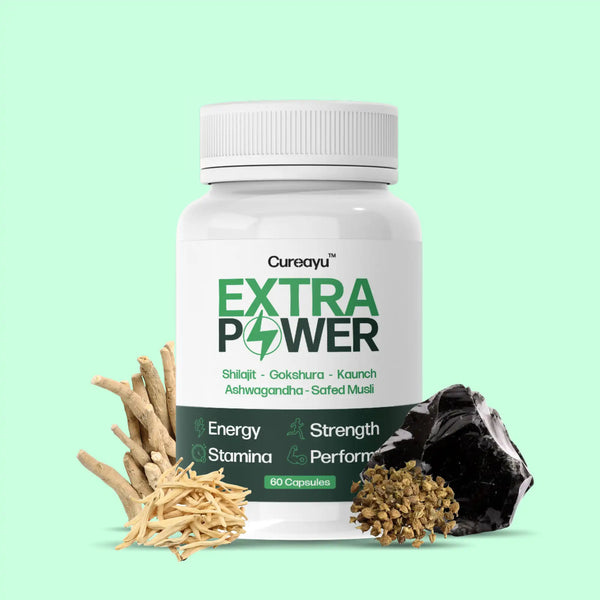
Cureayu's Extra Power Capsule for Men blends classical Vajikarana herbs — traditionally used to support stamina, energy, and male vitality as part of a healthy lifestyle. It is a supplement to complement good sleep, exercise, and diet — not a treatment for any medical condition, and not a substitute for medical care if you have symptoms of low testosterone. If you take medication or have a health condition, check with your doctor before starting.
Frequently Asked Questions
How can I increase testosterone naturally and fast?
There is no overnight fix, but the fastest real levers are fixing your sleep, starting strength exercise, losing excess belly fat, and lowering stress. These can influence testosterone within weeks. Herbs and correcting deficiencies help on top of the basics.
Does ashwagandha really increase testosterone?
Research is encouraging: a 2019 randomised controlled trial found men taking 600 mg of ashwagandha daily for 8 weeks had a greater increase in testosterone than those on a placebo, along with less stress. It works best alongside good lifestyle habits, not instead of them.
What is a normal testosterone level for men?
Roughly 300–1,000 ng/dL of total testosterone is considered normal (the standardised range is 264–916 ng/dL). Below about 300 ng/dL, confirmed on two morning tests with symptoms, is generally considered low.
Which foods boost testosterone?
No single food is a booster, but a whole-food diet with adequate protein, healthy fats (nuts, seeds, ghee in moderation), and vegetables supports hormone production. Correcting vitamin D and zinc deficiency is especially helpful.
Can stress lower testosterone?
Yes. Ongoing stress keeps cortisol high, and high cortisol works against testosterone. Daily stress management — walking, yoga, pranayama, better sleep — genuinely helps.
At what age does testosterone drop?
Levels peak in early adulthood and decline gradually from around age 30, by roughly 1% a year. This slow decline is normal; a sudden, symptomatic drop should be checked by a doctor.
Written & medically reviewed by Dr. Istuti, BAMS — Ayurvedic physician (Bachelor of Ayurvedic Medicine & Surgery) with an interest in men's health and vitality. Dr. Istuti reviews Cureayu's health content for accuracy and compliance.
Medically reviewed on 14 August 2026.
Disclaimer: This content is for educational purposes and is not a substitute for professional medical advice. Consult a qualified physician before starting any supplement, especially if you have a kidney/prostate condition or take medication.
Sources
American Urological Association — Testosterone Deficiency Guideline: auanet.org
Lopresti et al., 2019, RCT on ashwagandha and testosterone (PubMed): pubmed.ncbi.nlm.nih.gov/30854916
Integrative Natural Approaches for Age-Related Testosterone Decline (NCBI/PMC): ncbi.nlm.nih.gov
Internal links
Pillar hub: Sexual Wellness
Sibling: How to Increase Sperm Count Naturally
Sibling: Ashwagandha Benefits, Uses & Dosage
PDP: Extra Power for Men
Disclaimer: Educational content, not a substitute for professional medical advice. Consult a qualified physician before starting any supplement.