Enlarged Prostate: Early Symptoms You Shouldn't Ignore

If you've started making a second trip to the bathroom at night, or you feel like your bladder is never quite empty, you're not imagining it — and you're far from alone. For many men over 50, these small changes are the first, easy-to-miss signs of an enlarging prostate. Caught early, they're very manageable. The mistake is brushing them off as "just getting older."
This guide walks you through the early symptoms worth paying attention to, why they happen, the Ayurvedic view on urinary wellness, and when it's time to see a doctor.
Key Takeaways
- The prostate naturally enlarges with age; by their 60s, a majority of men have some enlargement.
- The earliest signs are usually about urination — going more often (especially at night), a weaker stream, and a feeling of not fully emptying.
- Enlargement (often called BPH) is common and not cancer, but only a doctor can tell them apart — so symptoms should be checked, not guessed.
- Certain herbs and lifestyle habits are traditionally used to support urinary comfort and healthy flow.
- Sudden inability to urinate, blood in urine, or fever with urinary pain needs prompt medical attention.
What is the prostate — and why does it enlarge?
The prostate is a small gland, about the size of a walnut, that sits just below the bladder and wraps around the urethra — the tube that carries urine out. As men age, hormonal shifts commonly cause the gland to grow. Because it surrounds the urethra, even modest growth can gently squeeze that tube and change the way urine flows. This age-related enlargement is known as benign prostatic hyperplasia (BPH) — "benign" meaning not cancer. Having it does not mean you have or will get prostate cancer; they are different things, which is why symptoms should be assessed by a doctor rather than self-diagnosed.
Early symptoms you shouldn't ignore
- Going more often, especially several times during the day.
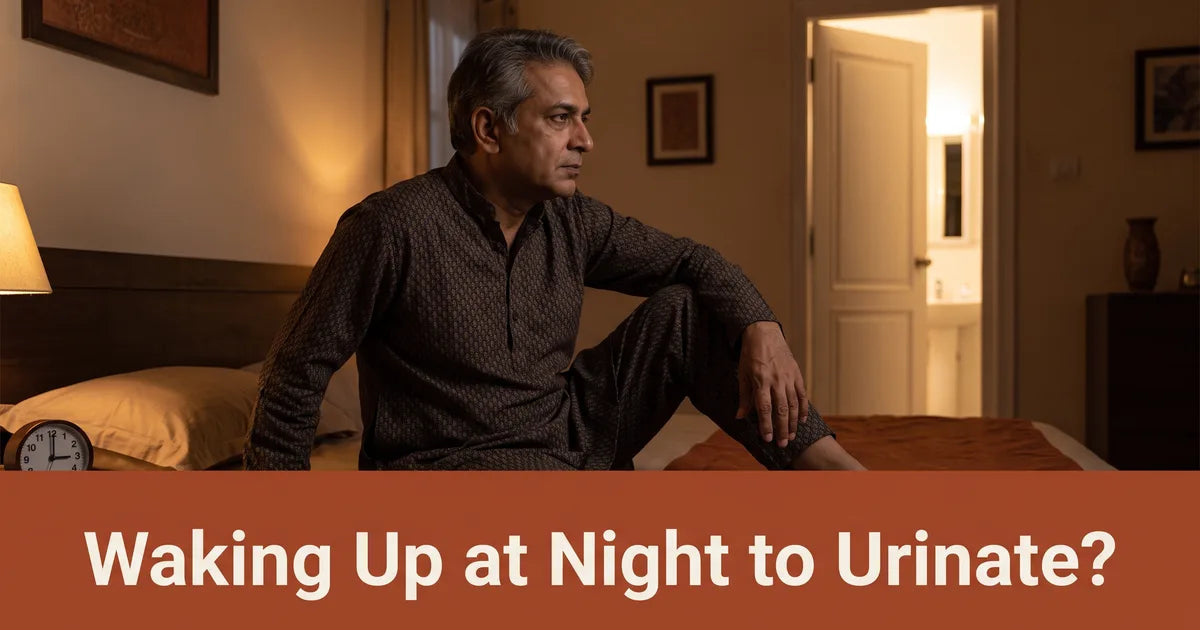
- Waking at night to urinate (nocturia) — often the very first thing men notice.
- A weaker or slower stream than you used to have.
- Trouble starting — the flow takes a moment to begin.
- Dribbling at the end, or starting and stopping mid-stream.
- A feeling of incomplete emptying — like the bladder still isn't done.
- A sudden, urgent need to go that's hard to postpone.
Any one of these alone can have other causes. But when a few show up together and stick around, it's worth getting checked.
Why "bar bar peshaab aana" happens at night
That familiar complaint — bar bar peshaab aana, especially at night — often comes down to the enlarged gland preventing the bladder from emptying fully. A bladder that never quite empties fills up again sooner, so the urge returns more often. It's a genuine quality-of-life issue and a valid reason to seek help — not something to simply put up with.
The Ayurvedic perspective on urinary wellness
In Ayurveda, healthy urine flow and comfort are linked to mutravaha srotas and the balance of apana vata, the downward-moving energy that governs elimination. As men age, an aggravation of vata and kapha in this region is classically associated with obstructed, difficult, or frequent urination. Several herbs are traditionally used to support prostate and urinary health:
- Gokshura (Gokhru, Tribulus terrestris) — long used to support healthy urine flow and urinary comfort.
- Varun (Varuna, Crataeva nurvala) — classically associated with supporting the urinary tract and easy flow.
- Punarnava (Boerhavia diffusa) — traditionally used to support healthy fluid balance.
- Shilajit and Kanchanar — used in classical formulations for men's wellness.
These are wellness supports, not treatments for BPH or prostate disease, and are best used as part of a broader healthy routine alongside proper medical care.
Practical steps that can help
- Don't hold it, but don't rush. Take time to empty fully; some men find "double voiding" helps.
- Time your fluids. Drink well through the day but taper in the two hours before bed.
- Go easy on caffeine and alcohol, which irritate the bladder and increase urgency.
- Keep moving. Regular activity is linked to better urinary health.
- Review medicines — some cold and allergy remedies can worsen symptoms; ask your doctor or pharmacist.
- Manage weight, blood pressure and blood sugar, all of which influence urinary and prostate health.
When to see a doctor
Book a check-up if urinary symptoms are ongoing, worsening, or disturbing your sleep. Seek prompt or urgent care for a sudden inability to urinate (an emergency), blood in the urine, pain or burning with urination or fever alongside urinary symptoms, or lower abdomen/back pain with difficulty passing urine. A doctor can examine the prostate, run simple tests, and rule out other conditions. Ayurvedic support can sit alongside medical care under a doctor's guidance, never as a replacement for it.
How Prostate Care fits
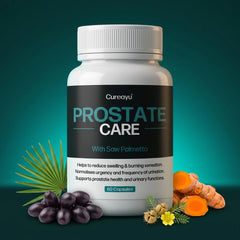
Cureayu Prostate Care is formulated around herbs like Gokshura and Varun that are traditionally used to support prostate and urinary wellness — healthy flow, comfort, and fewer disruptions to your routine. It's designed as part of a healthy lifestyle, not as a treatment for BPH or any prostate disease. If your symptoms are ongoing or you take regular medication, please see a doctor before starting any supplement. Learn more about Prostate Care →
FAQ
At what age does the prostate start to enlarge?
Usually from around a man's 40s, becoming more common each decade — by the 60s, a majority of men have some enlargement. It's a normal part of ageing for many men.
Is an enlarged prostate the same as prostate cancer?
No. An enlarged prostate (BPH) is benign and is not cancer. Some symptoms overlap, so only a doctor can tell them apart — which is why persistent symptoms should always be checked.
Can frequent night urination be a sign of enlarged prostate?
Yes, nocturia is one of the most common early signs, though it can also come from late fluids, diabetes, or certain medicines. A doctor can identify the reason.
Can Ayurvedic herbs cure an enlarged prostate?
Herbs like Gokshura and Varun are traditionally used to support urinary comfort and healthy flow. They are wellness support, not a cure for BPH or any disease, and should complement — not replace — medical care.
What lifestyle changes help with early prostate symptoms?
Tapering fluids before bed, reducing caffeine and alcohol, staying active, emptying the bladder fully, and managing weight and blood pressure can all help.
Written & medically reviewed by Dr. Istuti, BAMS — in-house Ayurvedic physician at Cureayu. Dr. Istuti focuses on men's urinary and prostate wellness and ensures every Cureayu health article is accurate, balanced, and compliant. Medically reviewed on 9 July 2026.
Disclaimer: This content is for educational purposes and is not a substitute for professional medical advice. Consult a qualified physician before starting any supplement, especially if you have a prostate condition or take medication.
Disclaimer: Educational content, not a substitute for professional medical advice. Consult a qualified physician before starting any supplement.