Grade 1 Fatty Liver: What It Means, Symptoms & an Indian Diet That Helps
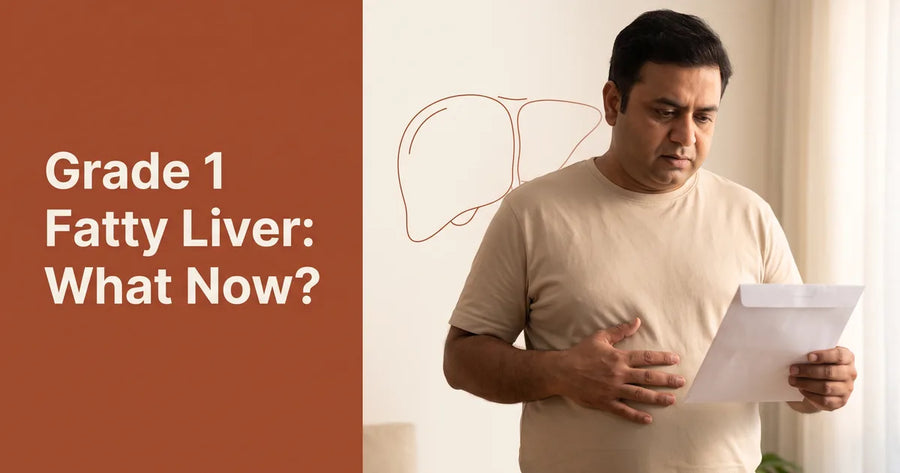
Here's the reassuring truth: grade 1 is the earliest and mildest stage, and it's exactly the stage where everyday food and lifestyle changes make the biggest difference. Let's walk through what it means and what to actually do, in an Indian context.
Key Takeaways
- Grade 1 fatty liver means mild extra fat has collected in the liver — the earliest stage, seen on ultrasound, often with no symptoms at all.
- It's very common in India and closely tied to weight, sugar, refined food, and sedentary routines — not just alcohol.
- Doctors widely agree the early stage responds well to weight loss, a lighter diet, and regular movement; even a 5–7% weight drop helps, per NIDDK guidance.
- Ayurveda traditionally supports liver health (yakrit) with herbs like Bhumi Amla, Kutki, and Kalmegh alongside a light, fresh diet.
- Grade 1 is a nudge, not a verdict — but it deserves action and a doctor's follow-up, not panic or neglect.
What does grade 1 fatty liver mean?
"Grade 1" is how a sonologist describes mildly increased fat in the liver on ultrasound. In plain words: some extra fat has started collecting in liver cells, but the liver's structure and deeper vessels still look normal. Doctors call the condition NAFLD — now increasingly termed MASLD — when it isn't caused by alcohol.
It matters because fat in the liver can, over years, progress to inflammation and scarring in some people. Caught at grade 1, that progression is far from inevitable — which is why this stage is often called a wake-up call rather than a disease label.
Symptoms: why you probably felt nothing
Most people with grade 1 fatty liver have no symptoms. Some notice mild, vague signs: heaviness or dull discomfort on the right side under the ribs, easy tiredness, or a general sense of sluggish digestion. Blood tests sometimes show mildly raised SGPT/SGOT (liver enzymes).
Because it's silent, the ultrasound finding is genuinely useful — it gives you years of head start.
The Ayurvedic perspective
Ayurveda regards the liver (yakrit) as central to digestion and metabolism, governed by pitta and closely linked to agni — digestive fire. A liver burdened by heavy, oily, sweet, and stale food accumulates ama (metabolic residue), which mirrors the modern picture of fat accumulation from excess calories and refined carbs.
Classical texts describe several herbs traditionally used to support healthy liver function: Bhumi Amla (Phyllanthus niruri), Kutki (Picrorhiza kurroa, described in the Bhavaprakasha Nighantu), Kalmegh (Andrographis paniculata), and Punarnava. Modern research on several of these is ongoing and early but encouraging — they remain supportive measures, not treatments.
What to eat (and skip): a practical Indian plan
Reduce first, add second. The liver recovers more from what you remove than what you add.
Cut down: sugar and sweets, refined flour (maida — biscuits, bakery, white bread), fried snacks and street food, sugary drinks and packaged juices, alcohol (ideally zero while the liver recovers), and late heavy dinners.
Build meals around: home-cooked dal-roti-sabzi with measured oil, more vegetables and whole grains (millets, dalia, brown rice), seasonal fruit instead of dessert, and an early, lighter dinner. A morning glass of warm water, and green tea if you enjoy it, fit well.
Move daily: 30–45 minutes of brisk walking most days is the single most evidence-backed step. Per NIDDK, losing even 5–7% of body weight meaningfully reduces liver fat for most people.
If uric acid or creatinine also showed up high on the same health check — a common combination — read our guides on high uric acid symptoms and foods to avoid and how to lower creatinine naturally.
When to see a doctor
See a physician if your liver enzymes are raised, you have diabetes, obesity, or high cholesterol alongside the fatty liver, or you notice yellowing of eyes, persistent right-side pain, swelling, or dark urine. Ask your doctor how often to repeat the ultrasound and blood tests — usually a review every 6–12 months tracks progress well. Never stop prescribed medicines on your own.
How Cureayu Liver Care fits in
Once the diet and walking routine is in place, some people like adding traditional herbal support. Cureayu Liver Care brings together Bhumi Amla, Kutki, Kalmegh and other classical herbs traditionally used in Ayurveda to support healthy liver function and digestion. It's a supplement — a companion to the lifestyle work above, not a replacement for it — and best taken with your doctor's knowledge.
FAQ
Can grade 1 fatty liver be reversed?
Doctors widely report that early-stage fatty liver often improves substantially with sustained weight loss, a lighter diet, and exercise — NIDDK notes weight loss can reduce liver fat, inflammation and scarring. The realistic timeline is months of consistency, not days.
Is grade 1 fatty liver serious?
Not immediately — it's the mildest grade and usually silent. It becomes serious only if ignored for years while the causes (sugar, weight, alcohol, inactivity) continue. Treat it as an early warning worth acting on.
Which foods should I strictly avoid with fatty liver?
Sugar-sweetened drinks, sweets and maida products, deep-fried food, and alcohol top the list. These drive liver fat faster than almost anything else in the Indian diet.
Is ghee bad for fatty liver?
In small, measured amounts (1–2 teaspoons a day) within an otherwise light diet, ghee is generally acceptable and valued in Ayurveda. The real problem is total calorie and fried-food load, not a spoon of ghee itself.
Does grade 1 fatty liver cause pain?
Usually not. Some people feel a dull heaviness under the right ribs. Sharp or persistent pain isn't typical of grade 1 and should be checked by a doctor.
How long does it take to improve grade 1 fatty liver?
With steady diet change, daily walking, and 5–7% weight loss, many people see improved liver enzymes and ultrasound findings over roughly 3–6 months. Individual results vary — track it with your doctor.
Written & medically reviewed by Dr. Istuti, BAMS;— in-house Ayurvedic physician at Cureayu, focused on metabolic and digestive wellness through classical Ayurveda and practical Indian diet guidance.
Medically reviewed on 10 July 2026.
Disclaimer: This content is for educational purposes and is not a substitute for professional medical advice. Consult a qualified physician before starting any supplement, especially if you have a kidney/prostate condition or take medication.

Disclaimer: Educational content, not a substitute for professional medical advice. Consult a qualified physician before starting any supplement.