
Ovarian Cyst Symptoms: Signs, Causes & Ayurvedic Care
A dull ache low in your belly, a bloated feeling that won't settle, or a period that suddenly feels different — and a quiet worry: "Could it be an ovarian cyst?" If that's where your mind is, take a breath. Ovarian cysts are extremely common, and most are small, harmless, and settle on their own.
This guide explains what the signs actually feel like, what causes cysts, which symptoms deserve a doctor's attention quickly, and how diet, lifestyle and traditional Ayurvedic care can support your overall well-being — calmly and compliantly.
Key Takeaways
- An ovarian cyst is a fluid-filled sac on or in an ovary. Most are functional cysts linked to the monthly cycle and often resolve by themselves.
- Common signs include lower-abdominal or pelvic discomfort, bloating, a feeling of fullness or pressure, and changes in the period. Many cysts cause no symptoms and are found by chance on a scan.
- Sudden, severe pelvic pain with fever, vomiting, faintness, or rapid breathing needs urgent medical care — it can signal a twisted or ruptured cyst.
- Cysts are not the same as PCOS, though the two are often confused.
- Ayurveda and lifestyle can support hormonal balance and comfort, but diagnosis and treatment of any cyst belong with your gynaecologist and an ultrasound.
What is an ovarian cyst?
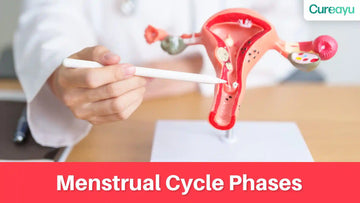
An ovarian cyst is a sac filled with fluid that forms on or inside an ovary. The two ovaries are part of the female reproductive system and release an egg each month.
Most cysts are functional cysts — a normal by-product of ovulation. A follicular cyst forms when the follicle that holds an egg doesn't release it; a corpus luteum cyst forms after the egg is released. These usually shrink and disappear over a few weeks to a couple of months. Other, less common types include dermoid cysts and endometriomas, which a doctor evaluates individually.
The reassuring headline: the large majority of ovarian cysts are small and harmless, and many women have them without ever knowing.
Ovarian cyst symptoms — what they feel like
Many cysts are silent. When they do cause symptoms, women commonly describe:
- Lower-abdominal or pelvic discomfort — a dull ache or heaviness, often on one side.
- Bloating or a swollen, full feeling in the lower belly.
- Pressure — a sense of fullness, or needing to pass urine more often if a larger cyst presses on the bladder.
- Changes in the period — heavier, lighter, irregular, or spotting between periods.
- Discomfort during intercourse or a low backache around the cycle.
- Feeling full quickly when eating, if a cyst is larger.
Because these overlap with ordinary period symptoms, indigestion and other conditions, symptoms alone can't confirm a cyst — an ultrasound does.
Red-flag symptoms — get help now
Go to a doctor or emergency care immediately if you have:
- Sudden, sharp, severe pelvic or abdominal pain
- Pain with fever or vomiting
- Faintness, dizziness, or weakness
- Rapid breathing or a racing heartbeat
These can point to a ruptured cyst or ovarian torsion (a twisted ovary), which are medical emergencies. Please don't wait these out at home.
What causes ovarian cysts?
- Ovulation (functional cysts). The most common cause — a normal part of the monthly cycle.
- Hormonal fluctuations, which can affect how follicles form and release.
- Endometriosis, which can create endometriomas.
- Pregnancy, which can leave a cyst that supports early pregnancy.
- Pelvic infections that spread to the ovaries.
Certain things make cysts more likely to be noticed or to recur, but functional cysts are largely just part of how a menstruating body works.
Ovarian cyst vs PCOS — they are not the same
This confusion is very common. PCOS (polycystic ovary syndrome) is a hormonal and metabolic condition in which the ovaries may show many tiny follicles, along with irregular cycles and other hormonal signs. A single ovarian cyst is one fluid-filled sac — a different thing entirely. Many women with an ovarian cyst do not have PCOS, and vice versa. If your cycles are irregular and you're unsure which applies to you, our guide to PCOD/PCOS symptoms in women explains the difference in plain language.
The Ayurvedic perspective
Classical Ayurveda views growths and swellings like cysts through the lens of aggravated doshas and kapha-natured accumulation, often with a role for sluggish agni (metabolism) and ama (metabolic residue). Care traditionally focuses on supporting healthy metabolism, smooth artava (menstrual) flow and srotoshodhana (keeping the body's channels clear).
Herbs classically used to support women's reproductive wellness and healthy metabolism include:
- Kanchanar (Bauhinia variegata) — the central herb in Kanchanar Guggulu, traditionally used in Ayurveda to support the body's handling of lumps, swellings and glandular health.
- Guggulu (Commiphora mukul) — traditionally used to support healthy metabolism and clear channels.
- Shatavari (Asparagus racemosus) — a classic women's tonic, traditionally used to support hormonal balance and reproductive wellness. (See our guide to Shatavari benefits for women.)
- Triphala — traditionally used to support gentle detoxification and digestion.
These herbs are traditionally used to support women's reproductive and metabolic wellness. They do not cure, treat, dissolve or reverse ovarian cysts, PCOS or any disease, and are never a substitute for gynaecological care, an ultrasound, or prescribed treatment.
Practical steps: diet & lifestyle that support balance
These support your general and hormonal well-being — they are not a treatment for a cyst:
1. Eat whole and fibre-rich. Plenty of vegetables, fruit, whole grains and legumes. Fibre supports healthy digestion and hormone metabolism.
2. Go easy on refined sugar and ultra-processed food. Steadier blood sugar supports steadier hormones — helpful especially if cycles are irregular.
3. Move most days. A brisk 30-minute walk, yoga or light strength work supports weight balance and circulation. Gentle yoga poses (like baddha konasana and supta baddha konasana) are traditionally used for pelvic comfort.
4. Manage stress and sleep. Chronic stress and poor sleep disturb the hormonal rhythm. Regular sleep, breathing practice (pranayama) and downtime genuinely matter.
5. Track your cycle. Note pain, bloating and bleeding patterns. A simple log helps your doctor far more than trying to remember at the appointment.
6. Keep your scans up to date. If a cyst has been found, follow the review ultrasound your doctor advises so any change is caught early.
When to see a doctor
Book a gynaecologist visit if you have:
- Persistent or worsening pelvic pain or bloating, or pain that isn't tied to your period.
- A noticeable change in your cycle — much heavier, irregular, or bleeding between periods.
- A cyst already found on a scan that needs its follow-up review.
- Symptoms alongside difficulty getting pregnant.
And seek emergency care immediately for the red-flag symptoms above (sudden severe pain, fever, vomiting, faintness). Diagnosis needs an ultrasound, and sometimes blood tests — this is not something to self-diagnose from a blog.
How Cureayu's No Cyst fits
If you're building a wellness routine alongside your doctor's advice, No Cyst Capsules — and the classical formulation Kanchanar Guggulu — are formulated with traditional herbs like Kanchanar and Guggulu, intended to support women's reproductive and glandular wellness and healthy metabolism as part of a balanced lifestyle.
To be honest with you: a supplement is a supporting player. It does not diagnose, treat, dissolve or cure an ovarian cyst, and it does not replace an ultrasound, gynaecological care or prescribed treatment. Please talk to your doctor before starting it — especially if you're pregnant, trying to conceive, or already under treatment.
FAQ
Q1. Are ovarian cysts dangerous?
Most are not. The majority are small functional cysts that resolve on their own within weeks. A minority need monitoring or treatment. The situations that need urgent care are a ruptured or twisted cyst, which cause sudden severe pain — so red-flag symptoms should never be ignored.
Q2. What are the first signs of an ovarian cyst?
Often there are none. When present, early signs include lower-abdominal or pelvic discomfort (often one-sided), bloating, a feeling of pressure or fullness, and changes in the period. Because these overlap with normal period symptoms, an ultrasound is needed to confirm.
Q3. Ovary me cyst ke lakshan kya hote hain?
Aksar koi lakshan nahi hote. Jab hote hain, to pet ke nichle hisse me halka dard ya bhaaripan (aksar ek taraf), pet phoolna, dabaav ya bharā-bharā mehsoos hona, aur period me badlav ho sakte hain. Achanak tez dard, bukhar ya ulti ho to turant doctor ko dikhayein. Sahi jaanch ke liye ultrasound zaroori hai.
Q4. Is an ovarian cyst the same as PCOS?
No. PCOS is a hormonal and metabolic condition with irregular cycles and many small follicles on the ovaries. A single ovarian cyst is one fluid-filled sac. They are different, though often confused — a doctor can tell you which applies to you.
Q5. Can diet and Ayurveda dissolve an ovarian cyst?
No supplement, food or herb should be claimed to dissolve or cure a cyst. Diet, lifestyle and traditional Ayurvedic herbs can support general and hormonal wellness, but the cyst itself must be assessed and managed by your gynaecologist with an ultrasound.
Q6. Do ovarian cysts affect fertility?
Most common functional cysts do not affect fertility. Some types linked to conditions like endometriosis, or PCOS, can be associated with fertility challenges. If you're trying to conceive and have been told you have a cyst, discuss it with your gynaecologist.
Written & medically reviewed by Dr. Istuti, BAMS — Ayurvedic physician with a focus on women's and metabolic wellness. Dr. Istuti reviews all Cureayu health content for accuracy and compliance.
Medically reviewed on September 9, 2026.
Disclaimer: This content is for educational purposes and is not a substitute for professional medical advice. Consult a qualified physician before starting any supplement, especially if you have a kidney/prostate condition, are pregnant or trying to conceive, or take medication.
Sources:
- MedlinePlus — Ovarian cysts: symptoms, causes and when to seek care.
- National Institutes of Health (NIH) / NICHD — Ovarian cysts overview.
- American College of Obstetricians and Gynecologists (ACOG) — Ovarian cysts patient information.
- Ministry of AYUSH — guidance on classical Ayurvedic herbs and formulations.
- Sharangadhara Samhita / Bhaishajya Ratnavali — classical references for Kanchanar Guggulu.