Bleeding Piles (Khooni Bawaseer): Causes, Symptoms & Ayurvedic Relief
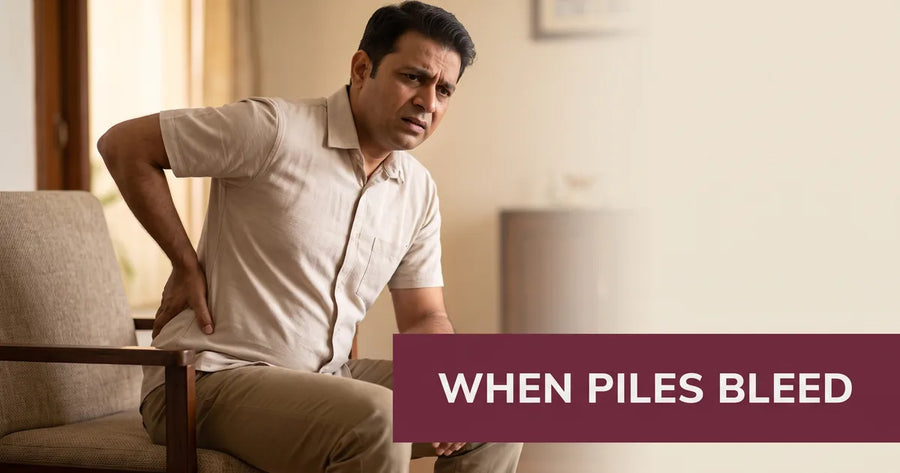
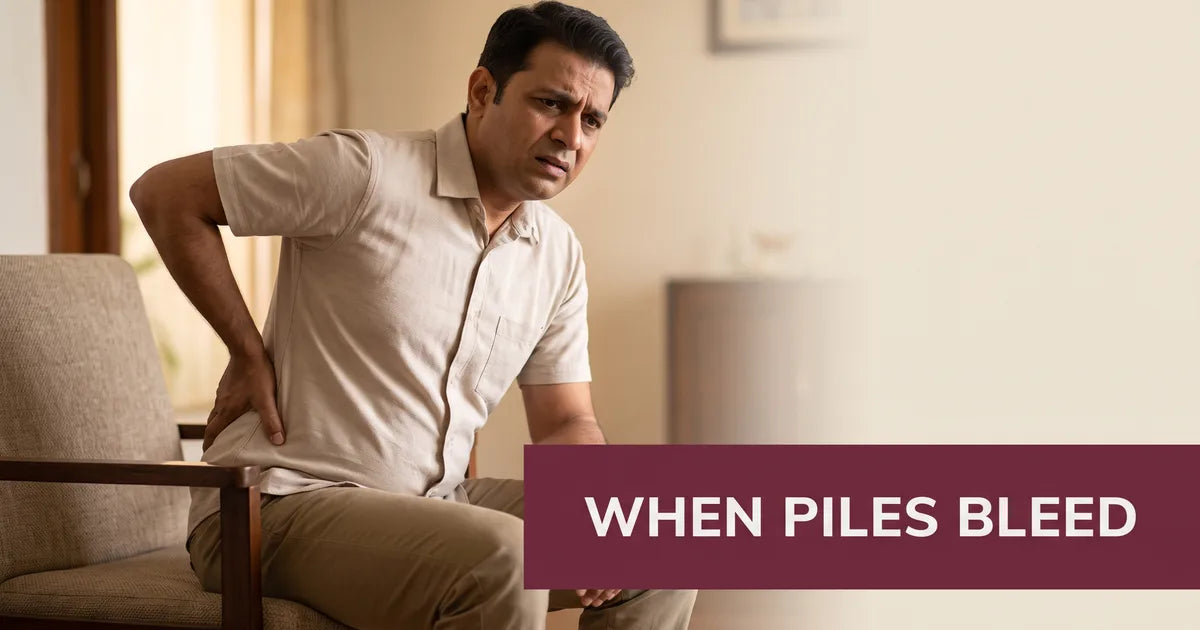
Seeing bright red blood in the toilet after passing stool is frightening. For millions dealing with khooni bawaseer (bleeding piles), that first sight sparks the same rush of worry: "Yeh kya hai? Kuch serious toh nahi?"
Most of the time, painless bright-red bleeding during a bowel movement is caused by piles — swollen blood vessels in and around the anus. It's common and manageable. But bleeding should never be ignored or self-diagnosed, because a few serious conditions can look the same. Here's how to understand it, calm the panic, and support lasting comfort.
Key Takeaways
- Bleeding piles usually show as bright red blood on the stool, toilet paper, or in the bowl — often painless.
- The most common trigger is straining during hard, constipated stools, which irritates and swells the veins.
- Fibre, water, and toilet habits are the foundation of relief — before anything else.
- Ayurveda traditionally treats arsha (piles) with gut-cooling, easy-motion herbs and lifestyle correction.
- Always get bleeding checked by a doctor at least once — to rule out other causes and confirm it's piles.
What are bleeding piles (khooni bawaseer)?
Piles, or haemorrhoids, are swollen veins in the lower rectum and anus — a bit like varicose veins, but in a very sensitive area. Ayurveda calls this condition arsha.
They come in two broad types:
Internal piles: Sit inside the rectum. You usually can't see or feel them, but they're the classic cause of painless bright-red bleeding — because the internal lining has few pain nerves.
External piles: Sit under the skin around the anus. These tend to be more painful, itchy, and can be felt as a lump; they may bleed if irritated.
When people say khooni bawaseer, they usually mean piles that have started to bleed — most often internal ones aggravated by hard stools and straining.
Symptoms: how to recognise bleeding piles
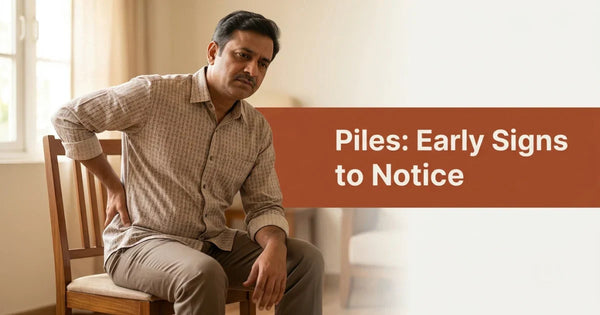
Alongside the bleeding, common signs include:
- Bright red blood on toilet paper, coating the stool, or dripping into the bowl (not mixed dark into the stool)
- Itching or irritation around the anus
- A feeling of fullness or that the bowels aren't fully empty
- A soft lump near the anus (with external piles)
- Discomfort or mild pain, especially while sitting or passing stool
- Mucus discharge in some cases
A quick note on the blood colour: piles bleeding is typically bright red and fresh. Dark, tarry, or maroon blood, or blood mixed into the stool, is different — that needs prompt medical attention, as it can point to bleeding higher up in the gut.
Why piles start bleeding — the common causes
The veins swell and bleed when pressure builds up in the anal area, again and again. The usual culprits in Indian daily life:
Chronic constipation and straining. The single biggest cause. Hard stools plus pushing forcefully stretches and tears the swollen vessels.
Low-fibre diet. Too much refined flour (maida), fried food, and too few vegetables, fruits and whole grains make stools hard and slow.
Not enough water. Dehydration hardens the stool further.
Long sitting hours. Desk jobs, long commutes, and long spells on the toilet (often scrolling the phone) all raise pressure in the region.
Pregnancy. Extra pressure and hormonal changes commonly bring on piles.
Ageing and heavy lifting. Weaker supporting tissue and repeated strain add up over time.
The Ayurvedic perspective on arsha (piles)
Ayurveda sees arsha largely as a disorder of aggravated vata and pitta combined with weak agni (digestive fire) and mandagni-driven constipation. When digestion is sluggish and the stool is dry and hard (a vata sign), repeated straining inflames the delicate guda (ano-rectal) region; the pitta aggravation shows up as heat, burning and bleeding.
Classical management, described in texts like the Sushruta Samhita and Ashtanga Hridayam, focuses on correcting the root — restoring smooth, soft motions and cooling the aggravated pitta — rather than only addressing the swelling. Herbs traditionally used in this space include:
- Nagkesar (Mesua ferrea) — classically used to support normal bleeding tendencies and a cooling effect.
- Haritaki and Triphala — traditionally used to ease constipation and promote gentle, regular motions.
- Neem and Kutaj — used for their cooling, soothing properties for the gut.
- Guggulu-based classical formulations — traditionally used to support healthy tissue and comfort in the region.
The goal, in Ayurvedic terms, is not to force the body but to make bowel movements soft and effortless so the area gets a chance to settle.
Practical relief: what actually helps day to day
- Load up on fibre. Bring in more whole grains (oats, dalia, whole wheat), vegetables, fruits (papaya, guava, pear), and soaked overnight isabgol (psyllium husk). Fibre softens stool so there's less to strain against.
- Drink enough water. Aim for steady hydration through the day — soft stool needs water.
- Don't delay the urge. Holding it in dries the stool and worsens straining.
- Cut the toilet-phone habit. Keep it under a few minutes; long sitting and pushing is a direct trigger.
- Try a warm sitz bath. Sitting in plain warm water for 10–15 minutes a couple of times a day soothes the area and eases discomfort.
- Move daily. Gentle walking keeps digestion regular; avoid heavy straining lifts during a flare.
- Ease off aggravating foods. Reduce very spicy, deep-fried, and maida-heavy meals that harden stools and add heat.
For related gut-comfort reading, see our guide on piles symptoms and early signs (bawaseer ke lakshan) and our overview of Triphala benefits for digestion and gentle detox.
When to see a doctor
Please don't self-diagnose bleeding. See a doctor promptly if you notice:
- Any rectal bleeding for the first time — it should be checked at least once to confirm the cause.
- Dark, tarry, or maroon blood, or blood mixed into the stool.
- Heavy or persistent bleeding, dizziness, or weakness (possible anaemia).
- A change in bowel habits, unexplained weight loss, or bleeding after age 40 without a clear piles history.
- Severe pain, a hard tender lump (possible clot/thrombosed pile), or fever.
A doctor can confirm it's piles, rule out other conditions, and advise if a procedure is needed. Ayurvedic and lifestyle support work best alongside that clarity — never instead of it.
How Piles Cure fits
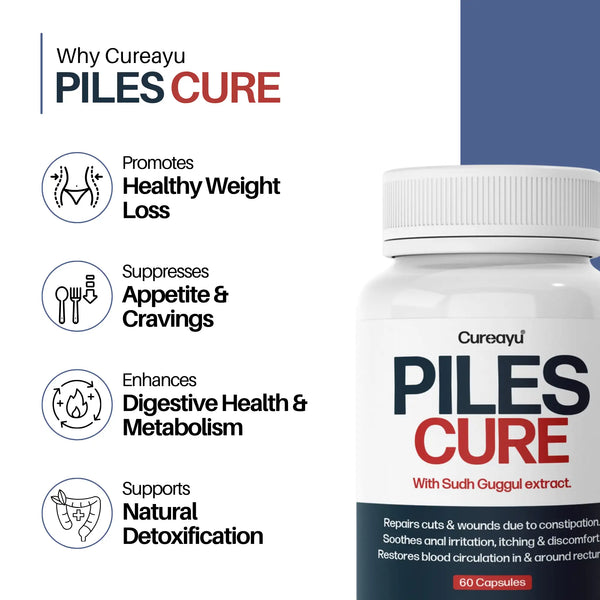
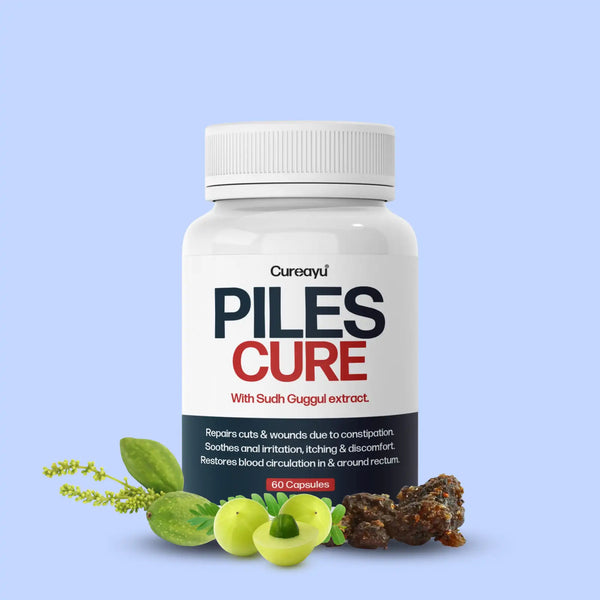
Once your bleeding has been checked and diet-and-lifestyle basics are in place, a targeted herbal routine can support the healing terrain. Piles Cure is our Ayurvedic capsule built around classical arsha herbs, traditionally used to support easy motions, soothe the ano-rectal region, and help maintain comfort during flare-ups. It's designed to complement a high-fibre diet and your doctor's guidance — not to replace medical care for bleeding.
FAQ
Q: Are bleeding piles serious (kya khooni bawaseer khatarnak hai)?
Most bleeding piles are not dangerous and settle with diet, hydration and care. But because a few serious conditions can bleed the same way, any rectal bleeding should be checked by a doctor at least once.
Q: Why is the blood bright red?
Bright-red, fresh blood usually means the bleeding is low down — from piles in the anal/rectal area. Dark or tarry blood suggests bleeding higher in the digestive tract and needs prompt medical review.
Q: Can bleeding piles heal on their own?
Mild flares often calm down once stools become soft and straining stops. Fixing constipation is the key. Recurrent or heavy bleeding, though, needs medical attention.
Q: What foods should I avoid with bleeding piles?
Go easy on very spicy food, deep-fried items, excess maida/refined flour, and too little fibre — all of which harden stool and can worsen straining and heat.
Q: Is isabgol (psyllium) good for piles?
Yes, for many people. Soaked psyllium husk adds soft bulk that makes stools easier to pass, reducing straining. Take it with plenty of water.
Q: Can Ayurvedic capsules cure piles permanently?
No responsible product should promise a permanent cure. Ayurvedic herbs are traditionally used to support easy motions and comfort. Lasting relief comes from consistent diet, hydration, and habit changes — with a doctor's guidance.
Written & medically reviewed by Dr. Istuti, BAMS — Ayurvedic physician (Bachelor of Ayurvedic Medicine & Surgery) with a focus on digestive and ano-rectal wellness. Dr. Istuti reviews every Cureayu health article for accuracy and compliance.
Medically reviewed on 20 August 2026.
Disclaimer: This content is for educational purposes and is not a substitute for professional medical advice. Consult a qualified physician before starting any supplement, especially if you have a kidney/prostate condition or take medication.
Sources
- MedlinePlus — Hemorrhoids (medlineplus.gov)
- National Institute of Diabetes and Digestive and Kidney Diseases (NIDDK) — Hemorrhoids: Symptoms & Causes (niddk.nih.gov)
- Sushruta Samhita, Nidana Sthana — description and classification of Arsha (piles)
- Ashtanga Hridayam — management principles for Arsha
- Ministry of AYUSH — resources on Ayurvedic dietary and lifestyle principles
Disclaimer: Educational content, not a substitute for professional medical advice. Consult a qualified physician before starting any supplement.