
Piles Symptoms (Bawaseer): Early Signs, Types & When to Worry
It often starts quietly — a little discomfort while sitting, some itching, or a streak of bright red blood in the toilet that makes your heart skip. Piles (bawaseer, or haemorrhoids) are extremely common, and the good news is that when you catch the signs early, they're usually very manageable with simple changes.
This guide walks you through what piles feel like, the different types, why they happen, and the practical, Ayurveda-rooted steps that support comfort — without any panic or hype.
Key Takeaways
- The most common early signs are painless bright-red bleeding, itching, a feeling of a lump near the anus, and discomfort while sitting or passing stool.
- Piles are of two main types — internal (inside the rectum, often painless but may bleed) and external (under the skin around the anus, often itchy or painful).
- The biggest driver is straining during bowel movements, usually from long-standing constipation and a low-fibre diet.
- Most early-stage piles improve with fibre, water, and lifestyle changes; Ayurveda adds herbs traditionally used to support comfortable digestion and healthy veins.
- See a doctor for any rectal bleeding to rule out other causes — bleeding should never be self-diagnosed.
What Are Piles (Bawaseer)?
Piles are swollen, inflamed veins in and around the lower rectum and anus — a bit like varicose veins, but in a more sensitive area. They develop when there's repeated pressure on these veins, most often from straining to pass hard stools. They're very common in India, partly because of low-fibre eating patterns, long hours of sitting, and inadequate water intake.
Early Symptoms You Shouldn't Ignore
- Bright red bleeding — typically painless, seen as streaks on the stool, on the toilet paper, or dripping into the bowl after passing motion.
- Itching or irritation (khujli) around the anus, sometimes with mucus.
- A soft lump or swelling near the anal opening that you can feel, which may be tender.
- Discomfort or a feeling of fullness — a sense that the bowel isn't fully empty.
- Pain during or after passing stool, more typical of external or thrombosed (clotted) piles.
- Soiling or dampness on undergarments from mucus discharge.
Quick answer: The classic early sign of piles is painless, bright-red bleeding after passing stool, often with itching and a lump near the anus. Any rectal bleeding, however, should be checked by a doctor at least once.
Internal vs External Piles
- Internal piles sit inside the rectum. They're usually painless because that area has fewer pain-sensing nerves, but they commonly bleed. In later stages they may bulge out (prolapse) during a bowel movement.
- External piles form under the skin around the anus. They tend to be itchy and painful, and you can often feel them as a lump. If a clot forms inside (a thrombosed external pile), the pain can become sharp and sudden.
Many people have a mix of both.
Why Piles Happen — The Common Causes
- Chronic constipation and straining — the single biggest cause.
- Low-fibre diet — too much maida, fried food, and too few vegetables, fruits, and whole grains.
- Not drinking enough water, which hardens stool.
- Long hours of sitting, including desk work and long commutes.
- Pregnancy, due to added pressure on pelvic veins.
- Heavy lifting and repeated straining.
- Ageing, as supporting tissues naturally weaken.
The encouraging part: most of these are modifiable.
The Ayurvedic Perspective on Piles (Arsha)
Ayurveda refers to piles as Arsha and connects them closely to a weak Agni (digestive fire) and aggravated Apana Vata, leading to chronic constipation and pressure in the lower rectum. The classical approach centres on restoring smooth digestion and gentle, regular bowel movements rather than forcing them.
Herbs named in Ayurvedic tradition and traditionally used to support anorectal comfort and healthy digestion include:
- Triphala — a gentle, classical combination traditionally used to support regular, comfortable bowel movements.
- Haritaki (Terminalia chebula) — traditionally valued for supporting easy digestion.
- Nagkesar (Mesua ferrea) — mentioned in classical texts in the context of Arsha.
- Neem and Aloe vera — traditionally used to soothe irritation.
These support a healthy routine and comfortable digestion; they are not a substitute for medical evaluation of bleeding.
Practical Steps: An Indian-Home Approach
Load up on fibre. Add more vegetables, fruits (papaya, banana, apple), whole grains, oats, and pulses. Soaked isabgol (psyllium husk) at night is a classic, gentle Indian remedy for softer stools.
Drink enough water. Aim for pale-yellow urine — soft stool needs hydration. Warm water in the morning can help stimulate a natural bowel movement.
Don't strain, don't delay. Go when you feel the urge; don't hold it. Avoid sitting on the toilet for long with your phone — it increases pressure on the veins.
Move more. A daily walk and light activity keep digestion regular and reduce the harm of long sitting.
Warm sitz baths. Sitting in warm water for 10–15 minutes can soothe discomfort and itching.
Ease off triggers. Cut back on very spicy, fried, and maida-heavy foods, and limit alcohol, which can worsen symptoms.
When to See a Doctor
- Any rectal bleeding, even if you suspect piles. Bleeding can also come from other conditions that need to be ruled out.
- Dark or maroon blood, or blood mixed into the stool (as opposed to bright red on the surface).
- A change in bowel habits, unexplained weight loss, or persistent tummy pain.
- Severe pain, a hard tender lump (possible thrombosed pile), or bleeding that won't stop.
- Symptoms that don't improve within a couple of weeks of lifestyle changes.
A quick clinical check gives you clarity and peace of mind.
How Piles Cure Fits In
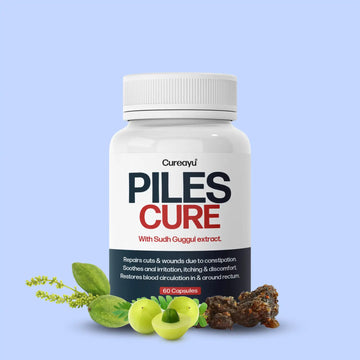
If you're managing early, mild piles and want extra support alongside a high-fibre diet and good hydration, Piles Cure combines Ayurvedic herbs traditionally used to support comfortable digestion, regular bowel movements, and healthy anorectal veins. It's meant to complement — not replace — lifestyle changes and your doctor's guidance. If you have ongoing bleeding or a diagnosed condition, or you're pregnant or on medication, please consult your physician before starting any supplement.
Frequently Asked Questions
What is the first sign of piles?
The most common early sign is painless, bright-red bleeding after passing stool, often noticed on toilet paper or in the bowl. Itching and a small lump near the anus are also frequent early signs. Any bleeding should be checked by a doctor at least once.
Are piles dangerous?
Most piles are not dangerous and improve with fibre, water, and lifestyle changes. However, because rectal bleeding can have other causes, it's important to get any bleeding evaluated rather than assuming it's only piles.
How do I know if my piles are internal or external?
Internal piles are inside the rectum, usually painless but prone to bleeding. External piles are around the anal opening and tend to be itchy or painful, often felt as a lump. Many people have both.
Can piles go away on their own?
Mild, early-stage piles often settle with a high-fibre diet, adequate water, avoiding straining, and warm sitz baths. Persistent or bleeding piles need medical evaluation.
What foods should I avoid with piles?
Limit low-fibre, constipating foods — maida, deep-fried items, and very spicy food — plus excess alcohol. Focus instead on fibre-rich vegetables, fruits, whole grains, and plenty of water.
Which Ayurvedic herbs are used for piles?
Triphala, Haritaki, Nagkesar, neem, and aloe vera are traditionally used to support comfortable digestion and anorectal wellness. They are not a substitute for medical care of bleeding.
Written & medically reviewed by Dr. Istuti, BAMS — an in-house Ayurvedic physician (Bachelor of Ayurvedic Medicine and Surgery) with a focus on digestive and anorectal wellness.
Medically reviewed on 10 July 2026.
Disclaimer: This content is for educational purposes and is not a substitute for professional medical advice. Consult a qualified physician before starting any supplement, especially if you have a kidney/prostate condition or take medication.
Sources: NIDDK — Hemorrhoids; MedlinePlus — Hemorrhoids; Ministry of AYUSH — Ayurvedic concepts of Arsha; Sushruta Samhita — Arsha references.
Related reading: Is Ayurveda Safe Alongside Allopathic Medicine? · Foods to Avoid When Creatinine Is High (Indian Diet) · Piles Cure.