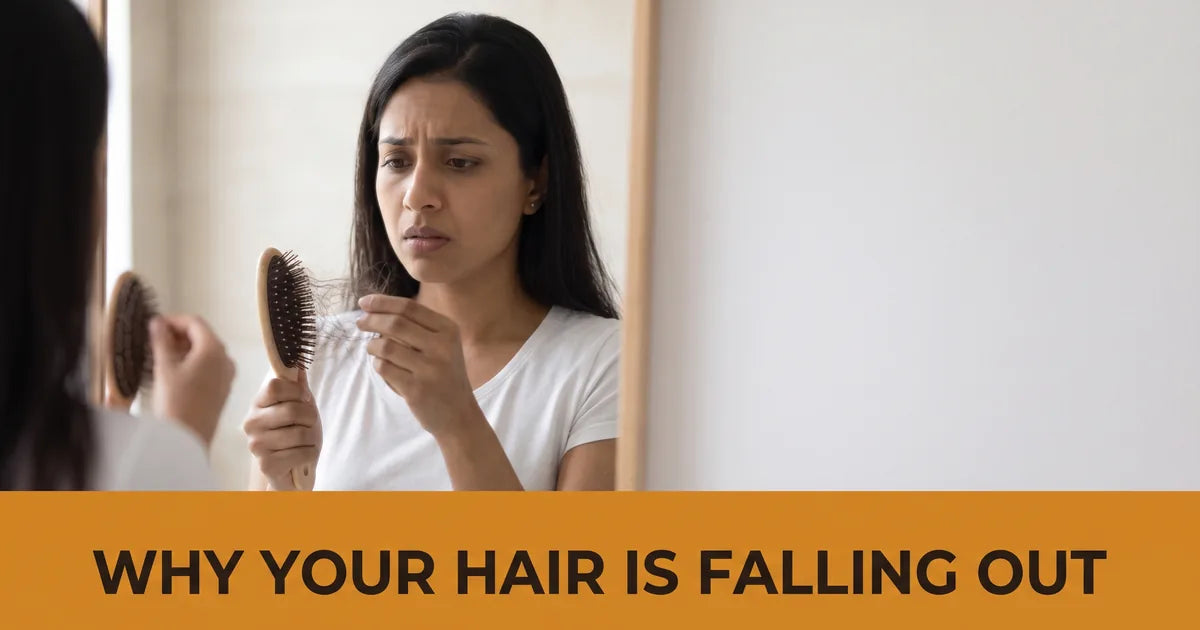
Hair Fall Causes & Ayurvedic Remedies (Baal Jhadne Ke Karan Aur Upay)
Hair Fall Causes & Ayurvedic Remedies (Baal Jhadne Ke Karan Aur Upay)
Finding strands on your pillow, in the shower drain, on your comb — hair fall is stressful, and the stress itself can make it worse. The good news: most everyday hair fall has an understandable, manageable cause. This doctor-reviewed guide explains why hair falls out (baal jhadne ke karan), how much shedding is actually normal, the Ayurvedic view, and practical steps and remedies that genuinely help.
Key Takeaways
- Losing around 50–100 hairs a day is completely normal — hair grows in cycles, and some shedding is part of it.
- Sudden, heavier shedding a few months after stress, illness, fever, childbirth, crash dieting or a big life change is often telogen effluvium — usually temporary and reversible.
- Pattern thinning (receding hairline in men, widening parting in women) is often androgenetic — genetic and gradual, and best assessed by a doctor.
- Diet gaps (iron, protein, vitamin D, B12), harsh styling, and scalp issues like dandruff are common, fixable contributors.
- Ayurveda frames hair health around balanced Pitta and strong dhatus (tissues); herbs like Bhringraj, Amla and Brahmi are traditionally used to support healthy hair — as part of a routine, not as a cure.
First, How Much Hair Fall Is Normal?
Hair grows in a cycle: a long growing phase, a short transition, and a resting phase after which the hair sheds and a new one grows in its place. At any time, about 10–15% of your hair is in that resting phase, so shedding some strands daily is simply the cycle working.
Most people lose around 50 to 100 hairs a day — more on wash days, which is normal because washing dislodges hairs that were already ready to fall. It becomes worth attention when you notice markedly more than usual (for example, large clumps, or a sense that it's clearly increased over weeks), visible thinning, or a receding or widening hairline.
The Common Causes of Hair Fall
1. Telogen effluvium (stress- or shock-related shedding)
This is diffuse, all-over shedding that typically starts 2–3 months after a trigger — a high fever or illness, surgery, childbirth, major emotional stress, crash dieting, or stopping certain medicines. It can feel dramatic, but it's usually temporary, and hair often regrows once the trigger passes and the body recovers.
2. Androgenetic (pattern) hair loss
This is the gradual, patterned thinning many people inherit — a receding hairline and crown thinning in men, and a widening parting or overall thinning in women. It's driven largely by genetics and hormones (DHT) and tends to be progressive, so early assessment by a doctor or dermatologist helps.
3. Nutritional gaps
Low iron (very common, especially in women with heavy periods), inadequate protein, and low vitamin D or B12 are frequent, correctable contributors to shedding. This is where diet — and, if a doctor confirms a deficiency, targeted correction — makes a real difference.
4. Scalp and styling factors
Dandruff and an itchy, flaky or fungal scalp can worsen shedding. So can tight hairstyles, excessive heat styling, harsh chemical treatments, and rough brushing of wet hair.
5. Hormonal and health conditions
Thyroid imbalance, PCOS, post-pregnancy hormone shifts, and some medical conditions and medicines can all affect hair. If your hair fall is sudden, severe, or comes with other symptoms, these are worth ruling out with a doctor.
Ayurvedic Perspective on Hair Health
In Ayurveda, hair (kesha) is considered a by-product of the bone tissue (asthi dhatu), and healthy hair is linked to balanced Pitta dosha and well-nourished tissues. Excess Pitta — from heat, stress, spicy-oily food, or poor sleep — is classically associated with weaker, faster-shedding hair. The Ayurvedic aim is to cool and balance Pitta, nourish the tissues, and support the scalp — always as support for healthy hair, never as a claimed cure for baldness or a disease.
Herbs and practices traditionally used for hair wellness include:
- Bhringraj (Eclipta alba) — classically called keshraja, "king of hair," long used in hair-support oils and formulations.
- Amla (Indian gooseberry) — a rich, traditional source of vitamin C, used to support scalp and hair.
- Brahmi and Jatamansi — traditionally used to calm the mind and support hair, reflecting the stress–hair link.
- Regular scalp oiling (champi) with a gentle massage — a time-honoured practice to nourish the scalp and encourage relaxation.
These are part of a caring routine, not a substitute for medical evaluation when hair fall is sudden or severe.
Practical Steps & Remedies That Help
- Eat for your hair. Prioritise protein (dal, paneer, eggs, curd, nuts), iron-rich foods (leafy greens, jaggery, dates), and vitamin-C foods (amla, citrus) that aid iron absorption.
- Get deficiencies checked. If shedding is persistent, ask your doctor about iron, vitamin D, B12 and thyroid — correcting a real gap is often the single biggest fix.
- Be gentle. Avoid tight ponytails and buns, minimise heat styling and harsh chemicals, and never brush wet hair aggressively.
- Care for the scalp. Treat dandruff and keep the scalp clean; a gentle, suitable shampoo matters more than an expensive one.
- Oil and massage weekly. A regular champi with a hair oil supports the scalp and is a genuine stress-reliever.
- Manage stress and sleep. Since stress and poor sleep feed shedding, steady sleep, walking, and breathing or yoga practices help more than people expect.
- Give it time. Because of the hair cycle, improvements take 3–6 months to show — consistency beats quick fixes.
When to See a Doctor
See a doctor or dermatologist if you have:
- Sudden, patchy, or very heavy hair loss, or bald patches
- Rapidly widening parting or a receding hairline that's progressing
- Hair fall with other symptoms — fatigue, weight change, irregular periods, or a very itchy/painful scalp
- Shedding that doesn't settle after a few months, or that's clearly worsening
A doctor can check for deficiencies, thyroid or hormonal issues, and scalp conditions, and guide the right treatment. Early advice saves months of guessing.
How Hair2Glow Fits at Cureayu
For everyday hair care, Cureayu's Hair2Glow range is designed to support healthy, stronger-feeling hair as part of a routine — the Hair2Glow Men Hair Tablets and Hair2Glow Women Hair Tablets combine hair-supporting nutrients and traditionally-used herbs, while the Hair2Glow Anti-Fungal Shampoo helps keep the scalp clean and comfortable against dandruff and itch. These support a healthy-hair routine; they are not a cure for baldness or any medical condition. If your hair fall is sudden, patchy or severe, please see a doctor. Used alongside good diet, gentle care and stress management, they're one supportive piece of the picture.
Frequently Asked Questions
1. How much hair fall is normal per day?
Losing around 50 to 100 hairs a day is normal, and a bit more on wash days. It's worth attention when you notice markedly more shedding over weeks, visible thinning, bald patches, or a receding or widening hairline.
2. Why is my hair suddenly falling out a lot?
Sudden, diffuse shedding a few months after a trigger — high fever or illness, surgery, childbirth, major stress, or crash dieting — is often telogen effluvium. It's usually temporary and hair tends to regrow as your body recovers. If it's severe or persistent, see a doctor.
3. Can a nutrition deficiency cause hair fall?
Yes. Low iron, protein, vitamin D and B12 are common, correctable causes, especially in women. If shedding persists, ask your doctor to check these — fixing a real deficiency is often the most effective step.
4. Do Ayurvedic herbs like Bhringraj and Amla stop hair fall?
They are traditionally used to support healthy hair and scalp as part of a routine, not to "cure" baldness. Bhringraj (keshraja) and Amla have a long history in hair care. Pair them with good diet, gentle handling and stress management, and give any routine 3–6 months.
5. How long does it take to see less hair fall?
Because hair grows in cycles, improvements usually take about 3 to 6 months of consistent care to become visible. Patience and consistency matter more than any single quick remedy.
6. Is hair fall reversible?
Often, yes — especially stress-, illness- or deficiency-related shedding (telogen effluvium), which typically recovers once the cause is addressed. Genetic pattern thinning is more gradual and progressive, so it's best assessed early by a doctor.
Written & medically reviewed by Dr. Istuti, BAMS
Dr. Istuti is Cureayu's in-house Ayurvedic physician (Bachelor of Ayurvedic Medicine and Surgery). She reviews every Cureayu health article for accuracy and compliance.
Medically reviewed on 7 August 2026.
Disclaimer: This content is for educational purposes and is not a substitute for professional medical advice. Consult a qualified physician before starting any supplement, especially if you have a kidney/prostate condition or take medication.
Sources
- American Academy of Dermatology — Hair loss: Who gets and causes: https://www.aad.org/public/diseases/hair-loss/causes/18-causes
- Cleveland Clinic — Telogen Effluvium: https://my.clevelandclinic.org/health/diseases/24486-telogen-effluvium
- Telogen Effluvium, StatPearls (NCBI Bookshelf): https://www.ncbi.nlm.nih.gov/books/NBK430848/
- MedlinePlus — Hair loss: https://medlineplus.gov/ency/article/003246.htm

Disclaimer: Educational content, not a substitute for professional medical advice. Consult a qualified physician before starting any supplement.