
High Cholesterol Symptoms: Warning Signs You Shouldn't Ignore
Here's the uncomfortable truth about high cholesterol (badhaa hua cholesterol): most of the time, it has no obvious symptoms at all. It builds up quietly in your blood vessels over years — which is exactly why it's called a "silent" risk factor. Many people only find out after a routine blood test, or worse, after a heart-related event.
So while there's no neat checklist of "high cholesterol symptoms," there ARE warning signs and risk patterns worth knowing — and simple diet, lifestyle, and Ayurvedic steps that can help you support healthy cholesterol levels.
Key Takeaways
- High cholesterol itself usually causes no direct symptoms — a blood test (lipid profile) is the only reliable way to know.
- Possible indirect warning signs can include chest discomfort on exertion, breathlessness, fatigue, or leg pain while walking — these need urgent medical attention.
- Key risk factors: family history, a diet high in fried/processed food, low activity, obesity, diabetes, and smoking.
- Ayurveda traditionally uses herbs like Arjuna, Guggul, and Garlic (Lahsun) to support heart and healthy lipid metabolism.
- A lipid profile after age 30–35, and earlier if you have risk factors, is the smartest step — talk to your doctor.
What Is Cholesterol, Really?
Cholesterol is a waxy, fat-like substance your body actually needs — for building cells and making hormones. The problem is balance. Doctors look at:
- LDL ("bad" cholesterol): high levels can build up in artery walls.
- HDL ("good" cholesterol): helps carry cholesterol away.
- Triglycerides: another blood fat that rises with sugar, refined carbs, and alcohol.
When LDL and triglycerides stay high for years, they contribute to plaque in the arteries — which is why cholesterol matters for your heart.
High Cholesterol "Symptoms": What to Actually Watch For
To be clear: high cholesterol usually has no symptoms of its own. But the conditions it contributes to can produce warning signs. Don't wait for these — but know them:
- Chest tightness or discomfort during exertion (walking fast, climbing stairs).
- Unusual breathlessness or fatigue with everyday activity.
- Pain or cramping in the legs while walking that eases with rest (a possible sign of reduced blood flow).
- Yellowish deposits around the eyelids or skin (xanthelasma) — sometimes linked to very high cholesterol, especially in familial cases.
Important: Any chest pain, breathlessness, or sudden weakness needs immediate medical attention — call your doctor or emergency services. These are heart-warning signs, not something to manage at home.
Cholesterol Badhne Ke Lakshan Aur Kaaran (Why It Rises)
Common contributors to high cholesterol:
- A diet heavy in fried food, vanaspati/trans fats, and refined carbs (maida, sugary snacks).
- Low physical activity and a sedentary routine.
- Overweight or obesity, and high belly fat.
- Uncontrolled diabetes and thyroid issues.
- Smoking and heavy alcohol.
- Family history — some people are genetically prone (familial hypercholesterolemia).
Ayurvedic Perspective: Herbs for Heart & Lipid Support
Ayurveda links cholesterol imbalance to poor agni (digestive/metabolic fire) and the accumulation of ama (metabolic residue) and excess medas (fat tissue). The traditional focus is on improving metabolism and supporting the heart:
- Arjuna (Terminalia arjuna): A classic hridya (heart-supporting) herb described in the Charaka Samhita, traditionally used to support cardiovascular health.
- Guggul (Commiphora mukul): Featured in classical texts for supporting healthy lipid metabolism; the formulation Triphala Guggulu is a traditional example.
- Garlic (Lahsun): Long used in both kitchens and Ayurveda; modern research has explored its role in supporting healthy cholesterol as part of a balanced diet.
These herbs are traditionally used to support heart health and healthy lipid metabolism — they are not a cure for heart disease and don't replace prescribed medication.
Practical Steps to Support Healthy Cholesterol
- Swap the cooking base: cut vanaspati and reused frying oil; use measured amounts of mustard, groundnut, or other everyday oils.
- Eat more fibre: oats, whole grains, dals, vegetables, and fruit like apple and guava help.
- Cut refined carbs and sugar — they push triglycerides up.
- Move daily: even a brisk 30-minute walk most days supports HDL and weight.
- Add heart-friendly foods: garlic, flaxseed, and seasonal vegetables.
- Quit smoking and limit alcohol.
- Manage diabetes, BP, and thyroid with your doctor — they're closely linked to lipids.
For more, see our related reads on thyroid symptoms in women and early signs of diabetes.
When to See a Doctor
- If you've never had a lipid profile and are over 30–35, or younger with family history — get tested.
- If you have diabetes, high BP, obesity, or a family history of heart disease.
- Immediately for chest pain, breathlessness, or leg pain on walking.
A simple fasting lipid profile blood test is the only reliable way to know your numbers. Home remedies and supplements support a healthy routine — they don't replace testing or prescribed treatment.
How Cureayu's Cholesterol Support Fits
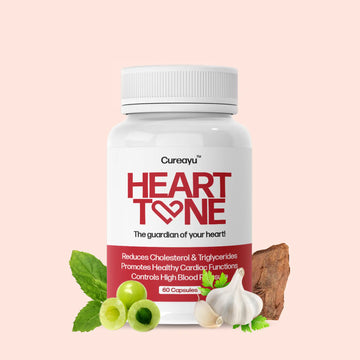
If you want to support your heart-health routine with Ayurvedic herbs, Cureayu Cholesterol Support — built around traditional lipid-supporting herbs like Arjuna and Guggul — can be a considered addition. For broader heart wellness, some also look at Heart Tone. Think of these as part of a wellness routine to help maintain already-healthy cholesterol levels — alongside good diet, exercise, and your doctor's advice — not as a substitute for prescribed medication. Please consult your physician before starting any supplement.
FAQ
Q1. What are the first warning signs of high cholesterol?
High cholesterol usually has no direct symptoms. Indirect warning signs from related heart issues can include chest discomfort on exertion, breathlessness, fatigue, or leg pain while walking. A lipid profile blood test is the only reliable way to know.
Q2. Can high cholesterol be felt in the body?
Generally no — that's why it's called a silent risk factor. You typically can't "feel" it. This is exactly why routine lipid testing matters, especially with risk factors like family history or diabetes.
Q3. Cholesterol badhne ke lakshan kya hain?
Aksar cholesterol high hone ke seedhe lakshan nahi hote. Lekin chal-phir mein saans phoolna, seene mein bhaari-pan, thakan, ya chalte waqt pairon mein dard jaise sanket ho sakte hain. Sabse sahi tarika hai lipid profile test karwana.
Q4. Can Ayurvedic herbs lower cholesterol?
Herbs like Arjuna, Guggul, and garlic are traditionally used to support heart health and healthy lipid metabolism. They are not a cure and shouldn't replace prescribed medication. Always consult your doctor before combining herbs with any drug.
Q5. Does Cureayu Cholesterol Support cure high cholesterol?
No. It is an Ayurvedic wellness supplement intended to support healthy cholesterol levels and heart wellness as part of a balanced lifestyle. It does not cure, treat, or reverse any disease. Use it with your doctor's guidance, alongside prescribed care.
Q6. How often should I check my cholesterol?
For most healthy adults, every 4–6 years from around age 30–35 is a common guideline, but more often if you have diabetes, high BP, obesity, or a family history. Ask your doctor for a schedule that suits you.
Written & medically reviewed by Dr. Istuti, BAMS — Ayurvedic physician with a focus on metabolic and heart wellness. Dr. Istuti reviews all Cureayu health content for accuracy and compliance.
Medically reviewed on July 18, 2026.
Disclaimer: This content is for educational purposes and is not a substitute for professional medical advice. Consult a qualified physician before starting any supplement, especially if you have a kidney/prostate condition or take medication.
Sources: National Heart, Lung, and Blood Institute (NHLBI); MedlinePlus (Cholesterol levels); World Health Organization (WHO) — cardiovascular risk factors; Ministry of AYUSH; classical text Charaka Samhita.