Dust Allergy: Symptoms, Causes & Ayurvedic Relief
Dust Allergy: Symptoms, Causes & Ayurvedic Relief
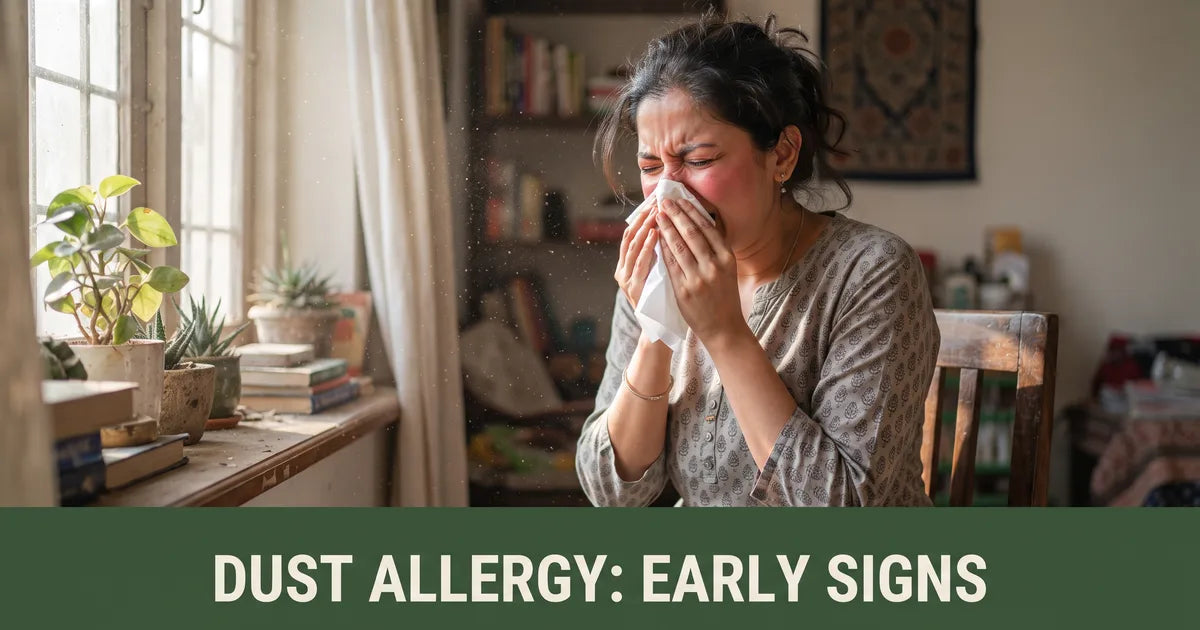
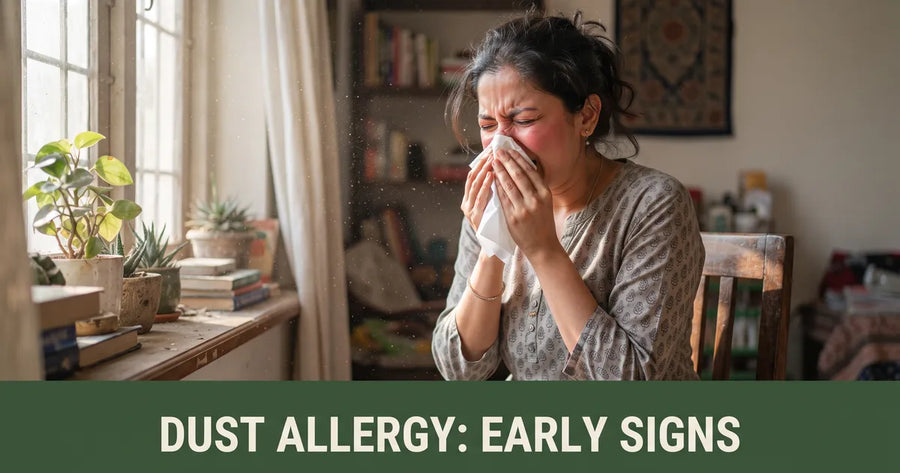
Some people start the day with a burst of sneezes the moment they shake out a bedsheet or sweep the floor. Others get a blocked, itchy nose every time they open a rarely-used cupboard. If that sounds familiar, you may be dealing with a dust allergy — one of the most common triggers of sneezing and a runny nose in Indian homes.
The good news: once you know your triggers, most of the discomfort is manageable with simple changes. Here's what a dust allergy actually is, how to recognise it, and how Ayurveda approaches easier breathing.
Key Takeaways
- A dust allergy is your immune system over-reacting to harmless particles like dust-mite waste, pollen or mould — it is not "just a cold".
- Typical signs: repeated sneezing, runny or blocked nose, itchy watering eyes, and throat irritation, often worse in the morning or while cleaning.
- Common Indian triggers include dust mites in bedding, old cupboards, damp corners after monsoon, and cockroach or pet dust.
- Reducing exposure — washing bedding hot, ventilating rooms, wearing a mask while cleaning — helps more than any single remedy.
- Ayurvedic herbs like Tulsi, Haridra (turmeric) and Pippali are traditionally used to support the respiratory system and a balanced response to allergens; persistent or severe symptoms need a doctor.
What is a dust allergy, really?
A dust allergy is an allergic reaction to tiny particles floating in household dust. The biggest culprit is usually the dust mite — a microscopic creature that lives in bedding, sofas and soft furnishings, feeding on flakes of dead skin. It's not the mite itself but its waste and body fragments that set off the reaction (MedlinePlus — Dust mite allergy).
When a sensitive person breathes these in, the immune system treats them as a threat and releases histamine, which produces the familiar sneezing, itching and congestion. Pollen, mould spores, pet dander and cockroach debris can trigger the same response (NIAID — Allergic conditions).
Symptoms: how to recognise a dust allergy
Dust allergy symptoms often look like a cold but tend to appear suddenly on exposure and settle when you move away. Watch for:
- Repeated bouts of sneezing, especially first thing in the morning
- Runny nose with clear, watery discharge — or the opposite, a blocked, stuffy nose
- Itchy, red, watering eyes
- Itching in the nose, throat or the roof of the mouth
- Post-nasal drip, cough or a scratchy throat
- In people with asthma: wheezing, chest tightness or breathlessness
A useful clue: symptoms that flare while making the bed, dusting, sweeping, or entering a musty room — and that come back year after year — point more to allergy than to infection.
Common triggers in Indian homes
Knowing your triggers is half the battle. The usual suspects:
- Bedding and pillows — prime real estate for dust mites.
- Old cupboards, storerooms and lofts where dust settles undisturbed.
- Damp corners after the monsoon, which encourage mould.
- Carpets, heavy curtains and soft toys that trap dust.
- Cockroach and rodent debris in kitchens.
- Street dust and pollution drifting in through open windows.
Practical steps for easier breathing
Reducing your exposure is the single most effective thing you can do:
- Wash bedding weekly in hot water. Dust mites are killed by hot washing; sun-dry pillows and mattresses when you can.
- Wear a mask while cleaning. Dusting and sweeping throw particles into the air — a simple cloth or surgical mask cuts the dose.
- Damp-dust instead of dry-dusting. A wet cloth traps dust rather than scattering it.
- Ventilate and de-damp. Open windows for cross-ventilation at low-pollen times, and keep bathrooms and corners dry to discourage mould.
- Declutter soft furnishings. Fewer carpets, heavy drapes and stuffed toys means fewer places for dust to hide.
- Rinse your nose and eyes. A gentle saline rinse can wash out trapped allergens after heavy exposure.
- Stay hydrated and support immunity with a warm, seasonal diet — see our guide on Tulsi and other everyday immunity herbs and general Ayurvedic wellness routines.
The Ayurvedic perspective
Ayurveda views repeated sneezing, runny nose and congestion largely as a Kapha-Vata imbalance affecting the pranavaha srotas (the respiratory channels), often worsened by cold, damp and low agni (digestive fire). The classical approach is to keep the channels clear, strengthen digestion, and avoid cold, heavy, mucus-forming foods during flare-ups.
Several herbs are traditionally used to support the respiratory system and a balanced response to everyday allergens:
- Tulsi (Ocimum sanctum) — traditionally used to support clear breathing and respiratory comfort.
- Haridra / turmeric (Curcuma longa) — valued in Ayurveda for its supportive properties.
- Pippali (Piper longum) and Shunthi (dry ginger) — classical kapha-balancing herbs used to keep the airways comfortable.
- Warm steam and honey — simple traditional comforts for a blocked nose and scratchy throat.
Everyday habits help too: warm water over cold drinks, a light steam inhalation, and avoiding curd and heavy fried food at night during a flare. These are supportive traditions, not a substitute for medical care.
When to see a doctor
See a doctor if you:
- Have breathlessness, wheezing or chest tightness (possible asthma),
- Get symptoms that are severe, year-round, or disrupt sleep and daily life,
- Have a persistent cough, coloured mucus or fever (which may signal infection, not allergy),
- Are not improving despite reducing exposure, or need to use relief medicines very often.
A doctor can confirm the trigger with allergy testing and guide the right treatment. Never stop a prescribed inhaler or medicine on your own.
How Allergy Care fits
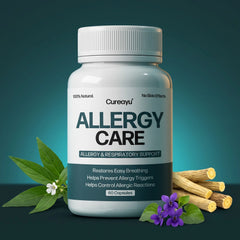
Alongside reducing your exposure and following your doctor's advice, Allergy Care Capsules is our Ayurvedic formulation with herbs traditionally used to support the respiratory system and easier breathing as part of a daily wellness routine. It is meant to complement — never replace — medical treatment. If you have asthma, take regular medication, or your symptoms are severe, check with your physician before starting any supplement.
FAQ
Q: How do I know if it's a dust allergy or a common cold?
A cold usually builds up over a day or two with body ache and sometimes fever, and clears in about a week. A dust allergy tends to start suddenly on exposure — like while cleaning — with lots of sneezing and itchy, watery eyes, and settles when you move away. Allergies also recur in the same situations year after year.
Q: Can a dust allergy be cured permanently?
Allergies are managed rather than "cured" overnight. For most people, consistently reducing exposure and following a doctor's plan keeps symptoms well controlled. Speak to a doctor about testing and long-term options.
Q: Why is my dust allergy worse in the morning?
You spend hours in bedding, where dust mites concentrate, so allergen exposure peaks overnight and on waking. Washing bedding in hot water weekly and airing the mattress often helps reduce morning sneezing.
Q: Does the monsoon make dust allergy worse?
It can. Damp, humid conditions after the rains encourage mould and dust mites, both common triggers. Keeping corners dry and well-ventilated helps limit them.
Q: Which Ayurvedic herbs are used for respiratory comfort?
Tulsi, turmeric (Haridra), Pippali and dry ginger (Shunthi) are traditionally used to support the respiratory system and comfortable breathing. They are supportive traditions and not a replacement for medical care when symptoms are severe.
Q: Does wearing a mask really help with dust allergy?
Yes — a mask while dusting, sweeping or entering a musty room reduces how many particles you breathe in, which is one of the simplest ways to cut symptoms.
Written & medically reviewed by Dr. Istuti, BAMS — in-house Ayurvedic physician at Cureayu. Dr. Istuti focuses on respiratory, metabolic and everyday wellness, and reviews every Cureayu health article for accuracy and compliance.
Medically reviewed on 21 August 2026.
Disclaimer: This content is for educational purposes and is not a substitute for professional medical advice. Consult a qualified physician before starting any supplement, especially if you have a respiratory condition such as asthma or take medication.
Sources
- MedlinePlus — Dust mite allergy: https://medlineplus.gov/ency/article/000813.htm
- NIAID (NIH) — Allergic Diseases: https://www.niaid.nih.gov/diseases-conditions/allergic-diseases
- WHO — Household air quality & health: https://www.who.int/health-topics/air-pollution
- Ministry of AYUSH — Ayurveda for respiratory wellness: https://www.ayush.gov.in/
Disclaimer: Educational content, not a substitute for professional medical advice. Consult a qualified physician before starting any supplement.