Chandraprabha Vati: Benefits, Uses, Dosage & Kidney Support

Chandraprabha Vati: Benefits, Uses, Dosage & Kidney Support
If your doctor or a family elder has mentioned Chandraprabha Vati for urinary trouble, low energy, or "kidney and bladder support," you probably want a plain-language answer: what is it, what is it actually used for, and how is it taken? This guide, reviewed by an Ayurvedic doctor, walks you through it honestly — what classical Ayurveda says, what modern understanding adds, and where it fits (and doesn't) in a real wellness routine.
Key Takeaways
- Chandraprabha Vati is a classical Ayurvedic herbo-mineral tablet made from around 37 ingredients, with Shilajit and Guggulu in the largest proportion.
- It is traditionally used to support healthy urinary flow, comfort, and overall kidney and reproductive wellness — not to cure any disease.
- The name means "as radiant as the moon" (Chandra = moon, Prabha = glow), a reference to Karpura/Chandraprabha (camphor) in the recipe.
- Typical traditional dosage is 1–2 tablets, once or twice daily, with warm water or milk, after meals — but the right dose should be set by a qualified vaidya or physician.
- It is generally well tolerated, but people with kidney disease, on medication, pregnant/breastfeeding, or with diabetes must consult a doctor first, because it contains minerals and potent herbs.
What Is Chandraprabha Vati?
Chandraprabha Vati is one of the most widely used vati (tablet) formulations in classical Ayurveda. It is documented in respected texts including the Sharangadhara Samhita (Madhyama Khanda) and Bhaishajya Ratnavali, which places it among the time-tested, well-documented Ayurvedic preparations rather than a modern invention.
It belongs to the herbo-mineral category — meaning it combines plant herbs with purified (shodhita) mineral ingredients such as Shilajit (Asphaltum) and small amounts of processed bhasmas. In Ayurvedic thinking, it is valued as a Rasayana (rejuvenative) and is classically associated with the mutravaha srotas — the body's urinary channels.
What's Inside It (Named Ingredients)
The classical recipe carries roughly 37 ingredients. The two present in the largest amount are:
- Shilajit (Asphaltum / Shilajatu) — a mineral-rich substance traditionally used as a rejuvenative and for urinary and vitality support.
- Guggulu (Commiphora mukul) — traditionally used to support healthy metabolism and clear channels.
Alongside these, the formulation typically includes well-known herbs such as Gokshura (Tribulus terrestris), Guduchi (Tinospora cordifolia), Haridra (turmeric), Daruharidra, Musta (nut grass), Vidanga, Vacha, Pippali, Maricha, Chavya, Karpura (camphor) — which lends the "Chandra-prabha" name — and the Triphala group, among others. Small quantities of purified mineral bhasmas (such as Loha/iron) also appear in traditional versions.
This wide, layered recipe is exactly why it's been used so broadly across urinary and general-wellness contexts for centuries.
What Chandraprabha Vati Is Traditionally Used For
In classical and everyday Ayurvedic practice, Chandraprabha Vati is traditionally used to support:
- Healthy urinary flow and comfort — the most common reason it's recommended, for people troubled by burning, straining, or frequent urge sensations.
- Kidney and bladder wellness as part of a broader routine (often paired with adequate water and diet).
- Male and female reproductive/vitality support, in line with its Rasayana reputation.
- Healthy blood sugar metabolism — classically indicated in prameha (a broad urinary/metabolic category).
- General strength and energy as a rejuvenative.
Important, honest framing: Ayurveda describes these as supportive roles. Chandraprabha Vati is not a cure for kidney disease, diabetes, urinary infection, or prostate enlargement. If you have a diagnosed condition, it can only ever be a complement to proper medical care — never a replacement.
Where Modern Understanding Fits
Modern reviews of Chandraprabha Vati describe it as a multi-ingredient herbo-mineral studied mostly at a compositional and traditional-use level, with early and small clinical explorations. That's an honest picture: centuries of documented traditional use plus growing but still-limited modern study. Several individual ingredients — Gokshura, Punarnava-family herbs, turmeric — have their own bodies of research for urinary and metabolic wellness.
The practical takeaway: treat it as a traditional wellness support with a strong classical pedigree, taken under guidance — not as a proven medicine for a serious diagnosis.
How to Take It: Traditional Dosage
Traditional dosage guidance is generally:
- 1–2 tablets, once or twice a day
- After meals, with warm water or milk (anupana)
- Often taken as a short, defined course rather than indefinitely
Because it contains potent herbs and mineral ingredients, the exact dose, duration, and combinations should be decided by a qualified Ayurvedic physician (vaidya) or your doctor — especially the strength of the specific brand you use, as recipes and tablet sizes vary.
Quick answer (for the "how much" question): Most classical guidance is 1–2 tablets once or twice daily after food with warm water, for a defined course — but confirm the exact dose with a qualified practitioner, particularly if you have a kidney condition or take other medicines.
Practical Kidney & Urinary Habits That Help Alongside
Any urinary or kidney support herb works best inside sensible daily habits. Simple, Indian-kitchen-friendly steps:
- Hydrate steadily — sip water through the day rather than large amounts at once; pale-yellow urine is the goal (unless your doctor has restricted your fluids).
- Go easy on very salty, deep-fried, and heavily processed foods — papad, pickle, namkeen, and packaged snacks add a big hidden salt load.
- Don't overdo protein supplements without medical advice, and be cautious with unprescribed painkillers, which can strain the kidneys.
- Move daily — a 20–30 minute walk supports circulation and metabolism.
- Get your numbers checked — a simple KFT (creatinine, urea, eGFR) and urine test give you a real baseline instead of guesswork.
When to See a Doctor
Please see a qualified doctor promptly — don't self-treat with any supplement — if you have:
- Burning, blood, or pus in urine, or fever with urinary pain (possible infection)
- A sharp drop in urine output, or new swelling in the feet, ankles, or face
- Persistent foamy urine, ongoing back/flank pain, or a rising creatinine on a report
- Difficulty or inability to pass urine (a medical emergency in men with prostate enlargement)
These need proper diagnosis and treatment. Ayurvedic support can sit alongside that care, not instead of it.
How Chandraprabha Vati & CreatiCare Fit at Cureayu
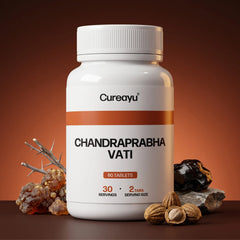
At Cureayu, we offer Chandraprabha Vati Tablets made to the classical herbo-mineral tradition, intended to support healthy urinary flow and everyday kidney and urinary comfort as part of a balanced routine. For people focused specifically on healthy creatinine levels and overall kidney support, our hero formulation CreatiCare is designed around that goal. Neither is a cure or a substitute for medical treatment — think of them as one supportive part of a wellness routine, best used with your doctor's awareness.
You may also find these helpful: our guides on how to improve kidney function naturally and understanding your kidney function test (KFT) report.
Frequently Asked Questions
1. What is Chandraprabha Vati mainly used for? It is traditionally used to support healthy urinary flow and comfort, kidney and bladder wellness, reproductive vitality, and healthy metabolism. In Ayurveda it is valued as a Rasayana (rejuvenative). It supports wellness — it does not cure disease.
2. Can Chandraprabha Vati lower creatinine or treat kidney disease? No supplement should be described as a treatment or cure for kidney disease. Chandraprabha Vati is traditionally used to support urinary and kidney wellness. If you have a raised creatinine or diagnosed kidney condition, work with your doctor; use any herbal support only with medical guidance.
3. What is the usual dosage? Traditionally 1–2 tablets once or twice daily after meals with warm water or milk, for a defined course. Confirm the exact dose and duration with a qualified Ayurvedic practitioner or your physician.
4. Are there any side effects or precautions? It is generally well tolerated when taken correctly, but it contains potent herbs and mineral ingredients. People who are pregnant or breastfeeding, have kidney disease, take regular medication, or have diabetes should consult a doctor before use. Buy only from trusted brands with proper quality control.
5. When is the best time to take it? Most commonly after meals, with warm water or milk. Your practitioner may adjust timing based on your constitution and concern.
6. How long does it take to notice support? This varies from person to person and by the reason it's being used. Ayurvedic support is gradual and works best with consistent healthy habits — hydration, diet, and activity — not overnight. Avoid any product promising instant or guaranteed results.
Written & medically reviewed by Dr. Istuti, BAMS
Dr. Istuti is Cureayu's in-house Ayurvedic physician (Bachelor of Ayurvedic Medicine and Surgery), focused on kidney, urinary, and metabolic wellness. She reviews every Cureayu health article for accuracy and compliance.
Medically reviewed on 6 August 2026.
Disclaimer: This content is for educational purposes and is not a substitute for professional medical advice. Consult a qualified physician before starting any supplement, especially if you have a kidney/prostate condition or take medication.
Sources
- Sharangadhara Samhita (Madhyama Khanda) & Bhaishajya Ratnavali — classical formulation references for Chandraprabha Vati.
- "Compositional Analysis and Clinical Applications of Chandraprabha Vati – A Classical Review," ResearchGate.
- "Chandraprabha Vati: Ancient Elixir for Modern Wellness," IJIRMPS (2024).
- National Kidney Foundation (NKF) — kidney health and hydration guidance: https://www.kidney.org
- NIDDK — Kidney disease basics: https://www.niddk.nih.gov/health-information/kidney-disease
Disclaimer: Educational content, not a substitute for professional medical advice. Consult a qualified physician before starting any supplement.