
Does Protein Powder Increase Creatinine? What the Science (and Ayurveda) Really Say

Does Protein Powder Increase Creatinine? What the Science (and Ayurveda) Really Say
You started whey to build muscle. Then a routine blood test showed your creatinine a little above the normal range — and now you’re wondering if your scoop of protein is quietly stressing your kidneys. It’s one of the most common worries we hear from gym-goers, and the honest answer has a few moving parts worth understanding.
Key Takeaways
- Protein powder can nudge your creatinine reading up — partly because more protein and more muscle mean more creatinine is produced, not always because your kidneys are failing.
- For people with healthy kidneys, current research has not shown that moderate protein powder causes kidney damage.
- For people who already have reduced kidney function, a high-protein load asks the kidneys to work harder — this group should be cautious and guided by a doctor.
- A single high creatinine reading is not a diagnosis. Hydration, a heavy gym session, creatine use and recent protein intake can all raise it temporarily.
- Ayurvedic herbs like Punarnava and Gokshura are traditionally used to support healthy kidney and urinary function as part of a balanced routine.
First, what is creatinine — and why protein matters
Creatinine is a waste product your body makes every day when muscle tissue breaks down. Your kidneys filter it out into urine, so a blood creatinine level is used as a rough marker of how well your kidneys are filtering (alongside eGFR and urea).
Here’s the link to protein: creatinine is produced in proportion to your muscle mass and protein turnover. Someone who lifts weights, eats a lot of protein, and carries more muscle will naturally run a slightly higher baseline creatinine than a smaller, sedentary person — with perfectly healthy kidneys. So the number on the report is influenced by your body and your diet, not only by your filtration.
So, does protein powder actually raise creatinine?
It can, in two different ways — and it’s important not to confuse them.
1. A real but often harmless rise. More dietary protein (and more muscle built from it) means more creatinine generated. Many whey and mass-gainer products also contain or are stacked with creatine, which the body converts into creatinine. This can push the blood reading up without anything being wrong with your kidneys. This kind of rise is usually modest.
2. Extra workload on already-stressed kidneys. A consistently very high-protein intake increases the filtration demand on the kidneys (“hyperfiltration”). For healthy kidneys, studies to date have not shown this causes lasting harm. But if your kidneys are already compromised — from diabetes, long-standing high blood pressure, or existing kidney disease — a heavy protein load can accelerate strain. This is the group that genuinely needs to be careful.
In short: a rising creatinine on protein powder is a signal to check, not automatically a sign of damage — but the right next step depends on whether your kidneys were healthy to begin with.
Who should be cautious with protein powder
Be extra careful, and speak to a doctor before loading up on protein supplements, if you:
- Have diabetes or high blood pressure (the two biggest drivers of kidney disease in India).
- Already know your eGFR is low or your creatinine has been trending up over several tests.
- Have protein or foam in your urine, swelling in the feet or under the eyes, or a family history of kidney disease.
- Are taking painkillers (NSAIDs) regularly or other medicines that affect the kidneys.
If none of these apply and your kidneys are healthy, moderate protein powder (used as directed, not mega-dosed) is generally considered reasonable — but keep reading for how to use it sensibly.
How to get an accurate creatinine reading
Because so many everyday things move the number, one reading can mislead you. To know your true baseline:
- Pause creatine and heavy protein for about 48 hours before the test (ask your doctor first).
- Avoid an intense workout the day before — muscle breakdown raises creatinine.
- Hydrate normally. Dehydration concentrates the blood and can push creatinine up; our post on whether dehydration can cause high creatinine explains this in detail.
- Ask for eGFR and urea too — these give context a single creatinine number can’t.
- Repeat the test after a couple of weeks before drawing conclusions. A trend tells the real story.
Using protein powder more kidney-smartly
If your kidneys are healthy and you want to keep them that way while staying on protein:
- Match protein to your actual need — most active adults do well around 1.2–1.6 g per kg of body weight from all sources combined, not endless scoops.
- Get protein from food first — dal, paneer, curd, eggs, soya — and use powder to fill the gap, not replace meals.
- Drink enough water through the day to help your kidneys clear waste.
- Go easy on added creatine unless you understand it will raise your reading.
- Don’t combine high protein with regular painkillers or crash supplements.
- Re-test periodically if you’re a heavy user, especially past 40.
The Ayurvedic perspective
Ayurveda views the kidneys and urinary system (mutravaha srotas) as channels that must stay clear and well-nourished for the body to remove ama (metabolic waste). Rather than “flushing” the kidneys aggressively, the classical approach is gentle support of healthy filtration and fluid balance.
Herbs traditionally used in this context include:
- Punarnava (Boerhavia diffusa) — classically used to support healthy fluid balance and kidney function. More in our guide to Punarnava for kidney health.
- Gokshura (Gokhru / Tribulus terrestris) — traditionally used to support urinary flow and comfort.
- Varuna — described in classical texts for the urinary channels.
These are supportive, not curative, and work best alongside sensible protein intake, hydration and medical guidance — never as a replacement for prescribed treatment.
When to see a doctor
Please consult a qualified physician — don’t self-manage — if you notice:
- Creatinine that keeps rising across repeat tests, or an eGFR that is low.
- Foamy urine, blood in urine, or a marked drop in how much you urinate.
- Swelling in the ankles, feet or around the eyes.
- Persistent fatigue, nausea or loss of appetite alongside an abnormal report.
- Any abnormal reading if you have diabetes, high blood pressure or heart disease.
A nephrologist can tell the difference between a diet-driven bump and a true change in kidney function — which is exactly the distinction that matters here. See also causes of high creatinine and what a high creatinine level means.
Where CreatiCare fits
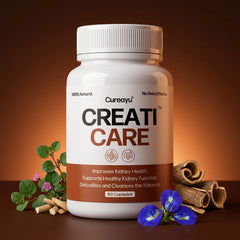
If you’re focused on long-term kidney wellness, CreatiCare Creatinine Capsules combine Ayurvedic herbs such as Punarnava and Gokshura that are traditionally used to support healthy kidney function and help maintain creatinine levels already within the normal range, as part of a balanced routine. It is a wellness supplement, not a treatment for kidney disease — if you have a diagnosed kidney condition or take medication, use it only under your doctor’s guidance.
FAQ
Q: Does whey protein damage healthy kidneys?
A: Current research has not shown that moderate whey intake damages kidneys in people who have normal kidney function. The caution applies mainly to those with existing kidney disease, diabetes or high blood pressure.
Q: Why did my creatinine go up after I started protein powder?
A: More protein and more muscle produce more creatinine, and many supplements contain creatine that converts to creatinine. This can raise the reading without your kidneys being damaged — but it’s worth confirming with a repeat test and eGFR.
Q: Should I stop protein powder if my creatinine is slightly high?
A: Not on your own. Get a repeat test (with eGFR and urea) under relaxed, hydrated conditions and discuss it with your doctor, who can tell whether it’s diet-driven or a real change in function.
Q: How much protein is safe for my kidneys?
A: For healthy adults, roughly 1.2–1.6 g per kg of body weight per day from all sources is a common guide. People with reduced kidney function are often advised to limit protein and should follow their doctor’s specific target.
Q: Can Ayurvedic herbs lower creatinine?
A: Herbs like Punarnava and Gokshura are traditionally used to support healthy kidney and urinary function. They are supportive, not a cure, and should complement — never replace — medical care.
Q: Is creatine the same as creatinine?
A: No. Creatine is a supplement that helps muscle performance; the body converts part of it into creatinine, the waste product measured on your blood test. Taking creatine can raise your creatinine reading.
Written & medically reviewed by Dr. Istuti, BAMS — in-house Ayurvedic physician at Cureayu. Dr. Istuti focuses on kidney, urinary and metabolic wellness, blending classical Ayurvedic practice with evidence-aware guidance for Indian patients and caregivers.
Medically reviewed on 8 October 2026.
Disclaimer: This content is for educational purposes and is not a substitute for professional medical advice. Consult a qualified physician before starting any supplement, especially if you have a kidney/prostate condition or take medication.
Sources
- National Kidney Foundation — Protein and your kidneys: kidney.org
- NIDDK — Kidney Disease Basics: niddk.nih.gov
- MedlinePlus — Creatinine blood test: medlineplus.gov
- Ministry of AYUSH, Government of India: ayush.gov.in
Disclaimer: Educational content, not a substitute for professional medical advice. Consult a qualified physician before starting any supplement.