
Is Jaggery (Gud) Good for Kidney Patients?

DI
Dr. Istuti ✓ Medically reviewed
Oct 7, 2026 · 6 min read
Is Jaggery (Gud) Good for Kidney Patients?
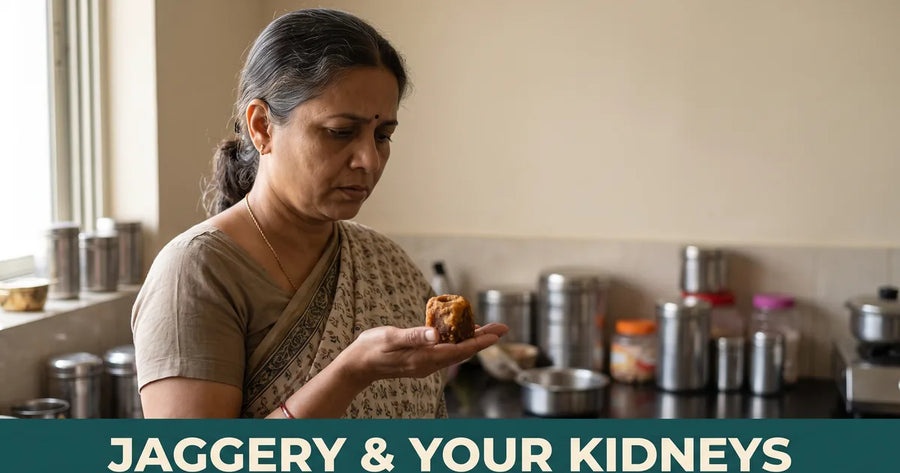
Jaggery — gud — has a healthy, old-fashioned reputation in most Indian homes. It is “natural,” it is what our grandparents used, and it feels like a safer sweetener than white sugar. So when someone is told their creatinine is high or their kidney report isn’t quite right, a very fair question follows: kya gud kidney ke liye accha hai?

The honest answer is “it depends” — and mostly on how much, and on what your doctor has told you about potassium and phosphorus. Let’s walk through it calmly.

Key Takeaways

  • Jaggery is not a kidney medicine and it is still sugar — it is not “good for the kidneys” in the way many people assume.
  • Its main concern for kidney patients is that it is a concentrated source of potassium and some phosphorus — two minerals that often need to be limited in kidney disease.
  • For a person with healthy kidneys, a small amount of jaggery is fine as an occasional sweetener.
  • For someone with high creatinine, reduced eGFR, or diabetes, jaggery should be treated like any sugar: small, occasional, and ideally cleared with your doctor or renal dietitian.
  • The bigger wins for kidney health are hydration, controlling blood pressure and sugar, and limiting salt — not swapping one sweetener for another.

First, what does jaggery actually contain?

Jaggery is made by boiling down sugarcane (or date/palm) juice without fully refining it. Because it skips the heavy refining that produces white sugar, it keeps small amounts of minerals — which is why it is often called a “healthier” sugar.

But those same minerals are the catch for kidney patients. Jaggery is a concentrated source of potassium, and it also contains phosphorus and sodium in small amounts, along with iron. In a healthy body, this is a minor plus. When the kidneys are not filtering well, potassium and phosphorus can build up in the blood, and that is exactly when these minerals stop being “bonus nutrition” and start being something to watch (National Kidney Foundation — Potassium).

And underneath the minerals, jaggery is still roughly 70–80% sugar. Gram for gram, it raises blood sugar much like table sugar does. For the large number of kidney patients who also have diabetes, that matters.

So — is jaggery good or bad for kidney patients?

It isn’t a villain, and it isn’t a remedy. Here is the practical way to think about it.

If your kidneys are healthy and you simply prefer gud over refined sugar for its taste or its traditional value, a small daily piece (a teaspoon or two) is reasonable. Treat it as a sweetener, not as a health food.

If you have high creatinine, a low eGFR, or diagnosed chronic kidney disease, potassium and phosphorus control becomes important, and many patients are put on specific limits by their nephrologist. Jaggery’s potassium load means it should be minimised, not freely added — “it’s natural” does not cancel out the potassium. The right amount is the amount your own doctor or renal dietitian signs off on, because it depends on your latest blood potassium and phosphorus numbers.

If you also have diabetes (a very common companion to kidney trouble), jaggery offers no real advantage over sugar for blood-glucose control. It still needs to be counted.

There is no evidence that jaggery lowers creatinine or “cleans” the kidneys, despite what some forwards claim. Be wary of any message promising that.

What Ayurveda traditionally says about gud

In classical Ayurveda, guda (jaggery) is described as nourishing and warming, and aged jaggery (purana gud) is considered gentler on digestion than fresh. It has traditionally been used in small quantities to make herbal preparations palatable and to support strength.

But Ayurveda is also clear that sweet, heavy foods should be taken in moderation and matched to the person and the season — not eaten freely, and not as a substitute for addressing the root issue. That traditional caution lines up neatly with modern renal-diet advice: enjoy it sparingly, and let your overall diet — not one sweetener — do the real work.

Smarter everyday choices for kidney health

If you are watching your kidneys, these habits move the needle far more than your choice of sweetener:

  • Drink water sensibly — enough to keep urine pale, but follow any fluid limit your doctor has set. More is not always better in kidney disease.
  • Keep salt low. Excess sodium pushes up blood pressure, which is hard on kidneys. Go easy on papad, pickle, namkeen and packaged snacks.
  • Control blood pressure and blood sugar. These are the two biggest drivers of kidney damage in India.
  • Be careful with potassium-heavy foods if you’ve been told to — that can include coconut water, banana, potato, tomato and, yes, large amounts of jaggery.
  • Avoid unprescribed painkillers (NSAIDs) and random “kidney detox” powders.
  • Don’t self-prescribe supplements if you have kidney disease — always check first.

When to see a doctor

Please get checked, rather than managing by diet alone, if you have:

  • A creatinine or eGFR result that your lab has flagged as abnormal
  • Swelling in the feet, ankles or around the eyes
  • Persistent foamy urine, or a drop in how much urine you pass
  • Known diabetes or high blood pressure with new tiredness, nausea or breathlessness

A simple KFT (kidney function test) and a potassium/phosphorus check tell you exactly where you stand — far better than guessing from your diet.

Where CreatiCare fits in

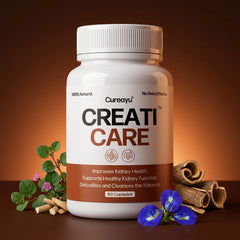
CreatiCare is an Ayurvedic formulation traditionally used to support healthy creatinine levels and overall kidney wellness as part of a balanced routine. It is not a sweetener substitute and not a cure for kidney disease — think of it as one supporting piece alongside the diet, hydration and blood-pressure habits above. If you have a diagnosed kidney condition or take regular medication, please run it past your treating doctor first.

Related reading: High-potassium foods to avoid with kidney problems · Is banana good for kidney patients? · How to support kidney function naturally

FAQ

Is jaggery better than sugar for kidney patients?
Not meaningfully. Jaggery has a few extra minerals, but for kidney patients those minerals (especially potassium) are the problem, not the benefit. Both should be limited.

Can jaggery lower creatinine?
No. There is no evidence that jaggery lowers creatinine. Ignore messages that claim it “cleans” the kidneys.

How much jaggery is safe if I have high creatinine?
There is no single safe number — it depends on your latest potassium and phosphorus levels. Ask your doctor or renal dietitian; for many patients the answer is “very little, occasionally.”

Is jaggery safe for a diabetic kidney patient?
It still raises blood sugar like sugar does, so it offers no real advantage. Count it as sugar and keep portions tiny.

Is gud good for healthy people’s kidneys?
If your kidneys are healthy, a small amount of jaggery is fine. It won’t harm healthy kidneys and won’t specially protect them either.


Written & medically reviewed by Dr. Istuti, BAMS — in-house Ayurvedic physician at Cureayu, focused on kidney and metabolic wellness. Dr. Istuti reviews every health article for medical accuracy and compliant, patient-first guidance.

Medically reviewed on October 7, 2026.

Disclaimer: This content is for educational purposes and is not a substitute for professional medical advice. Consult a qualified physician before starting any supplement, especially if you have a kidney/prostate condition or take medication.

Sources

  • National Kidney Foundation — Potassium and Your CKD Diet: kidney.org
  • National Kidney Foundation — Phosphorus and Your Diet: kidney.org
  • NIDDK — Eating Right for Chronic Kidney Disease: niddk.nih.gov
 

CreatiCare™−16%
MENTIONED IN THIS ARTICLE
CreatiCare™
★ 4.83 · 1136 reviews
₹999 ₹1,199
DI
Written & reviewed by Dr. Istuti
Ayurvedic physician focused on kidney, urinary and metabolic wellness. Reviews all Cureayu health content. Medically reviewed Oct 7, 2026.

Disclaimer: Educational content, not a substitute for professional medical advice. Consult a qualified physician before starting any supplement.


ShareWAfX⧉

Is Jaggery (Gud) Good for Kidney Patients?

DI
Dr. Istuti ✓ Medically reviewed
Oct 7, 2026 · 6 min read
Is Jaggery (Gud) Good for Kidney Patients?

Jaggery — gud — has a healthy, old-fashioned reputation in most Indian homes. It is “natural,” it is what our grandparents used, and it feels like a safer sweetener than white sugar. So when someone is told their creatinine is high or their kidney report isn’t quite right, a very fair question follows: kya gud kidney ke liye accha hai?

The honest answer is “it depends” — and mostly on how much, and on what your doctor has told you about potassium and phosphorus. Let’s walk through it calmly.

Key Takeaways

  • Jaggery is not a kidney medicine and it is still sugar — it is not “good for the kidneys” in the way many people assume.
  • Its main concern for kidney patients is that it is a concentrated source of potassium and some phosphorus — two minerals that often need to be limited in kidney disease.
  • For a person with healthy kidneys, a small amount of jaggery is fine as an occasional sweetener.
  • For someone with high creatinine, reduced eGFR, or diabetes, jaggery should be treated like any sugar: small, occasional, and ideally cleared with your doctor or renal dietitian.
  • The bigger wins for kidney health are hydration, controlling blood pressure and sugar, and limiting salt — not swapping one sweetener for another.

First, what does jaggery actually contain?

Jaggery is made by boiling down sugarcane (or date/palm) juice without fully refining it. Because it skips the heavy refining that produces white sugar, it keeps small amounts of minerals — which is why it is often called a “healthier” sugar.

But those same minerals are the catch for kidney patients. Jaggery is a concentrated source of potassium, and it also contains phosphorus and sodium in small amounts, along with iron. In a healthy body, this is a minor plus. When the kidneys are not filtering well, potassium and phosphorus can build up in the blood, and that is exactly when these minerals stop being “bonus nutrition” and start being something to watch (National Kidney Foundation — Potassium).

And underneath the minerals, jaggery is still roughly 70–80% sugar. Gram for gram, it raises blood sugar much like table sugar does. For the large number of kidney patients who also have diabetes, that matters.

So — is jaggery good or bad for kidney patients?

It isn’t a villain, and it isn’t a remedy. Here is the practical way to think about it.

If your kidneys are healthy and you simply prefer gud over refined sugar for its taste or its traditional value, a small daily piece (a teaspoon or two) is reasonable. Treat it as a sweetener, not as a health food.

If you have high creatinine, a low eGFR, or diagnosed chronic kidney disease, potassium and phosphorus control becomes important, and many patients are put on specific limits by their nephrologist. Jaggery’s potassium load means it should be minimised, not freely added — “it’s natural” does not cancel out the potassium. The right amount is the amount your own doctor or renal dietitian signs off on, because it depends on your latest blood potassium and phosphorus numbers.

If you also have diabetes (a very common companion to kidney trouble), jaggery offers no real advantage over sugar for blood-glucose control. It still needs to be counted.

There is no evidence that jaggery lowers creatinine or “cleans” the kidneys, despite what some forwards claim. Be wary of any message promising that.

What Ayurveda traditionally says about gud

In classical Ayurveda, guda (jaggery) is described as nourishing and warming, and aged jaggery (purana gud) is considered gentler on digestion than fresh. It has traditionally been used in small quantities to make herbal preparations palatable and to support strength.

But Ayurveda is also clear that sweet, heavy foods should be taken in moderation and matched to the person and the season — not eaten freely, and not as a substitute for addressing the root issue. That traditional caution lines up neatly with modern renal-diet advice: enjoy it sparingly, and let your overall diet — not one sweetener — do the real work.

Smarter everyday choices for kidney health

If you are watching your kidneys, these habits move the needle far more than your choice of sweetener:

  • Drink water sensibly — enough to keep urine pale, but follow any fluid limit your doctor has set. More is not always better in kidney disease.
  • Keep salt low. Excess sodium pushes up blood pressure, which is hard on kidneys. Go easy on papad, pickle, namkeen and packaged snacks.
  • Control blood pressure and blood sugar. These are the two biggest drivers of kidney damage in India.
  • Be careful with potassium-heavy foods if you’ve been told to — that can include coconut water, banana, potato, tomato and, yes, large amounts of jaggery.
  • Avoid unprescribed painkillers (NSAIDs) and random “kidney detox” powders.
  • Don’t self-prescribe supplements if you have kidney disease — always check first.

When to see a doctor

Please get checked, rather than managing by diet alone, if you have:

  • A creatinine or eGFR result that your lab has flagged as abnormal
  • Swelling in the feet, ankles or around the eyes
  • Persistent foamy urine, or a drop in how much urine you pass
  • Known diabetes or high blood pressure with new tiredness, nausea or breathlessness

A simple KFT (kidney function test) and a potassium/phosphorus check tell you exactly where you stand — far better than guessing from your diet.

Where CreatiCare fits in

CreatiCare is an Ayurvedic formulation traditionally used to support healthy creatinine levels and overall kidney wellness as part of a balanced routine. It is not a sweetener substitute and not a cure for kidney disease — think of it as one supporting piece alongside the diet, hydration and blood-pressure habits above. If you have a diagnosed kidney condition or take regular medication, please run it past your treating doctor first.

Related reading: High-potassium foods to avoid with kidney problems · Is banana good for kidney patients? · How to support kidney function naturally

FAQ

Is jaggery better than sugar for kidney patients?
Not meaningfully. Jaggery has a few extra minerals, but for kidney patients those minerals (especially potassium) are the problem, not the benefit. Both should be limited.

Can jaggery lower creatinine?
No. There is no evidence that jaggery lowers creatinine. Ignore messages that claim it “cleans” the kidneys.

How much jaggery is safe if I have high creatinine?
There is no single safe number — it depends on your latest potassium and phosphorus levels. Ask your doctor or renal dietitian; for many patients the answer is “very little, occasionally.”

Is jaggery safe for a diabetic kidney patient?
It still raises blood sugar like sugar does, so it offers no real advantage. Count it as sugar and keep portions tiny.

Is gud good for healthy people’s kidneys?
If your kidneys are healthy, a small amount of jaggery is fine. It won’t harm healthy kidneys and won’t specially protect them either.


Written & medically reviewed by Dr. Istuti, BAMS — in-house Ayurvedic physician at Cureayu, focused on kidney and metabolic wellness. Dr. Istuti reviews every health article for medical accuracy and compliant, patient-first guidance.

Medically reviewed on October 7, 2026.

Disclaimer: This content is for educational purposes and is not a substitute for professional medical advice. Consult a qualified physician before starting any supplement, especially if you have a kidney/prostate condition or take medication.

Sources

  • National Kidney Foundation — Potassium and Your CKD Diet: kidney.org
  • National Kidney Foundation — Phosphorus and Your Diet: kidney.org
  • NIDDK — Eating Right for Chronic Kidney Disease: niddk.nih.gov


DI
Written & reviewed by Dr. Istuti
Ayurvedic physician focused on kidney, urinary and metabolic wellness. Reviews all Cureayu health content. Medically reviewed Oct 7, 2026.

Disclaimer: Educational content, not a substitute for professional medical advice. Consult a qualified physician before starting any supplement.