Kidney Pain: Location, Symptoms & When to Worry
Kidney Pain: Location, Symptoms & When to Worry
A dull ache in your back or side can set off a quiet worry: “Is this my kidneys?” Often it is simple muscle strain — but sometimes the discomfort really does come from the kidneys, and knowing the difference helps you act calmly and at the right time. This guide explains where kidney pain is felt, what usually causes it, the warning signs that need a doctor, and how Ayurveda views kidney wellness.
Key Takeaways
- Kidney pain is usually felt in the flank — the side and back, just below the ribs — not in the lower back where most muscle pain sits.
- Common causes include kidney stones and urinary/kidney infections; pain with fever or urine changes needs prompt attention.
- Kidney pain that comes with fever, vomiting, blood in urine, or a very high or steady severe ache is a reason to see a doctor quickly.
- Not all kidney problems hurt — conditions like rising creatinine can be silent, which is why reports matter.
- Ayurveda supports kidney wellness through hydration, diet and traditional herbs — alongside, never instead of, medical care.
Where Are Your Kidneys — and Where Is Kidney Pain Felt?
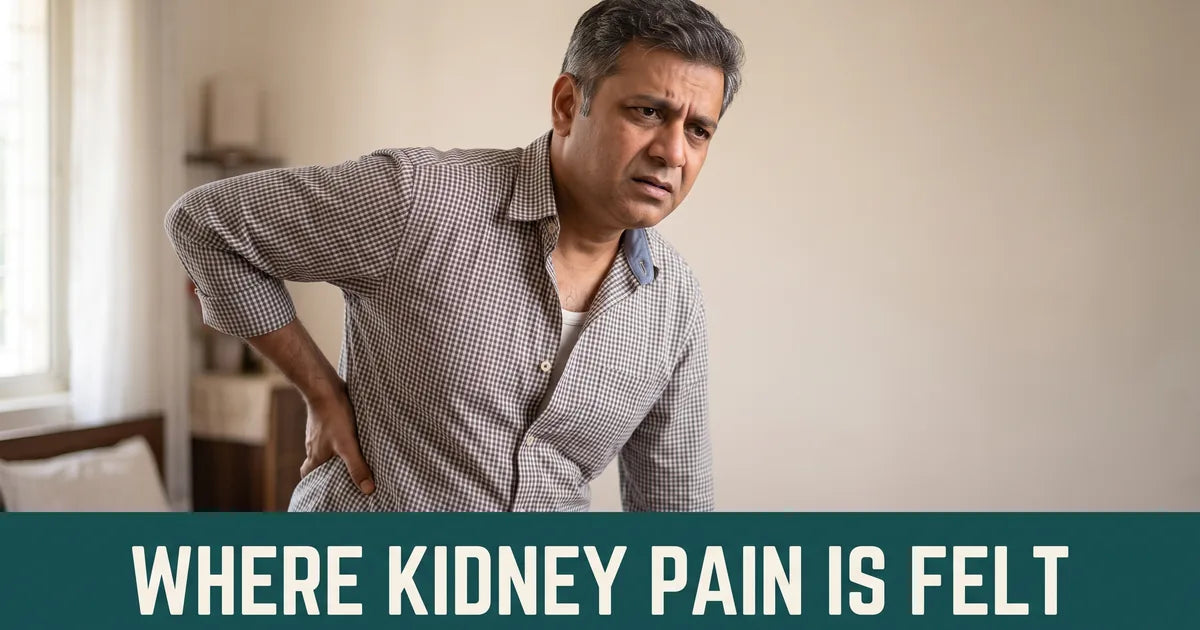
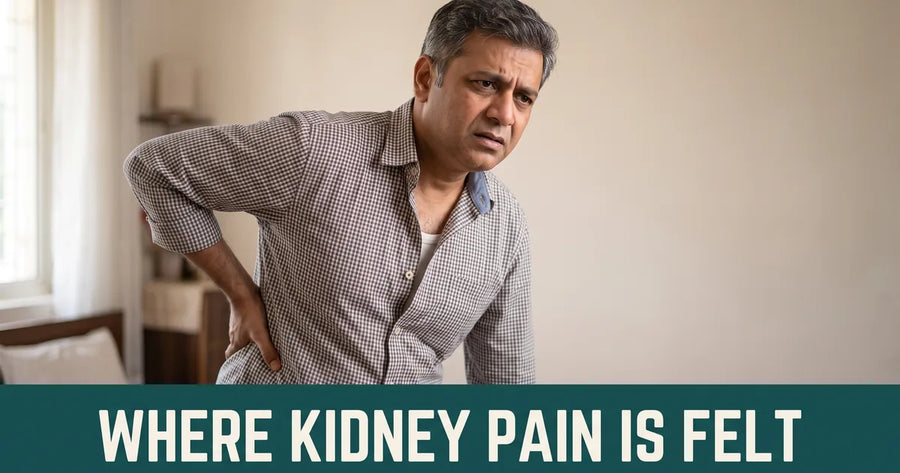
Your two kidneys sit towards the back of your upper abdomen, one on each side of the spine, tucked partly under the lower ribs. Because of this position, kidney pain is typically felt in the flank: the area on either side of your back between the lower ribs and the hip. It may be on one side or both, and can sometimes spread towards the lower abdomen or groin.
Kidney Pain vs Back Pain: How to Tell the Difference
This is the question most people really have. A few general pointers:
- Location: Muscle or spine back pain is usually lower and central; kidney pain sits higher and more to the side (flank).
- Movement: Back strain often changes with posture or movement; kidney pain usually does not ease when you shift position.
- Company it keeps: Kidney pain is more likely to come with fever, nausea, or changes in urine.
These are clues, not a diagnosis — only a doctor can confirm the source.
Common Causes of Kidney Pain
The most frequent reasons include:
- Kidney stones (pathri): often sharp, cramping, wave-like pain that may move towards the groin, sometimes with blood in the urine.
- Urinary tract or kidney infection: aching flank pain with fever, chills, burning urination or urgency.
- Dehydration and, less commonly, cysts or other conditions your doctor can evaluate.
Symptoms That Can Accompany Kidney Problems
Alongside pain, watch for:
- Fever and chills
- Blood in the urine, or cloudy / strong-smelling urine
- Burning or very frequent urination
- Swelling in the feet, ankles or around the eyes
- Nausea or vomiting
- Unusual tiredness
Remember that some kidney issues — such as a rising creatinine level — may cause no pain at all, which is why regular blood and urine tests matter for anyone at risk.
The Ayurvedic Perspective
Ayurveda places the kidneys within the mutravaha srotas (the urinary channels) and links their healthy function to balanced vata and kapha and a well-working agni (digestive fire). Poor hydration, excessive salty-spicy food, holding urine and an irregular routine are seen as aggravating factors.
For kidney and urinary wellness, classical practice turns to herbs that are traditionally used to support healthy kidney function, normal urine flow and fluid balance, such as Punarnava (Boerhavia diffusa), Gokshura (Tribulus terrestris) and Varuna (Crataeva nurvala). These support everyday wellness; they are not treatments for kidney disease and should complement your doctor’s plan.
Practical Steps You Can Take
- Stay well hydrated with the fluid amount your doctor advises for you (needs differ if you already have a kidney condition).
- Go easy on salt and very spicy, processed foods.
- Don’t hold urine for long periods, and keep good toilet hygiene to lower infection risk.
- Keep your reports handy — creatinine, eGFR and urine tests give the real picture behind symptoms.
- Avoid self-medicating with painkillers repeatedly; some can stress the kidneys. Ask a doctor first.
When to See a Doctor
Seek medical care promptly — or urgently — if you have flank pain with high fever, shaking chills, repeated vomiting, blood in the urine, inability to pass urine, or severe pain that will not settle. These can point to a stone blocking flow or an infection that needs quick treatment. Anyone with known kidney concerns, diabetes or high blood pressure should get persistent or new pain checked rather than waiting it out.
How CreatiCare Fits
Day-to-day kidney care is mostly about hydration, diet and regular checks. CreatiCare™ is an Ayurvedic formulation traditionally used to support healthy creatinine levels and overall kidney wellness as part of a balanced routine. It is a supplement to medical care — not a treatment for kidney pain or disease — so always use it under your physician’s guidance, especially if you take other medicines.
Frequently Asked Questions
Where exactly is kidney pain felt?
Usually in the flank — the side and back just below the ribs, on one or both sides. It can spread towards the lower abdomen or groin, especially with stones.
How do I know if it’s kidney pain or back pain?
Back/muscle pain is usually lower, central and changes with movement; kidney pain sits higher and to the side, does not ease with position changes, and may come with fever or urine changes. A doctor can confirm.
Can kidney problems occur without any pain?
Yes. Several kidney issues, including a rising creatinine level, can be silent. This is why blood and urine tests matter if you have risk factors.
Is kidney pain always serious?
Not always, but it should not be ignored — especially with fever, blood in urine, vomiting or severe, steady pain, which need prompt medical care.
Does drinking more water help kidney pain?
Adequate hydration supports general kidney and urinary health, but the right amount depends on your condition. If you already have a kidney diagnosis, follow your doctor’s fluid advice rather than drinking extra on your own.
Written & medically reviewed by Dr. Istuti, BAMS — in-house Ayurvedic physician at Cureayu, focused on kidney, metabolic and men’s-health wellness. Dr. Istuti reviews every Cureayu health article for accuracy and compliance.
Medically reviewed on October 9, 2026.
Disclaimer: This content is for educational purposes and is not a substitute for professional medical advice. Consult a qualified physician before starting any supplement, especially if you have a kidney/prostate condition or take medication.
Sources
- MedlinePlus — Kidney Diseases & flank pain: medlineplus.gov
- National Kidney Foundation — Kidney Stones: kidney.org
- NIDDK — Your Kidneys & How They Work: niddk.nih.gov
- Ministry of AYUSH, Government of India: ayush.gov.in
Related reading: Kidney Function Test (KFT) Report Explained · Kidney Infection: Symptoms, Causes & Warning Signs · Swelling in Feet & Ankles: Kidney Causes

Disclaimer: Educational content, not a substitute for professional medical advice. Consult a qualified physician before starting any supplement.