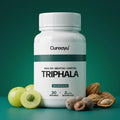
Triphala Benefits: Uses, Dosage & How to Take It

Triphala Benefits: Uses, Dosage & How to Take It
If your grandmother kept a jar of a dark, tangy-bitter powder for “pet saaf” mornings, chances are it was triphala. It is one of the most trusted formulations in Ayurveda — but what does it actually do, how much should you take, and when? Here's a clear, honest guide.
Key Takeaways
- Triphala = three fruits: Amalaki (amla), Bibhitaki (baheda) and Haritaki (harad).
- It is traditionally used to support digestion, gentle detox and regular bowel movements — the classic “tridoshic” tonic.
- The three fruits are rich in natural antioxidants like vitamin C, tannins, gallic and ellagic acid.
- Usually taken as powder (churna) with warm water at night, or as capsules for convenience.
- It is a supportive wellness herb — not a treatment for any disease. Check with a doctor if you're pregnant, on medication, or have a health condition.
What is triphala?
Triphala (literally “three fruits”) is a classical Ayurvedic blend, described in texts like the Charaka Samhita and Sushruta Samhita, combining:
- Amalaki (Emblica officinalis, Indian gooseberry) — cooling, rich in vitamin C, traditionally used to support digestion and rejuvenation (rasayana).
- Bibhitaki (Terminalia bellirica, baheda) — traditionally used to support the respiratory tract and healthy metabolism.
- Haritaki (Terminalia chebula, harad) — often called the “king of medicines” in Ayurveda, traditionally used as a gentle bowel toner.
Together they are considered tridoshic — balancing to all three doshas (Vata, Pitta, Kapha) — which is why triphala is such a common daily tonic.
Triphala benefits (what tradition and research suggest)
Framed honestly — these are traditional uses and areas of ongoing research, not disease cures.
1. Supports digestion and regularity. Triphala's best-known role is as a gentle digestive and bowel support. A study in The Journal of Alternative and Complementary Medicine reported that triphala supported digestion and eased occasional constipation (overview via ScienceDirect). In Ayurveda it is used to strengthen agni (digestive fire) and reduce ama (metabolic waste).
2. Rich in antioxidants. The three fruits are natural sources of vitamin C and polyphenols such as tannins, gallic acid and ellagic acid, which are studied for their antioxidant activity (Healthline summary).
3. May support gut health. Emerging research has explored triphala's potential prebiotic properties — nourishing beneficial gut bacteria — though this is still an evolving area.
4. Traditionally used for gentle detox. In classical practice, triphala is valued for helping the body's natural elimination and cleansing processes as part of a routine, rather than harsh purging.
5. Oral and eye care in tradition. Triphala water has long been used traditionally as a mouth rinse and eye wash (triphala kwath) — best done only under guidance.
How to take triphala (dosage & timing)
Triphala is flexible, which is part of its charm:
- Powder (churna): the traditional form. A common approach is about ½–1 teaspoon (roughly 3–5 g) mixed in warm water, taken at night, about 30–60 minutes after dinner, to support morning regularity.
- Capsules/tablets: convenient and taste-free — follow the label. Our Triphala Capsules make daily use simple without the bitter taste.
- Timing: night is most common for digestive/bowel support; some take it in the morning on an empty stomach for a lighter tonic effect.
- Start low: begin with a smaller dose and increase gradually so your gut adjusts.
Consistency matters more than a large dose — triphala is a slow, steady tonic, not an overnight fix.
Who should be cautious
- Pregnant or breastfeeding women — avoid unless a doctor advises, as Haritaki is traditionally not recommended in pregnancy.
- People on medication (especially blood sugar or blood thinners) — check for interactions with your doctor.
- Loose motions / diarrhoea — skip triphala until it settles, as it can be mildly laxative.
- Children and the elderly — use only under guidance and at gentle doses.
The Ayurvedic view in one line
Ayurveda sees triphala not as a “cure” but as a rasayana — a rejuvenating routine herb that keeps digestion, elimination and vitality ticking along when taken consistently and sensibly. Pair it with warm water, regular meals and sleep for the best of its traditional benefits.
You may also like our related guides on how to detox your kidneys naturally, Chandraprabha Vati benefits, and understanding IBS: gas, bloating & gut discomfort.
When to see a doctor
Triphala is a wellness supplement, not a substitute for care. See a doctor if you have persistent constipation, ongoing bloating or abdominal pain, unexplained weight changes, or blood in the stool — these need proper evaluation rather than a home remedy.
How Cureayu Triphala fits
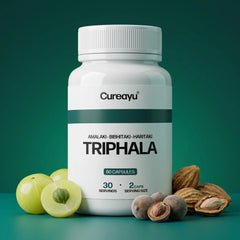
If you'd like triphala's traditional digestive and detox support without the bitter churna taste, Cureayu Triphala Capsules offer a convenient daily dose made from amla, baheda and harad. Use it as part of a balanced routine — and if you're pregnant, on medication, or managing a health condition, talk to your doctor first.
FAQ
Q: What are the main benefits of triphala? Triphala is traditionally used to support digestion, regular bowel movements and gentle detox, and is rich in natural antioxidants. It is a wellness tonic, not a treatment for any disease.
Q: When is the best time to take triphala? Most people take it at night with warm water, 30–60 minutes after dinner, to support morning regularity. Some prefer it in the morning on an empty stomach for a lighter effect.
Q: How much triphala should I take daily? A common traditional dose is about ½–1 teaspoon (roughly 3–5 g) of churna in warm water, or as directed on your capsule label. Start with a smaller dose and increase gradually.
Q: Can I take triphala every day? Triphala is traditionally used as a daily tonic (rasayana). Many people take it regularly, but it's sensible to take occasional breaks and consult a doctor for long-term use, especially if you're on medication.
Q: Does triphala help with weight? Triphala supports digestion and metabolism as part of a healthy routine, but it is not a weight-loss drug. Any benefit comes alongside balanced diet and activity, not on its own.
Q: Are there side effects of triphala? In some people it can cause mild loose motions or stomach cramps, especially at higher doses. Reduce the dose or pause if that happens, and avoid it in pregnancy unless a doctor advises.
Written & medically reviewed by Dr. Istuti, BAMS — in-house Ayurvedic physician at Cureayu. Dr. Istuti specialises in classical Ayurvedic formulations and reviews every Cureayu article for accuracy and compliance.
Medically reviewed on 18 August 2026.
Disclaimer: This content is for educational purposes and is not a substitute for professional medical advice. Consult a qualified physician before starting any supplement, especially if you have a kidney/prostate condition or take medication.
Sources - ScienceDirect — Triphala overview (pharmacology): https://www.sciencedirect.com/topics/pharmacology-toxicology-and-pharmaceutical-science/triphala - Healthline — What Are the Benefits of Triphala?: https://www.healthline.com/nutrition/triphala - Peterson CT et al., Journal of Alternative and Complementary Medicine — Therapeutic uses of Triphala: https://pubmed.ncbi.nlm.nih.gov/28696777/
Disclaimer: Educational content, not a substitute for professional medical advice. Consult a qualified physician before starting any supplement.