
Acidity & Gas: Causes, Symptoms & Ayurvedic Home Remedies

DI
Dr. Istuti ✓ Medically reviewed
Sep 30, 2026 · 5 min read
Acidity & Gas: Causes, Symptoms & Ayurvedic Home Remedies
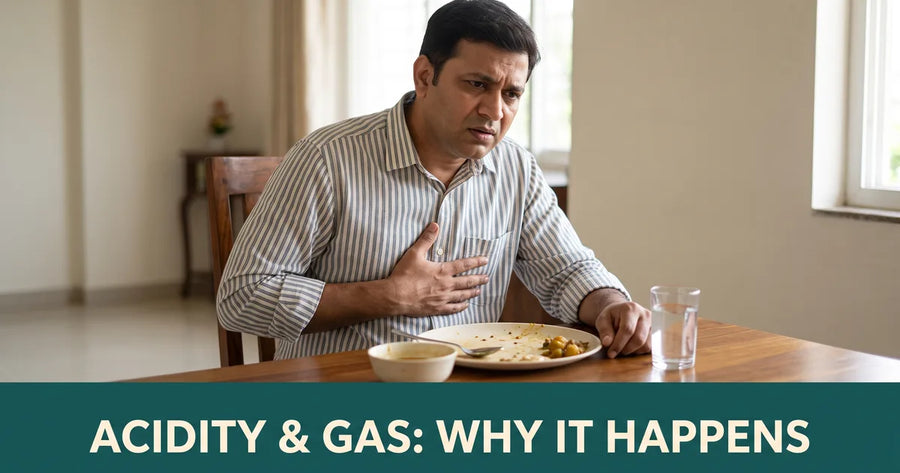
That burning behind the chest after a heavy meal. The bloated, tight feeling in the stomach. The burps, the sour taste, the restlessness at night. If acidity and gas are a regular visitor in your day, you are far from alone — it is one of the most common complaints in Indian homes.

The good news: for most people, everyday acidity and gas respond well to simple diet and lifestyle changes, supported by time-tested Ayurvedic habits. Here’s a clear, practical guide.

Key Takeaways

  • Acidity (acid reflux/heartburn) and gas (bloating, flatulence) often travel together but are slightly different problems.
  • Common triggers: spicy/oily food, eating late, skipping meals, tea/coffee, stress and lying down after eating.
  • Ayurveda links them to an aggravated Pitta (and disturbed Agni, your digestive fire).
  • Simple home helpers: saunf, jeera, ajwain, cold milk, Amla and Mulethi, plus meal-timing fixes.
  • See a doctor for frequent, severe or long-standing symptoms — persistent reflux needs proper evaluation.

What causes acidity and gas?

Acidity happens when stomach acid flows back up into the food pipe (acid reflux), giving that burning “heartburn” feeling. Gas and bloating come from air and gases building up in the digestive tract, often from how and what we eat.

Everyday causes overlap a lot:

  • Spicy, fried, very oily or heavy food
  • Large meals, eating too fast, or eating late at night
  • Long gaps between meals / skipping meals
  • Too much tea, coffee, or fizzy/aerated drinks
  • Lying down or sleeping soon after eating
  • Stress, irregular routine and poor sleep
  • Smoking and excess alcohol

Common symptoms

  • Burning in the chest or upper stomach (heartburn)
  • Sour or bitter taste, or acid coming up into the throat
  • Bloating, a tight or full feeling, frequent burping or flatulence
  • Discomfort that worsens after meals or when lying down
  • Mild nausea or a “heavy” stomach

Occasional symptoms after an indulgent meal are normal. It’s the frequent, repeating pattern that’s worth acting on.

The Ayurvedic perspective

Ayurveda sees acidity as largely a Pitta imbalance — the “hot, sharp” energy of digestion running high — while gas and bloating point to disturbed Vata and a weakened Agni (digestive fire). The classical approach is not to fight symptoms but to steady digestion: eat cooling, easy-to-digest food, keep regular meal times, and use gentle carminative spices.

Herbs traditionally used to support digestive comfort include Amla (cooling, Pitta-pacifying), Mulethi (licorice, soothing to the stomach lining), Saunf (fennel) and Jeera (cumin) for gas, and classical formulations like Avipattikar churna and Triphala for overall gut balance. These are traditionally used to support comfortable digestion — not to treat any disease.

For more on gentle gut support, see our guides to Triphala benefits and uses and IBS, gas and bloating gut care.

Ayurvedic-aware home remedies & lifestyle steps

Simple, kitchen-friendly habits that many families rely on:

  • Chew saunf (fennel) after meals — a classic post-meal digestive that eases gas.
  • Jeera or ajwain water: lightly boil a teaspoon of cumin or carom seeds in water, cool, and sip — a gentle remedy for bloating.
  • A few sips of cold (not iced) milk can soothe a burning sensation for some people.
  • Eat smaller, regular meals and don’t skip them — long gaps worsen acidity.
  • Finish dinner 2–3 hours before bed and avoid lying down straight after eating.
  • Cut back on trigger foods: very spicy, deep-fried, and excess tea/coffee.
  • Slow down and de-stress: eat calmly, sleep well, and add a short walk after dinner.
  • Stay upright and hydrated through the day; raise the head of the bed slightly if night reflux bothers you.

When to see a doctor

Home care is for occasional, mild acidity and gas. See a doctor if you have: symptoms more than twice a week or for several weeks; difficulty or pain when swallowing; unexplained weight loss; vomiting, or vomit that looks like blood or coffee grounds; black or tarry stools; or chest pain, breathlessness or sweating (which can mimic a heart problem and needs emergency care). Persistent reflux (GERD) needs proper evaluation — don’t rely on home remedies alone.

How OOK Gas Capsules fit

OOK Gas Capsules are an Ayurvedic formulation with carminative herbs traditionally used to support gas relief and everyday digestion comfort. They are meant to complement good eating habits — regular meals, fewer trigger foods, calmer routines — not to replace medical care for persistent or severe symptoms. If your acidity is frequent or long-standing, please see a doctor and check before adding any supplement.

FAQ

What is the fastest home remedy for acidity?
Many people get quick relief from chewing fennel (saunf), sipping cold milk or jeera water, and sitting upright rather than lying down. If relief doesn’t come or symptoms keep returning, see a doctor.

Why do I get gas and bloating after every meal?
Common reasons are eating too fast or too much, heavy/oily food, carbonated drinks, and irregular meal times. Smaller, calmer, regular meals and post-meal fennel often help.

Is acidity and GERD the same thing?
Occasional acid reflux is common. When reflux is frequent and persistent, it’s called GERD and needs medical evaluation and management.

Which foods should I avoid for acidity?
Very spicy, deep-fried and oily foods, excess tea/coffee, fizzy drinks, and late heavy dinners are the usual culprits. Notice your own triggers.

Can stress cause acidity and gas?
Yes — stress, poor sleep and an irregular routine can worsen both. Calm, regular eating and a short after-dinner walk help many people.


Written & medically reviewed by Dr. Istuti, BAMS — in-house Ayurvedic physician at Cureayu, focused on digestive, metabolic and everyday wellness. Dr. Istuti reviews every Cureayu health article for medical accuracy and compliance.
Medically reviewed on 29 September 2026.

Disclaimer: This content is for educational purposes and is not a substitute for professional medical advice. Consult a qualified physician before starting any supplement, especially if you have a kidney/prostate condition or take medication.

Sources:

DI
Written & reviewed by Dr. Istuti
Ayurvedic physician focused on kidney, urinary and metabolic wellness. Reviews all Cureayu health content. Medically reviewed Sep 30, 2026.

Disclaimer: Educational content, not a substitute for professional medical advice. Consult a qualified physician before starting any supplement.

ShareWAfX⧉

Acidity & Gas: Causes, Symptoms & Ayurvedic Home Remedies

DI
Dr. Istuti ✓ Medically reviewed
Sep 30, 2026 · 5 min read
Acidity & Gas: Causes, Symptoms & Ayurvedic Home Remedies

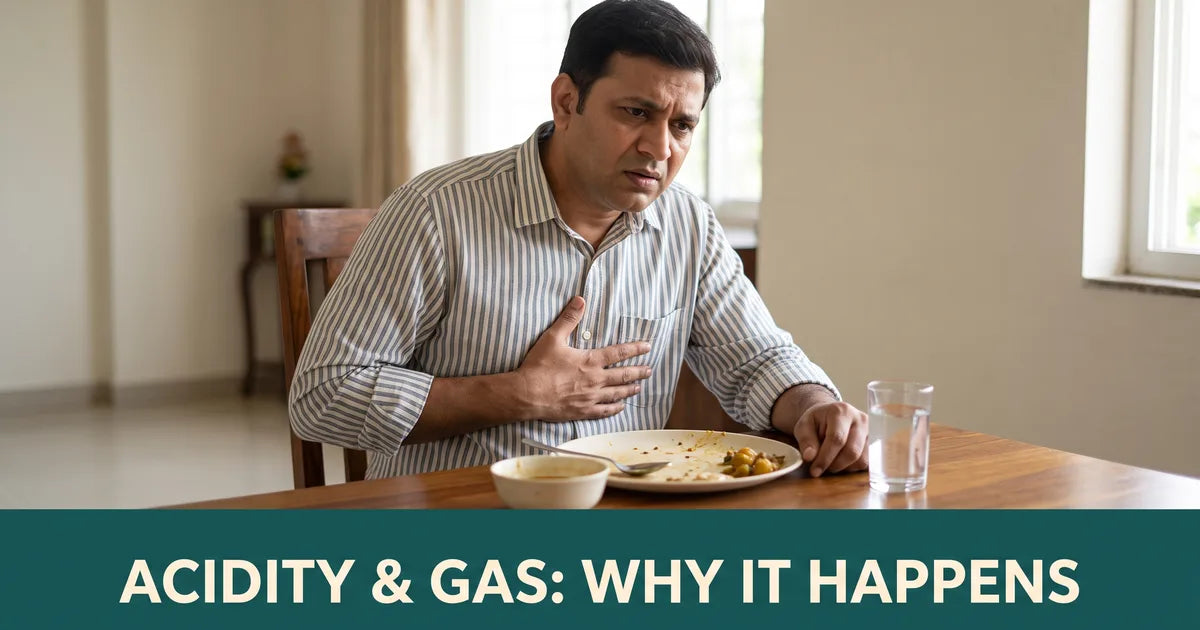
That burning behind the chest after a heavy meal. The bloated, tight feeling in the stomach. The burps, the sour taste, the restlessness at night. If acidity and gas are a regular visitor in your day, you are far from alone — it is one of the most common complaints in Indian homes.

The good news: for most people, everyday acidity and gas respond well to simple diet and lifestyle changes, supported by time-tested Ayurvedic habits. Here’s a clear, practical guide.

Key Takeaways

  • Acidity (acid reflux/heartburn) and gas (bloating, flatulence) often travel together but are slightly different problems.
  • Common triggers: spicy/oily food, eating late, skipping meals, tea/coffee, stress and lying down after eating.
  • Ayurveda links them to an aggravated Pitta (and disturbed Agni, your digestive fire).
  • Simple home helpers: saunf, jeera, ajwain, cold milk, Amla and Mulethi, plus meal-timing fixes.
  • See a doctor for frequent, severe or long-standing symptoms — persistent reflux needs proper evaluation.

What causes acidity and gas?

Acidity happens when stomach acid flows back up into the food pipe (acid reflux), giving that burning “heartburn” feeling. Gas and bloating come from air and gases building up in the digestive tract, often from how and what we eat.

Everyday causes overlap a lot:

  • Spicy, fried, very oily or heavy food
  • Large meals, eating too fast, or eating late at night
  • Long gaps between meals / skipping meals
  • Too much tea, coffee, or fizzy/aerated drinks
  • Lying down or sleeping soon after eating
  • Stress, irregular routine and poor sleep
  • Smoking and excess alcohol

Common symptoms

  • Burning in the chest or upper stomach (heartburn)
  • Sour or bitter taste, or acid coming up into the throat
  • Bloating, a tight or full feeling, frequent burping or flatulence
  • Discomfort that worsens after meals or when lying down
  • Mild nausea or a “heavy” stomach

Occasional symptoms after an indulgent meal are normal. It’s the frequent, repeating pattern that’s worth acting on.

The Ayurvedic perspective

Ayurveda sees acidity as largely a Pitta imbalance — the “hot, sharp” energy of digestion running high — while gas and bloating point to disturbed Vata and a weakened Agni (digestive fire). The classical approach is not to fight symptoms but to steady digestion: eat cooling, easy-to-digest food, keep regular meal times, and use gentle carminative spices.

Herbs traditionally used to support digestive comfort include Amla (cooling, Pitta-pacifying), Mulethi (licorice, soothing to the stomach lining), Saunf (fennel) and Jeera (cumin) for gas, and classical formulations like Avipattikar churna and Triphala for overall gut balance. These are traditionally used to support comfortable digestion — not to treat any disease.

For more on gentle gut support, see our guides to Triphala benefits and uses and IBS, gas and bloating gut care.

Ayurvedic-aware home remedies & lifestyle steps

Simple, kitchen-friendly habits that many families rely on:

  • Chew saunf (fennel) after meals — a classic post-meal digestive that eases gas.
  • Jeera or ajwain water: lightly boil a teaspoon of cumin or carom seeds in water, cool, and sip — a gentle remedy for bloating.
  • A few sips of cold (not iced) milk can soothe a burning sensation for some people.
  • Eat smaller, regular meals and don’t skip them — long gaps worsen acidity.
  • Finish dinner 2–3 hours before bed and avoid lying down straight after eating.
  • Cut back on trigger foods: very spicy, deep-fried, and excess tea/coffee.
  • Slow down and de-stress: eat calmly, sleep well, and add a short walk after dinner.
  • Stay upright and hydrated through the day; raise the head of the bed slightly if night reflux bothers you.

When to see a doctor

Home care is for occasional, mild acidity and gas. See a doctor if you have: symptoms more than twice a week or for several weeks; difficulty or pain when swallowing; unexplained weight loss; vomiting, or vomit that looks like blood or coffee grounds; black or tarry stools; or chest pain, breathlessness or sweating (which can mimic a heart problem and needs emergency care). Persistent reflux (GERD) needs proper evaluation — don’t rely on home remedies alone.

How OOK Gas Capsules fit

OOK Gas Capsules are an Ayurvedic formulation with carminative herbs traditionally used to support gas relief and everyday digestion comfort. They are meant to complement good eating habits — regular meals, fewer trigger foods, calmer routines — not to replace medical care for persistent or severe symptoms. If your acidity is frequent or long-standing, please see a doctor and check before adding any supplement.

FAQ

What is the fastest home remedy for acidity?
Many people get quick relief from chewing fennel (saunf), sipping cold milk or jeera water, and sitting upright rather than lying down. If relief doesn’t come or symptoms keep returning, see a doctor.

Why do I get gas and bloating after every meal?
Common reasons are eating too fast or too much, heavy/oily food, carbonated drinks, and irregular meal times. Smaller, calmer, regular meals and post-meal fennel often help.

Is acidity and GERD the same thing?
Occasional acid reflux is common. When reflux is frequent and persistent, it’s called GERD and needs medical evaluation and management.

Which foods should I avoid for acidity?
Very spicy, deep-fried and oily foods, excess tea/coffee, fizzy drinks, and late heavy dinners are the usual culprits. Notice your own triggers.

Can stress cause acidity and gas?
Yes — stress, poor sleep and an irregular routine can worsen both. Calm, regular eating and a short after-dinner walk help many people.


Written & medically reviewed by Dr. Istuti, BAMS — in-house Ayurvedic physician at Cureayu, focused on digestive, metabolic and everyday wellness. Dr. Istuti reviews every Cureayu health article for medical accuracy and compliance.
Medically reviewed on 29 September 2026.

Disclaimer: This content is for educational purposes and is not a substitute for professional medical advice. Consult a qualified physician before starting any supplement, especially if you have a kidney/prostate condition or take medication.

Sources:

DI
Written & reviewed by Dr. Istuti
Ayurvedic physician focused on kidney, urinary and metabolic wellness. Reviews all Cureayu health content. Medically reviewed Sep 30, 2026.

Disclaimer: Educational content, not a substitute for professional medical advice. Consult a qualified physician before starting any supplement.