Grade 3 Fatty Liver: Meaning, Symptoms & Diet

DI
Dr. Istuti ✓ Medically reviewed
Oct 15, 2026 · 7 min read
Grade 3 Fatty Liver: Meaning, Symptoms & Diet
Grade 3 Fatty Liver: Meaning, Symptoms & Diet

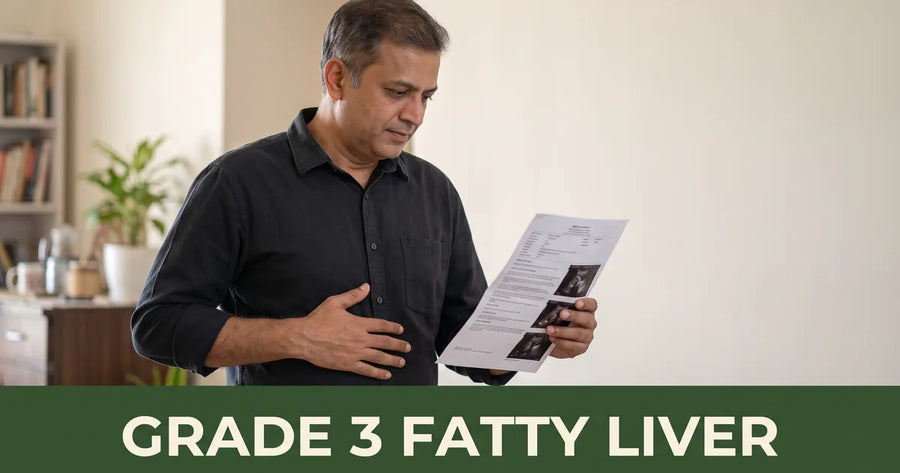
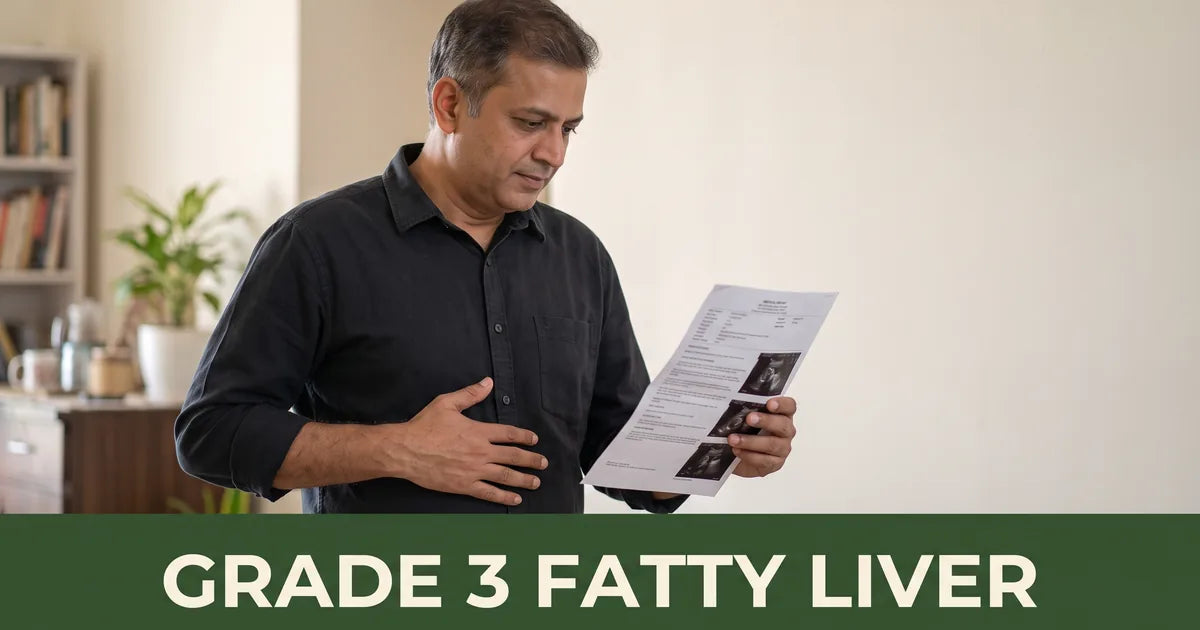
Seeing “Grade 3 fatty liver” on an ultrasound report is understandably worrying — it is the most advanced grade on the scan, and it deserves to be taken seriously. The important thing to know up front: this is a signal to act with your doctor, not a verdict, and the liver still has a real ability to recover when the load on it is reduced.

This doctor-reviewed guide explains what Grade 3 fatty liver means, the symptoms and risks, and the Indian-diet and Ayurvedic steps traditionally used to support a healthier liver — always alongside proper medical care.

Key Takeaways

  • Grade 3 fatty liver means a severe amount of fat has built up in the liver — the highest grade seen on a routine ultrasound.
  • At this stage there is a higher chance of inflammation (steatohepatitis) and, over time, scarring (fibrosis), so it needs proper medical follow-up, not just home measures.
  • Symptoms may include tiredness, a dull ache or heaviness in the upper-right abdomen, poor appetite or unexplained weight change — though some people still feel little.
  • The main drivers are the same as earlier grades, only further along: excess weight and belly fat, high sugar and refined carbs, fried food, diabetes, high cholesterol and alcohol.
  • Even at Grade 3, sustained weight loss, a better diet and activity can meaningfully reduce liver fat. Ayurvedic herbs such as Kutki, Bhumyamalaki, Kalmegh and Punarnava are traditionally used to support healthy liver function alongside — never instead of — your doctor’s plan.

What Does Grade 3 Fatty Liver Mean?

Fatty liver (medically, hepatic steatosis) is graded on ultrasound by how much fat has accumulated and how “bright” the liver looks compared with the kidney:

Grade What it broadly means
Grade 1 (mild) A small amount of fat; usually no symptoms
Grade 2 (moderate) A moderate fat build-up; a clear signal to act on diet and lifestyle
Grade 3 (severe) Heavy fat build-up; needs closer medical monitoring and blood tests

Most cases in India are non-alcoholic fatty liver disease (NAFLD), linked to weight, blood sugar and cholesterol rather than alcohol. Grade 3 simply means the fat load is heavy. It is more likely to come with raised liver enzymes and a higher risk of progressing to inflammation and scarring — which is exactly why it should be worked up properly rather than managed by guesswork.

Symptoms of Grade 3 Fatty Liver

Even at this stage fatty liver can be surprisingly quiet, but symptoms are more likely than at earlier grades. Watch for:

  • A dull ache, heaviness or discomfort in the upper-right side of the abdomen.
  • Persistent tiredness, weakness or low energy.
  • Poor appetite, nausea or a feeling of fullness.
  • Unexplained weight change and difficulty concentrating.
  • In more advanced liver strain (not everyone): yellowing of the eyes or skin (jaundice), swelling in the abdomen or legs, or easy bruising — these need urgent medical attention.

Because symptoms are unreliable, Grade 3 is usually best tracked with liver blood tests (SGPT/SGOT, and others your doctor orders) rather than by how you feel.

Why Grade 3 Needs Closer Attention

At a heavy fat load, more people develop non-alcoholic steatohepatitis (NASH) — fatty liver with inflammation — which, if it continues for years, can lead to fibrosis (scarring) and, in a minority, cirrhosis. The encouraging part is that this is usually a slow process and the liver responds well when the underlying drivers (weight, sugar, cholesterol, alcohol) are brought under control. Grade 3 is a strong reason to partner with a doctor now, while lifestyle change still has the most leverage.

What Causes It?

  • Excess weight and belly fat — the strongest driver.
  • High sugar and refined carbs — sweets, cold drinks, maida, excess rice.
  • Fried and oily food and trans fats.
  • Diabetes / insulin resistance and high cholesterol or triglycerides.
  • Alcohol (in alcoholic fatty liver) and a sedentary routine.
  • Sometimes certain medicines or rapid, crash weight loss — discuss these with your doctor.

The Ayurvedic Perspective

In Ayurveda, the liver is closely tied to pitta (specifically ranjaka pitta) and to the body’s fat metabolism (meda dhatu). A heavy fatty liver is understood as a marked accumulation of ama (metabolic waste) with disturbed fat metabolism and weakened digestive fire (agni). Several herbs are described in classical texts — and studied in modern research — for supporting liver function. They are traditionally used to support a healthy liver, never to “cure” liver disease, and they do not replace medical care at this grade.

  • Kutki (Picrorhiza kurroa) — a classical liver-supporting herb.
  • Bhumyamalaki (Bhumi Amla, Phyllanthus niruri) — traditionally used for liver and digestive wellness.
  • Kalmegh (Andrographis paniculata) — the “king of bitters,” traditionally used to support the liver.
  • Punarnava and Triphala — traditionally used to support healthy metabolism and gentle detoxification.

Diet & Lifestyle to Support a Healthier Liver

Foods to favour: plenty of vegetables and leafy greens, whole grains (oats, jowar, bajra), dals and legumes, fruit in moderation, and healthy fats in small amounts. Bitter vegetables such as karela and methi are traditionally valued for the liver.

Foods to limit or avoid: sugar and sweets, cold drinks and packaged juices, maida and refined carbs, deep-fried snacks, excess ghee and oil, red and processed meat, and alcohol — alcohol especially should be stopped at this grade.

Lifestyle: aim for gradual, steady weight loss (losing even 7–10% of body weight can meaningfully reduce liver fat and inflammation), 30–45 minutes of activity most days, better sleep, and tight control of blood sugar and cholesterol. Avoid crash diets and over-the-counter “liver detox” shortcuts — steady change is what the liver responds to.

When to See a Doctor

Grade 3 fatty liver should always be reviewed by a doctor — ideally a physician or hepatologist. See one promptly if you have persistent right-sided abdominal pain, ongoing fatigue, or raised liver enzymes, and seek care urgently for yellowing of the eyes or skin, abdominal swelling, vomiting blood, or confusion. Your doctor may order further blood tests, a FibroScan or elastography to check for scarring, and a plan to control weight, sugar and cholesterol. At this grade, medical monitoring is not optional — lifestyle and supplements support that plan, they do not replace it.

How Cureayu Liver Care Fits

For daily Ayurvedic support, Cureayu Liver Care combines traditional liver herbs that are traditionally used to support healthy liver function and metabolism. At Grade 3 it should be seen as one small part of a bigger, doctor-led plan — weight loss, diet, activity and control of sugar and cholesterol do the real work. If you take medication or have a diagnosed liver condition, always check with your doctor before adding any supplement.

Frequently Asked Questions

1. Is Grade 3 fatty liver dangerous? It is the most advanced grade on ultrasound and carries a higher chance of inflammation and, over time, scarring — so it should be taken seriously and monitored by a doctor. That said, it is usually a slow process, and sustained lifestyle change can meaningfully improve it.

2. Can Grade 3 fatty liver be reversed? The liver has a strong ability to recover when the fat load is reduced. Many people improve their liver fat and enzymes with sustained weight loss, a better diet and activity, even at this grade. Outcomes vary and scarring is harder to undo, so work closely with your doctor and track progress with tests.

3. How long does it take to improve? There is no fixed timeline, but noticeable changes in liver enzymes and scans often follow a few months of consistent diet, weight loss and exercise. Consistency matters more than speed, and your doctor will decide how often to re-test.

4. Which foods should I avoid with Grade 3 fatty liver? Sugar and sweets, cold drinks, maida and refined carbs, deep-fried food, excess oil, red and processed meat, and alcohol. Stopping alcohol and cutting sugar are two of the highest-impact steps you can take.

5. Can Ayurvedic herbs help a Grade 3 fatty liver? Herbs like Kutki and Bhumyamalaki are traditionally used to support healthy liver function. At this grade they should only be used alongside your doctor’s plan and lifestyle change, never as a stand-alone treatment. Always discuss any supplement with your physician.


Written & medically reviewed by Dr. Istuti, BAMS — Ayurvedic physician (Bachelor of Ayurvedic Medicine and Surgery) with a focus on kidney, urinary, liver and metabolic wellness. Dr. Istuti reviews all Cureayu health content for accuracy and compliance.

Medically reviewed on October 15, 2026.

Disclaimer: This content is for educational purposes and is not a substitute for professional medical advice. Consult a qualified physician before starting any supplement, especially if you have a kidney/prostate condition or take medication.

Related reading

Cureayu Liver Care−14%
MENTIONED IN THIS ARTICLE
Cureayu Liver Care
★ 4.99 · 471 reviews
₹599 ₹699
DI
Written & reviewed by Dr. Istuti
Ayurvedic physician focused on kidney, urinary and metabolic wellness. Reviews all Cureayu health content. Medically reviewed Oct 19, 2026.

Disclaimer: Educational content, not a substitute for professional medical advice. Consult a qualified physician before starting any supplement.

ShareWAfX⧉

Grade 3 Fatty Liver: Meaning, Symptoms & Diet

DI
Dr. Istuti ✓ Medically reviewed
Oct 15, 2026 · 7 min read
Grade 3 Fatty Liver: Meaning, Symptoms & Diet

Grade 3 Fatty Liver: Meaning, Symptoms & Diet

Seeing “Grade 3 fatty liver” on an ultrasound report is understandably worrying — it is the most advanced grade on the scan, and it deserves to be taken seriously. The important thing to know up front: this is a signal to act with your doctor, not a verdict, and the liver still has a real ability to recover when the load on it is reduced.

This doctor-reviewed guide explains what Grade 3 fatty liver means, the symptoms and risks, and the Indian-diet and Ayurvedic steps traditionally used to support a healthier liver — always alongside proper medical care.

Key Takeaways

  • Grade 3 fatty liver means a severe amount of fat has built up in the liver — the highest grade seen on a routine ultrasound.
  • At this stage there is a higher chance of inflammation (steatohepatitis) and, over time, scarring (fibrosis), so it needs proper medical follow-up, not just home measures.
  • Symptoms may include tiredness, a dull ache or heaviness in the upper-right abdomen, poor appetite or unexplained weight change — though some people still feel little.
  • The main drivers are the same as earlier grades, only further along: excess weight and belly fat, high sugar and refined carbs, fried food, diabetes, high cholesterol and alcohol.
  • Even at Grade 3, sustained weight loss, a better diet and activity can meaningfully reduce liver fat. Ayurvedic herbs such as Kutki, Bhumyamalaki, Kalmegh and Punarnava are traditionally used to support healthy liver function alongside — never instead of — your doctor’s plan.

What Does Grade 3 Fatty Liver Mean?

Fatty liver (medically, hepatic steatosis) is graded on ultrasound by how much fat has accumulated and how “bright” the liver looks compared with the kidney:

Grade What it broadly means
Grade 1 (mild) A small amount of fat; usually no symptoms
Grade 2 (moderate) A moderate fat build-up; a clear signal to act on diet and lifestyle
Grade 3 (severe) Heavy fat build-up; needs closer medical monitoring and blood tests

Most cases in India are non-alcoholic fatty liver disease (NAFLD), linked to weight, blood sugar and cholesterol rather than alcohol. Grade 3 simply means the fat load is heavy. It is more likely to come with raised liver enzymes and a higher risk of progressing to inflammation and scarring — which is exactly why it should be worked up properly rather than managed by guesswork.

Symptoms of Grade 3 Fatty Liver

Even at this stage fatty liver can be surprisingly quiet, but symptoms are more likely than at earlier grades. Watch for:

  • A dull ache, heaviness or discomfort in the upper-right side of the abdomen.
  • Persistent tiredness, weakness or low energy.
  • Poor appetite, nausea or a feeling of fullness.
  • Unexplained weight change and difficulty concentrating.
  • In more advanced liver strain (not everyone): yellowing of the eyes or skin (jaundice), swelling in the abdomen or legs, or easy bruising — these need urgent medical attention.

Because symptoms are unreliable, Grade 3 is usually best tracked with liver blood tests (SGPT/SGOT, and others your doctor orders) rather than by how you feel.

Why Grade 3 Needs Closer Attention

At a heavy fat load, more people develop non-alcoholic steatohepatitis (NASH) — fatty liver with inflammation — which, if it continues for years, can lead to fibrosis (scarring) and, in a minority, cirrhosis. The encouraging part is that this is usually a slow process and the liver responds well when the underlying drivers (weight, sugar, cholesterol, alcohol) are brought under control. Grade 3 is a strong reason to partner with a doctor now, while lifestyle change still has the most leverage.

What Causes It?

  • Excess weight and belly fat — the strongest driver.
  • High sugar and refined carbs — sweets, cold drinks, maida, excess rice.
  • Fried and oily food and trans fats.
  • Diabetes / insulin resistance and high cholesterol or triglycerides.
  • Alcohol (in alcoholic fatty liver) and a sedentary routine.
  • Sometimes certain medicines or rapid, crash weight loss — discuss these with your doctor.

The Ayurvedic Perspective

In Ayurveda, the liver is closely tied to pitta (specifically ranjaka pitta) and to the body’s fat metabolism (meda dhatu). A heavy fatty liver is understood as a marked accumulation of ama (metabolic waste) with disturbed fat metabolism and weakened digestive fire (agni). Several herbs are described in classical texts — and studied in modern research — for supporting liver function. They are traditionally used to support a healthy liver, never to “cure” liver disease, and they do not replace medical care at this grade.

  • Kutki (Picrorhiza kurroa) — a classical liver-supporting herb.
  • Bhumyamalaki (Bhumi Amla, Phyllanthus niruri) — traditionally used for liver and digestive wellness.
  • Kalmegh (Andrographis paniculata) — the “king of bitters,” traditionally used to support the liver.
  • Punarnava and Triphala — traditionally used to support healthy metabolism and gentle detoxification.

Diet & Lifestyle to Support a Healthier Liver

Foods to favour: plenty of vegetables and leafy greens, whole grains (oats, jowar, bajra), dals and legumes, fruit in moderation, and healthy fats in small amounts. Bitter vegetables such as karela and methi are traditionally valued for the liver.

Foods to limit or avoid: sugar and sweets, cold drinks and packaged juices, maida and refined carbs, deep-fried snacks, excess ghee and oil, red and processed meat, and alcohol — alcohol especially should be stopped at this grade.

Lifestyle: aim for gradual, steady weight loss (losing even 7–10% of body weight can meaningfully reduce liver fat and inflammation), 30–45 minutes of activity most days, better sleep, and tight control of blood sugar and cholesterol. Avoid crash diets and over-the-counter “liver detox” shortcuts — steady change is what the liver responds to.

When to See a Doctor

Grade 3 fatty liver should always be reviewed by a doctor — ideally a physician or hepatologist. See one promptly if you have persistent right-sided abdominal pain, ongoing fatigue, or raised liver enzymes, and seek care urgently for yellowing of the eyes or skin, abdominal swelling, vomiting blood, or confusion. Your doctor may order further blood tests, a FibroScan or elastography to check for scarring, and a plan to control weight, sugar and cholesterol. At this grade, medical monitoring is not optional — lifestyle and supplements support that plan, they do not replace it.

How Cureayu Liver Care Fits

For daily Ayurvedic support, Cureayu Liver Care combines traditional liver herbs that are traditionally used to support healthy liver function and metabolism. At Grade 3 it should be seen as one small part of a bigger, doctor-led plan — weight loss, diet, activity and control of sugar and cholesterol do the real work. If you take medication or have a diagnosed liver condition, always check with your doctor before adding any supplement.

Frequently Asked Questions

1. Is Grade 3 fatty liver dangerous? It is the most advanced grade on ultrasound and carries a higher chance of inflammation and, over time, scarring — so it should be taken seriously and monitored by a doctor. That said, it is usually a slow process, and sustained lifestyle change can meaningfully improve it.

2. Can Grade 3 fatty liver be reversed? The liver has a strong ability to recover when the fat load is reduced. Many people improve their liver fat and enzymes with sustained weight loss, a better diet and activity, even at this grade. Outcomes vary and scarring is harder to undo, so work closely with your doctor and track progress with tests.

3. How long does it take to improve? There is no fixed timeline, but noticeable changes in liver enzymes and scans often follow a few months of consistent diet, weight loss and exercise. Consistency matters more than speed, and your doctor will decide how often to re-test.

4. Which foods should I avoid with Grade 3 fatty liver? Sugar and sweets, cold drinks, maida and refined carbs, deep-fried food, excess oil, red and processed meat, and alcohol. Stopping alcohol and cutting sugar are two of the highest-impact steps you can take.

5. Can Ayurvedic herbs help a Grade 3 fatty liver? Herbs like Kutki and Bhumyamalaki are traditionally used to support healthy liver function. At this grade they should only be used alongside your doctor’s plan and lifestyle change, never as a stand-alone treatment. Always discuss any supplement with your physician.


Written & medically reviewed by Dr. Istuti, BAMS — Ayurvedic physician (Bachelor of Ayurvedic Medicine and Surgery) with a focus on kidney, urinary, liver and metabolic wellness. Dr. Istuti reviews all Cureayu health content for accuracy and compliance.

Medically reviewed on October 15, 2026.

Disclaimer: This content is for educational purposes and is not a substitute for professional medical advice. Consult a qualified physician before starting any supplement, especially if you have a kidney/prostate condition or take medication.

Related reading

DI
Written & reviewed by Dr. Istuti
Ayurvedic physician focused on kidney, urinary and metabolic wellness. Reviews all Cureayu health content. Medically reviewed Oct 19, 2026.

Disclaimer: Educational content, not a substitute for professional medical advice. Consult a qualified physician before starting any supplement.