Knee Pain: Causes, Ayurvedic Relief & When to Worry

DI
Dr. Istuti ✓ Medically reviewed
Oct 1, 2026 · 6 min read
Knee Pain: Causes, Ayurvedic Relief & When to Worry
Knee Pain: Causes, Ayurvedic Relief & When to Worry

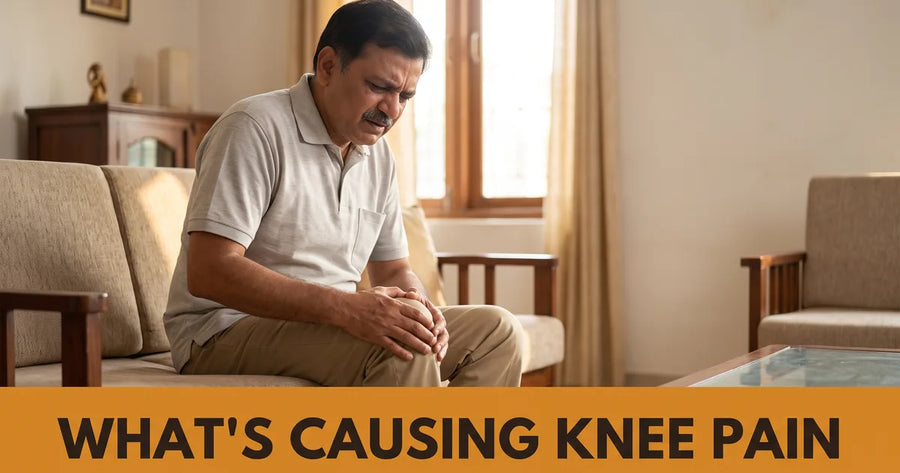
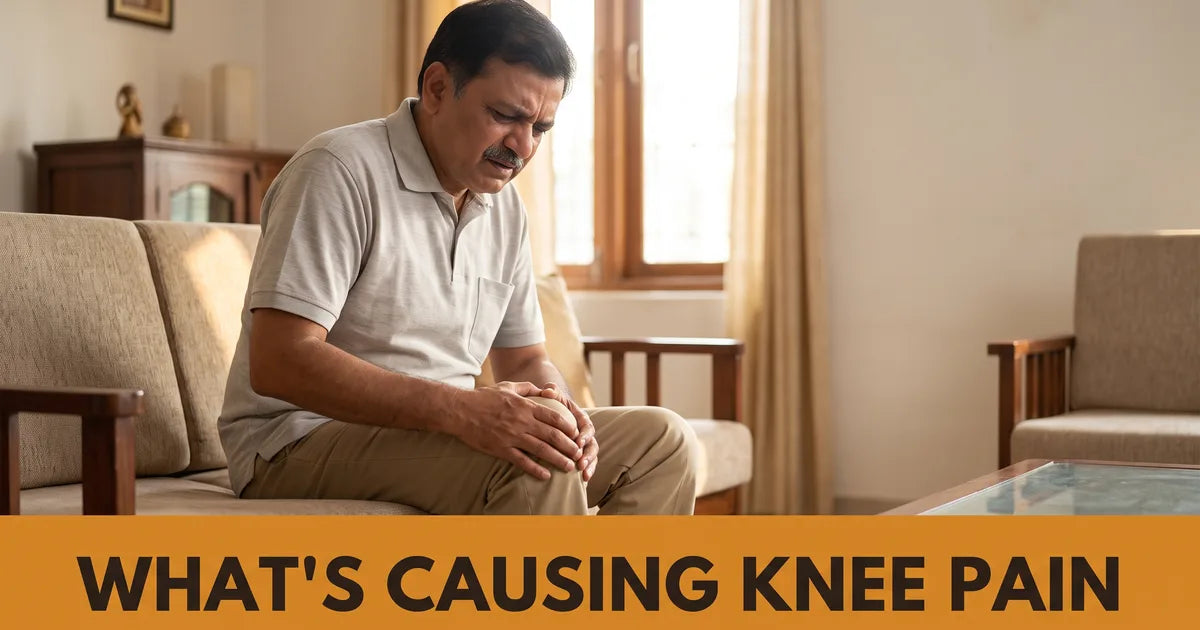
Knee pain (ghutno mein dard) is one of the most common complaints in Indian homes — the twinge getting up from the floor, the ache climbing stairs, the stiffness on a cold morning. For many, it quietly shrinks daily life: fewer walks, skipped stairs, a worry about “getting old.”

The good news is that most knee pain is manageable once you understand why it’s happening. This doctor-reviewed guide walks through the common causes, practical relief you can start at home, the Ayurvedic view on joint comfort, and the warning signs that mean you should see a doctor.

Key Takeaways

  • Most everyday knee pain comes from wear-and-tear (osteoarthritis), overuse, extra body weight, or weak surrounding muscles — not something sinister.
  • Gentle movement, weight management and strengthening the thigh (quadriceps) muscles are the most proven ways to ease and prevent knee pain.
  • Ayurveda frames joint pain largely as aggravated Vata, and uses warm oil massage (abhyanga) and herbs traditionally used to support joint comfort and mobility.
  • Red-flag knees — a hot, swollen, red joint, a knee that locks or gives way, severe pain after injury, or fever with joint pain — need prompt medical care.
  • Supplements and home care support joint wellness; they do not replace diagnosis or treatment of a joint disease.

What Causes Knee Pain? The Common Reasons

Knees carry your body weight through every step, squat and stair — so they feel the strain first. The most common causes in Indian adults are:

  • Osteoarthritis (wear-and-tear) — the cushioning cartilage thins with age and use, leading to ache, stiffness and a grinding feeling, usually worse later in the day.
  • Extra body weight — every extra kilo multiplies the load across the knee; weight is one of the biggest modifiable drivers of knee pain.
  • Weak or tight muscles — weak thigh (quadriceps) muscles leave the knee poorly supported, while tight hamstrings and calves pull on the joint.
  • Overuse or sudden activity — long standing, too many stairs, or a sudden burst of exercise can inflame tendons around the knee.
  • Old injuries — a past ligament or meniscus injury can ache for years, especially in cold or damp weather.
  • Other conditions — gout (high uric acid), rheumatoid arthritis and infections can also target the knee and need medical diagnosis.

If your pain is tied to high uric acid or a swollen, fiery big-toe-and-knee pattern, read our guide on high uric acid symptoms and foods to avoid.

Signs & Symptoms to Notice

Knee pain shows up in different ways, and the pattern is a clue to the cause:

  • Morning stiffness that eases as you move — common in arthritis.
  • Pain on stairs or squatting — points to kneecap or cartilage strain.
  • Swelling or warmth — suggests active inflammation.
  • A grinding or clicking feel — often wear-and-tear.
  • Locking or “giving way” — may signal a mechanical problem that needs assessment.

Home Relief & Lifestyle Steps That Actually Help

For everyday, non-emergency knee pain, these practical steps make the biggest difference:

  • Keep moving, gently — rest a flare for a day, but don’t stop moving. Flat-ground walking, cycling and swimming keep knees mobile without pounding them.
  • Strengthen the thighs — simple quadriceps exercises (straight-leg raises, gentle wall sits) build the support the knee needs. This is the single most effective long-term step.
  • Manage weight — even a small, steady reduction noticeably lightens the load on the knees.
  • Warm vs cold — warmth (a bag or warm oil) eases stiffness; a cold pack helps a freshly swollen, inflamed knee.
  • Mind the posture — avoid deep squatting and sitting cross-legged on the floor for long if it hurts; use a chair and a firm bed.
  • Right footwear — cushioned, well-fitting shoes reduce the shock that reaches the knee.

Knee pain often travels with back and posture issues — our guides on lower back pain (kamar dard) and joint pain in monsoon are useful companions.

The Ayurvedic Perspective on Joint Comfort

Ayurveda views most joint pain (sandhivata) as an aggravation of Vata dosha — the dry, cold, mobile quality that, in excess, leaves joints stiff, creaky and achy, especially with age and in cold weather. The classical approach is to counter dryness and cold with warmth, oil (sneha) and nourishment.

Traditional practices and herbs used to support joint comfort and mobility include:

  • Abhyanga (warm oil massage) — gently massaging the knee with warm sesame (til) or a medicated oil to ease stiffness and support circulation.
  • Shallaki (Boswellia serrata) — the classical “joint herb,” traditionally used to support comfortable, mobile joints.
  • Guggulu — used in many classical joint formulations for its traditional supportive role.
  • Nirgundi and Rasna — herbs traditionally applied and taken to support joint ease.
  • Ashwagandha — traditionally used to support strength and recovery.

A warm, freshly cooked diet, staying hydrated, and avoiding excess cold, dry and leftover foods are the classical Vata-pacifying basics for joints.

How Joint Care Fits

Alongside movement, strengthening and warm oil massage, many people like a daily routine that supports their joints. Cureayu Joint Care Capsules bring together traditional Ayurvedic herbs such as Shallaki and Guggulu that are traditionally used to support joint comfort, flexibility and everyday mobility as part of a balanced lifestyle. Think of it as wellness support — not a medicine, and not a substitute for a doctor’s diagnosis if your knee pain is severe or persistent.

When to See a Doctor

Most knee pain settles with care, but see a doctor promptly if you notice any of these:

  • A hot, red, very swollen knee, or fever alongside joint pain — possible infection or gout flare.
  • Pain after a fall or injury, or a knee that locks, buckles or gives way.
  • Pain that is severe, worsening, or not improving after a couple of weeks of home care.
  • Obvious deformity, inability to bear weight, or numbness and tingling down the leg.

A timely check-up gets you the right diagnosis — arthritis, gout, a ligament issue — so the care actually matches the cause.

Frequently Asked Questions

1. What is the main cause of knee pain in old age? In older adults, the most common cause is osteoarthritis — the gradual wear of knee cartilage — often made worse by extra weight and weak thigh muscles. A doctor can confirm the cause for your knee.

2. What is the best home remedy for knee pain? There is no single “cure,” but the most effective home steps are gentle regular movement, thigh-strengthening exercises, weight management, and warm oil massage for stiffness or a cold pack for a swollen knee.

3. Is walking good or bad for knee pain? For most everyday knee pain, gentle walking on flat ground is helpful — it keeps the joint mobile and strengthens supporting muscles. Avoid long stairs and steep slopes during a flare, and build up slowly.

4. Which Ayurvedic herbs are used for knee and joint pain? Ayurveda traditionally uses herbs such as Shallaki (Boswellia), Guggulu, Nirgundi, Rasna and Ashwagandha, along with warm oil massage (abhyanga), to support joint comfort and mobility. These support wellness and are not a treatment for joint disease.

5. When should I worry about knee pain? See a doctor if the knee is hot, red and very swollen, if there is fever, if it followed an injury, if it locks or gives way, or if severe pain is not improving after a couple of weeks.


Written & medically reviewed by Dr. Istuti, BAMS — Ayurvedic physician (Bachelor of Ayurvedic Medicine and Surgery) with a focus on joint, spine, kidney and metabolic wellness. Dr. Istuti reviews all Cureayu health content for accuracy and compliance.

Medically reviewed on October 1, 2026.

Disclaimer: This content is for educational purposes and is not a substitute for professional medical advice. Consult a qualified physician before starting any supplement, especially if you have a kidney/prostate condition or take medication.

Sources

  • National Institute of Arthritis and Musculoskeletal and Skin Diseases (NIAMS) — Osteoarthritis. https://www.niams.nih.gov/health-topics/osteoarthritis
  • MedlinePlus — Knee pain. https://medlineplus.gov/ency/article/003187.htm
  • NHS — Knee pain. https://www.nhs.uk/conditions/knee-pain/
  • Ministry of AYUSH, Government of India — Ayurveda. https://www.ayush.gov.in/

Related reading

Joint Care Capsules−20%
MENTIONED IN THIS ARTICLE
Joint Care Capsules
★ 4.85 · 165 reviews
₹799 ₹999
DI
Written & reviewed by Dr. Istuti
Ayurvedic physician focused on kidney, urinary and metabolic wellness. Reviews all Cureayu health content. Medically reviewed Oct 1, 2026.

Disclaimer: Educational content, not a substitute for professional medical advice. Consult a qualified physician before starting any supplement.

ShareWAfX⧉

Knee Pain: Causes, Ayurvedic Relief & When to Worry

DI
Dr. Istuti ✓ Medically reviewed
Oct 1, 2026 · 6 min read
Knee Pain: Causes, Ayurvedic Relief & When to Worry

Knee Pain: Causes, Ayurvedic Relief & When to Worry

Knee pain (ghutno mein dard) is one of the most common complaints in Indian homes — the twinge getting up from the floor, the ache climbing stairs, the stiffness on a cold morning. For many, it quietly shrinks daily life: fewer walks, skipped stairs, a worry about “getting old.”

The good news is that most knee pain is manageable once you understand why it’s happening. This doctor-reviewed guide walks through the common causes, practical relief you can start at home, the Ayurvedic view on joint comfort, and the warning signs that mean you should see a doctor.

Key Takeaways

  • Most everyday knee pain comes from wear-and-tear (osteoarthritis), overuse, extra body weight, or weak surrounding muscles — not something sinister.
  • Gentle movement, weight management and strengthening the thigh (quadriceps) muscles are the most proven ways to ease and prevent knee pain.
  • Ayurveda frames joint pain largely as aggravated Vata, and uses warm oil massage (abhyanga) and herbs traditionally used to support joint comfort and mobility.
  • Red-flag knees — a hot, swollen, red joint, a knee that locks or gives way, severe pain after injury, or fever with joint pain — need prompt medical care.
  • Supplements and home care support joint wellness; they do not replace diagnosis or treatment of a joint disease.

What Causes Knee Pain? The Common Reasons

Knees carry your body weight through every step, squat and stair — so they feel the strain first. The most common causes in Indian adults are:

  • Osteoarthritis (wear-and-tear) — the cushioning cartilage thins with age and use, leading to ache, stiffness and a grinding feeling, usually worse later in the day.
  • Extra body weight — every extra kilo multiplies the load across the knee; weight is one of the biggest modifiable drivers of knee pain.
  • Weak or tight muscles — weak thigh (quadriceps) muscles leave the knee poorly supported, while tight hamstrings and calves pull on the joint.
  • Overuse or sudden activity — long standing, too many stairs, or a sudden burst of exercise can inflame tendons around the knee.
  • Old injuries — a past ligament or meniscus injury can ache for years, especially in cold or damp weather.
  • Other conditions — gout (high uric acid), rheumatoid arthritis and infections can also target the knee and need medical diagnosis.

If your pain is tied to high uric acid or a swollen, fiery big-toe-and-knee pattern, read our guide on high uric acid symptoms and foods to avoid.

Signs & Symptoms to Notice

Knee pain shows up in different ways, and the pattern is a clue to the cause:

  • Morning stiffness that eases as you move — common in arthritis.
  • Pain on stairs or squatting — points to kneecap or cartilage strain.
  • Swelling or warmth — suggests active inflammation.
  • A grinding or clicking feel — often wear-and-tear.
  • Locking or “giving way” — may signal a mechanical problem that needs assessment.

Home Relief & Lifestyle Steps That Actually Help

For everyday, non-emergency knee pain, these practical steps make the biggest difference:

  • Keep moving, gently — rest a flare for a day, but don’t stop moving. Flat-ground walking, cycling and swimming keep knees mobile without pounding them.
  • Strengthen the thighs — simple quadriceps exercises (straight-leg raises, gentle wall sits) build the support the knee needs. This is the single most effective long-term step.
  • Manage weight — even a small, steady reduction noticeably lightens the load on the knees.
  • Warm vs cold — warmth (a bag or warm oil) eases stiffness; a cold pack helps a freshly swollen, inflamed knee.
  • Mind the posture — avoid deep squatting and sitting cross-legged on the floor for long if it hurts; use a chair and a firm bed.
  • Right footwear — cushioned, well-fitting shoes reduce the shock that reaches the knee.

Knee pain often travels with back and posture issues — our guides on lower back pain (kamar dard) and joint pain in monsoon are useful companions.

The Ayurvedic Perspective on Joint Comfort

Ayurveda views most joint pain (sandhivata) as an aggravation of Vata dosha — the dry, cold, mobile quality that, in excess, leaves joints stiff, creaky and achy, especially with age and in cold weather. The classical approach is to counter dryness and cold with warmth, oil (sneha) and nourishment.

Traditional practices and herbs used to support joint comfort and mobility include:

  • Abhyanga (warm oil massage) — gently massaging the knee with warm sesame (til) or a medicated oil to ease stiffness and support circulation.
  • Shallaki (Boswellia serrata) — the classical “joint herb,” traditionally used to support comfortable, mobile joints.
  • Guggulu — used in many classical joint formulations for its traditional supportive role.
  • Nirgundi and Rasna — herbs traditionally applied and taken to support joint ease.
  • Ashwagandha — traditionally used to support strength and recovery.

A warm, freshly cooked diet, staying hydrated, and avoiding excess cold, dry and leftover foods are the classical Vata-pacifying basics for joints.

How Joint Care Fits

Alongside movement, strengthening and warm oil massage, many people like a daily routine that supports their joints. Cureayu Joint Care Capsules bring together traditional Ayurvedic herbs such as Shallaki and Guggulu that are traditionally used to support joint comfort, flexibility and everyday mobility as part of a balanced lifestyle. Think of it as wellness support — not a medicine, and not a substitute for a doctor’s diagnosis if your knee pain is severe or persistent.

When to See a Doctor

Most knee pain settles with care, but see a doctor promptly if you notice any of these:

  • A hot, red, very swollen knee, or fever alongside joint pain — possible infection or gout flare.
  • Pain after a fall or injury, or a knee that locks, buckles or gives way.
  • Pain that is severe, worsening, or not improving after a couple of weeks of home care.
  • Obvious deformity, inability to bear weight, or numbness and tingling down the leg.

A timely check-up gets you the right diagnosis — arthritis, gout, a ligament issue — so the care actually matches the cause.

Frequently Asked Questions

1. What is the main cause of knee pain in old age? In older adults, the most common cause is osteoarthritis — the gradual wear of knee cartilage — often made worse by extra weight and weak thigh muscles. A doctor can confirm the cause for your knee.

2. What is the best home remedy for knee pain? There is no single “cure,” but the most effective home steps are gentle regular movement, thigh-strengthening exercises, weight management, and warm oil massage for stiffness or a cold pack for a swollen knee.

3. Is walking good or bad for knee pain? For most everyday knee pain, gentle walking on flat ground is helpful — it keeps the joint mobile and strengthens supporting muscles. Avoid long stairs and steep slopes during a flare, and build up slowly.

4. Which Ayurvedic herbs are used for knee and joint pain? Ayurveda traditionally uses herbs such as Shallaki (Boswellia), Guggulu, Nirgundi, Rasna and Ashwagandha, along with warm oil massage (abhyanga), to support joint comfort and mobility. These support wellness and are not a treatment for joint disease.

5. When should I worry about knee pain? See a doctor if the knee is hot, red and very swollen, if there is fever, if it followed an injury, if it locks or gives way, or if severe pain is not improving after a couple of weeks.


Written & medically reviewed by Dr. Istuti, BAMS — Ayurvedic physician (Bachelor of Ayurvedic Medicine and Surgery) with a focus on joint, spine, kidney and metabolic wellness. Dr. Istuti reviews all Cureayu health content for accuracy and compliance.

Medically reviewed on October 1, 2026.

Disclaimer: This content is for educational purposes and is not a substitute for professional medical advice. Consult a qualified physician before starting any supplement, especially if you have a kidney/prostate condition or take medication.

Sources

  • National Institute of Arthritis and Musculoskeletal and Skin Diseases (NIAMS) — Osteoarthritis. https://www.niams.nih.gov/health-topics/osteoarthritis
  • MedlinePlus — Knee pain. https://medlineplus.gov/ency/article/003187.htm
  • NHS — Knee pain. https://www.nhs.uk/conditions/knee-pain/
  • Ministry of AYUSH, Government of India — Ayurveda. https://www.ayush.gov.in/

Related reading

DI
Written & reviewed by Dr. Istuti
Ayurvedic physician focused on kidney, urinary and metabolic wellness. Reviews all Cureayu health content. Medically reviewed Oct 1, 2026.

Disclaimer: Educational content, not a substitute for professional medical advice. Consult a qualified physician before starting any supplement.