High Potassium Foods to Avoid for Kidney Health
High Potassium Foods to Avoid for Kidney Health
If your kidney report mentioned potassium, or your doctor told you to "watch your potassium," it is natural to feel unsure about what you can and cannot eat. Many everyday Indian foods — banana, coconut water, potato, tomato, dal — are rich in potassium, so the advice can feel confusing and even a little scary.
This guide explains, in plain language, why potassium matters for your kidneys, the symptoms of a high level, and which foods are worth limiting when your kidney function is reduced. As always, use it alongside your own doctor's advice, not instead of it.
Key Takeaways
- Potassium is an essential mineral, but healthy kidneys keep its blood level in a tight range (roughly 3.5–5.0 mmol/L).
- When kidney function drops, potassium can build up in the blood — a condition called hyperkalemia (usually a level above 5.0–5.5 mmol/L).
- High potassium often causes no symptoms at first, which is why blood tests matter. When symptoms appear they can include muscle weakness, tiredness, or an irregular heartbeat.
- Common high-potassium Indian foods to be mindful of include banana, coconut water, potato, tomato, spinach, dried fruits, and many dals.
- Never self-restrict drastically or change medicines on your own — potassium needs are personal. Work with your doctor or a renal dietitian.
Why potassium matters for your kidneys
Potassium is a mineral your body needs every day. It helps your muscles contract, keeps your heartbeat steady, and supports normal nerve signals. You get it from food, and your kidneys are the main organ that removes any excess through urine.
That balance is the important part. In a person with healthy kidneys, eating a potassium-rich meal is not a problem — the kidneys simply filter out what the body does not need. But when kidney function is reduced, the kidneys may not clear potassium as efficiently. Over time, the level in the blood can climb higher than it should.
According to the National Kidney Foundation, people with reduced kidney function are often advised to manage how much potassium they eat, because their kidneys can no longer remove it as easily. This is why the same banana that is "healthy" for most people may need portion control for someone with advanced kidney disease.
What is hyperkalemia (high potassium)?
The normal blood potassium range is usually about 3.5 to 5.0 mmol/L (millimoles per litre). Hyperkalemia is the medical term for a level above the upper limit of normal — generally described as above 5.0–5.5 mmol/L.
In healthy adults, high potassium from food alone is uncommon, because the kidneys excrete the excess. It becomes far more relevant in people with chronic kidney disease, where the kidneys' ability to remove potassium is limited. Certain medicines (for example, some blood-pressure tablets) can also raise potassium, which is another reason never to stop or change a prescription on your own.
Symptoms of high potassium
Here is the tricky part: mild hyperkalemia often causes no symptoms at all. Many people only find out through a routine blood test. When potassium rises to higher levels, possible signs include:
- Muscle weakness or a heavy, tired feeling in the legs
- Numbness or tingling
- Palpitations or an irregular, "skipping" heartbeat
- In severe cases, dangerous heart-rhythm changes
Because a very high potassium level can affect the heart, sudden severe symptoms — a racing or irregular heartbeat with weakness or breathlessness — need urgent medical care, not home remedies.
High potassium foods to limit (Indian diet)
If your doctor has advised a lower-potassium diet, the goal is not to fear food — it is portion awareness and smart swaps. Here are common high-potassium foods in an Indian kitchen:
Fruits
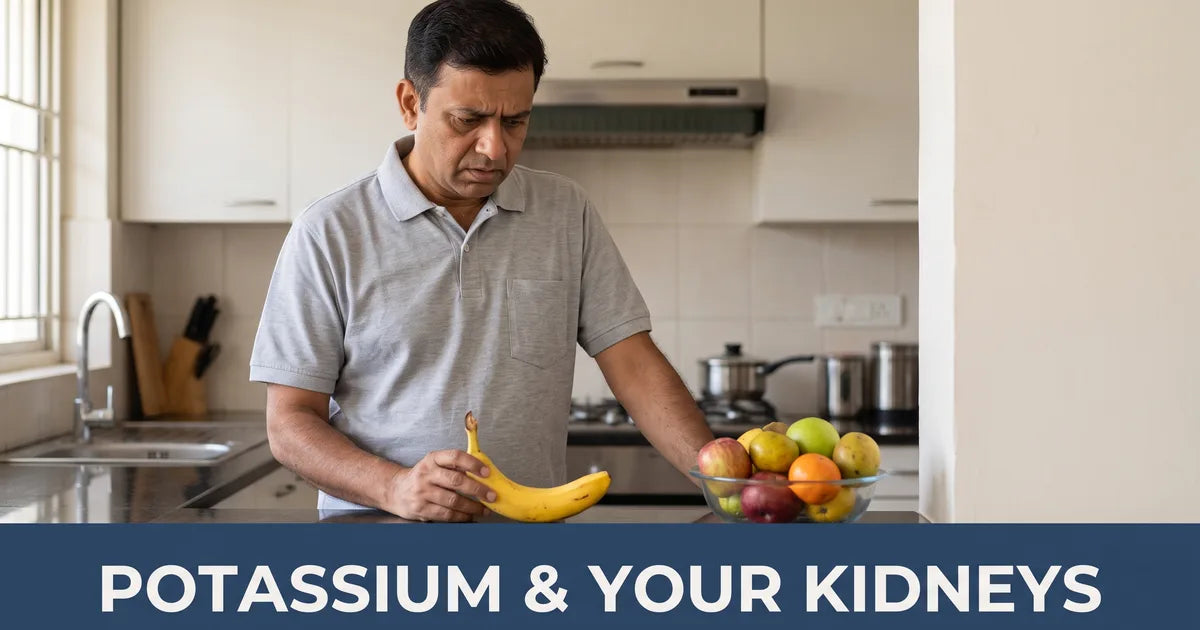
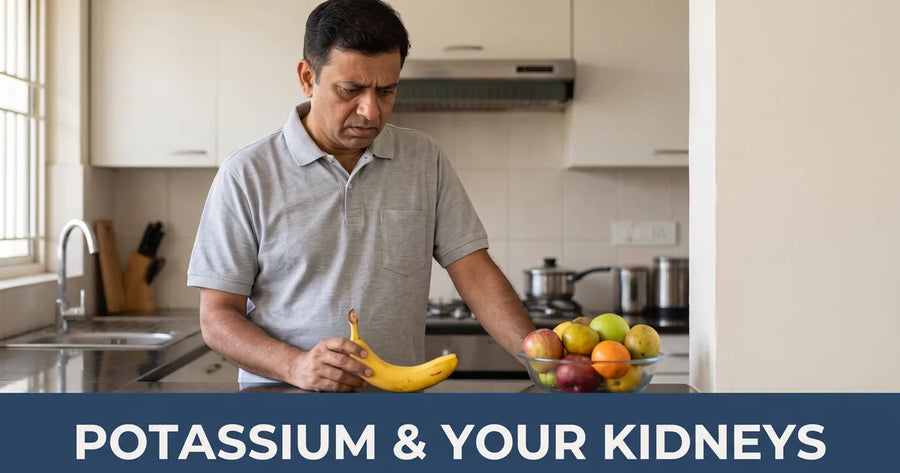
- Banana
- Orange and mosambi (sweet lime)
- Chikoo (sapota), custard apple (sitaphal)
- Mango, kiwi
- Dried fruits — raisins, dates, apricots, figs
Vegetables
- Potato and sweet potato
- Tomato (and tomato purée/sauce)
- Spinach (palak) and other cooked leafy greens
- Beetroot, pumpkin, drumstick
- Avocado
Drinks and others
- Coconut water (nariyal pani)
- Fruit and vegetable juices (potassium is concentrated)
- Many dals and legumes (rajma, chana, moong in large amounts)
- Nuts and seeds
- Coconut, jaggery in large amounts
A useful kitchen tip your dietitian may suggest for potatoes and some vegetables is "leaching" — peeling, cutting small, soaking in water, and boiling in plenty of water (then discarding it). This lowers, though does not remove, the potassium content.
Lower-potassium swaps
You do not have to give up variety. Depending on your stage and blood results, lower-potassium options often include apple, pear, papaya (in moderation), guava in small portions, and vegetables such as bottle gourd (lauki), ridge gourd (turai), and cabbage. Your exact list should come from your renal dietitian, because the right amount depends on your blood potassium and kidney stage — not on a generic chart.
The Ayurvedic perspective on kidney wellness
Ayurveda does not measure potassium, but it has long paid attention to the mutravaha srotas — the body's urinary channels — and to keeping them clear and well-functioning. Classical texts such as the Charaka Samhita and Sushruta Samhita describe herbs traditionally used to support healthy urine flow and overall kidney wellness.
A few herbs commonly discussed in this context:
- Punarnava (Boerhavia diffusa) — traditionally used in Ayurveda to support healthy fluid balance and urinary function.
- Gokshura (Tribulus terrestris) — classically used to support the urinary system and comfortable urine flow.
- Varun (Crataeva nurvala) — described in traditional texts for urinary-tract wellness.
In Ayurveda these are used as part of a balanced routine — sensible diet, adequate (doctor-guided) hydration, rest, and stress care — not as a quick fix. Modern research into some of these herbs is still growing, so they are best seen as supportive of a wellness routine rather than a treatment for any kidney condition.
Practical, everyday steps
Small, consistent habits usually matter more than any single food:
- Get tested, don't guess. A blood test is the only way to know your potassium level. Keep your follow-up appointments.
- Portion, don't panic. For most high-potassium foods, the issue is quantity. A few slices of tomato is different from a large bowl of tomato curry.
- Watch hidden sources. Coconut water, packaged juices, and "health" powders can be surprisingly high in potassium.
- Cook smart. Ask your dietitian about leaching vegetables and using fresh over processed foods (many packaged and "low-sodium" salts use potassium salts).
- Follow your fluid advice. Some people are told to drink more, others to restrict — this depends on your kidney stage. Follow your doctor's guidance.
- Never stop prescribed medicine on your own, even if you read that it affects potassium. Talk to your doctor first.
When to see a doctor
Please seek medical advice promptly if you:
- Have known kidney disease and notice new muscle weakness, tiredness, or palpitations
- Feel a racing, pounding, or irregular heartbeat — especially with breathlessness (seek urgent care)
- Have a kidney report you don't understand, or a potassium result outside the normal range
- Take blood-pressure or heart medicines and have questions about potassium
Your doctor may repeat the blood test, review your medicines, and refer you to a renal dietitian for a personalised plan. That personalised plan is far safer than any general food list online, including this one.
How CreatiCare fits
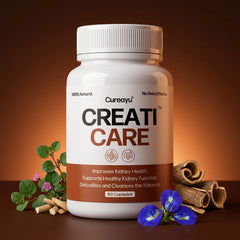
Cureayu's CreatiCare is an Ayurvedic formulation with herbs such as Punarnava and Gokshura, traditionally used to support healthy kidney function and normal creatinine levels as part of a balanced lifestyle. It is a supplement to support your wellness routine — not a treatment for kidney disease, and not a replacement for your prescribed medicines or your renal diet. If you have a diagnosed kidney condition or take regular medication, please check with your physician before starting any supplement.
Frequently Asked Questions
Is banana bad for kidney patients?
Not for everyone. Banana is high in potassium, so people with reduced kidney function or a high blood-potassium level are often advised to limit it. If your kidneys are healthy, banana is generally fine. Follow your doctor's or dietitian's advice for your situation.
Is coconut water good or bad for the kidneys?
Coconut water (nariyal pani) is naturally high in potassium. For a healthy person it is a good drink, but for someone with advanced kidney disease or high potassium, it may need to be limited. It is not a "kidney cleanse."
Does high potassium have symptoms?
Often none, especially when mild — which is why blood tests are important. Higher levels can cause muscle weakness, tiredness, or an irregular heartbeat, and very high levels are a medical emergency.
How can I lower potassium in vegetables?
A method called leaching — peeling, cutting small, soaking, and boiling in plenty of water that you then throw away — can reduce (not remove) potassium in potatoes and some vegetables. Ask your dietitian for the right technique.
Can Ayurvedic herbs lower potassium?
No herb is a proven way to lower blood potassium, and you should not rely on one for that. Herbs like Punarnava and Gokshura are traditionally used to support general urinary and kidney wellness as part of a routine, alongside — not instead of — medical care.
What is the normal potassium level?
Blood potassium is usually about 3.5–5.0 mmol/L. A level above roughly 5.0–5.5 mmol/L is called hyperkalemia. Your lab report will show its own reference range.
Written & medically reviewed by Dr. Istuti, BAMS — Ayurvedic physician (Bachelor of Ayurvedic Medicine & Surgery) with a focus on kidney and metabolic wellness. Dr. Istuti reviews Cureayu's health content for accuracy and compliance.
Medically reviewed on 14 August 2026.
Disclaimer: This content is for educational purposes and is not a substitute for professional medical advice. Consult a qualified physician before starting any supplement, especially if you have a kidney/prostate condition or take medication.
Sources
National Kidney Foundation — Potassium in Your CKD Diet: kidney.org
MedlinePlus — High potassium level: medlineplus.gov
StatPearls / NCBI Bookshelf — Hyperkalemia: ncbi.nlm.nih.gov
Chronic Hyperkalemia in Chronic Kidney Disease (NCBI/PMC): ncbi.nlm.nih.gov/PMC9223624
Internal links
Pillar hub: Renal Health Care
Sibling: Best Fruits for Kidney Patients
Sibling: Best Vegetables for Kidney Patients
Sibling: Is Coconut Water Good for Kidney Patients
PDP: CreatiCare
Disclaimer: Educational content, not a substitute for professional medical advice. Consult a qualified physician before starting any supplement.