
Is Pomegranate (Anar) Good for Kidney Patients?

Is Pomegranate (Anar) Good for Kidney Patients?
Pomegranate — anar — has a reputation in Indian homes as a “blood-building,” healthy fruit. So if you or a family member has a kidney concern, it’s natural to wonder: is it safe, or is it one more thing to be careful with?
The honest answer is “usually yes, in sensible amounts — but it depends on your stage and your reports.” This doctor-reviewed guide explains pomegranate’s nutrition, its real benefits, when to be cautious, and how much is reasonable for kidney patients in an everyday Indian diet.
Key Takeaways
- Pomegranate is rich in antioxidants (polyphenols) and is, for most people, a kidney-friendly fruit in moderate portions.
- It has moderate potassium — roughly 200–250 mg per 100 g — so people on a potassium-restricted diet (usually later-stage CKD) should watch their serving size.
- Pomegranate is relatively low in phosphorus and sodium, which is helpful for kidney health.
- Pomegranate juice can interact with some medicines (similar to grapefruit) — always check with your doctor if you take regular medication.
- Ayurvedic herbs and a balanced routine are traditionally used to support kidney wellness — food and supplements support, they do not replace, medical care.
Is Pomegranate Good for Kidney Patients? The Short Answer
For most people with mild or early kidney concerns, a small-to-moderate serving of pomegranate is generally fine and even nourishing. It is low in sodium and phosphorus and packed with protective antioxidants. The main thing to keep an eye on is potassium, because kidneys that aren’t filtering well can let potassium build up in the blood.
If your doctor has told you to limit potassium — common in later-stage chronic kidney disease (CKD) or if a blood test showed high potassium — then portion size matters, and you should follow their specific advice over any general article.
Pomegranate Nutrition: What Matters for Kidneys
Here’s what a kidney patient actually needs to look at in pomegranate arils (approximate values per 100 g):
| Nutrient | Roughly per 100 g | Why it matters for kidneys |
|---|---|---|
| Potassium | ~200–250 mg | Moderate — watch portion if on a potassium limit |
| Phosphorus | ~30–40 mg | Low — generally kidney-friendly |
| Sodium | ~3 mg | Very low — good for blood pressure and kidneys |
| Protein | ~1.5 g | Low — not a concern in normal servings |
| Antioxidants (polyphenols) | High | Support against oxidative stress |
For comparison, pomegranate’s potassium sits below very high-potassium fruits like banana and is roughly in the “moderate” band — which is why a normal serving is usually okay, but a large bowl or a full glass of juice can add up quickly.
Potential Benefits of Pomegranate
Pomegranate is one of the more studied fruits, and a few points are relevant to kidney and heart wellness:
- Antioxidant support: Its polyphenols help the body handle oxidative stress, which is often higher in people with kidney issues.
- Heart and blood-pressure friendly: Because it is very low in sodium and has been studied for supporting healthy blood pressure, it fits well into a heart- and kidney-conscious diet — and healthy blood pressure is good for the kidneys.
- Hydration and fibre: The arils add gentle fibre and fluid to the diet in a natural, unprocessed form.
Some research in people on dialysis has explored pomegranate juice for its antioxidant effects. This is promising but specialised — dialysis patients must follow their renal dietitian’s fluid and potassium plan before adding any juice.
When to Be Careful With Pomegranate
Pomegranate is a food, not a medicine — but a few situations call for extra care:
- You’re on a potassium-restricted diet: Keep to a small serving (say, a handful of arils, not a big bowl), and don’t combine several potassium-rich foods in one meal.
- You drink pomegranate juice regularly: Juice concentrates the sugar and potassium of several fruits into one glass. Whole arils are the better choice for kidney patients.
- You take regular medication: Pomegranate juice can affect how the body processes certain medicines (similar to grapefruit), including some blood-pressure and cholesterol drugs. Check with your doctor or pharmacist.
- You’re on fluid restriction: Count juice as part of your daily fluid allowance.
When in doubt, share your latest kidney function test (KFT) report with your doctor and ask what fruit portions suit your stage.
How Much Pomegranate Is Safe?
There is no single number for everyone, but a practical guide for most people with early or mild kidney concerns:
- A small bowl of arils (about half a cup) a few times a week is a reasonable everyday portion.
- Prefer whole arils over juice — you get the fibre and eat less overall.
- If you’ve been told to limit potassium, ask your doctor or dietitian for your personal portion and space fruit through the day rather than all at once.
Pair pomegranate with other kidney-friendly Indian foods, and be mindful of high-potassium foods on the same plate.
The Ayurvedic Perspective
Ayurveda regards pomegranate (dadima) as a gentle, tridosha-balancing fruit — light, easy to digest, and traditionally valued for supporting strength and digestion. It is considered nourishing rather than heavy, which is why classical texts speak of it kindly.
For kidney and urinary wellness specifically, Ayurveda leans on herbs such as Punarnava (Boerhavia diffusa) and Gokshura (Gokhru, Tribulus terrestris), which are traditionally used to support healthy fluid balance and urine flow. These are supportive of everyday wellness — not a treatment for kidney disease, which needs medical care.
How CreatiCare Fits
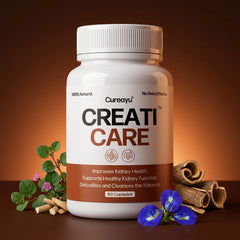
Alongside a sensible, kidney-aware diet, many people like a daily routine that supports their kidneys. CreatiCare™ Creatinine Capsules combine traditional herbs such as Punarnava and Gokshura that are traditionally used to support healthy creatinine levels and everyday kidney function as part of a balanced lifestyle. Think of it as wellness support — not a medicine or a substitute for your doctor’s advice. If you have kidney disease or take medication, please check with your physician before starting any supplement.
When to See a Doctor
Diet is only one piece of kidney care. See a doctor if you notice persistent swelling in the feet or face, foamy urine, unusual tiredness, changes in how much you urinate, or a rising creatinine on your reports. If a blood test has ever shown high potassium, treat any diet advice as secondary to your doctor’s instructions — high potassium can be serious.
Frequently Asked Questions
1. Can kidney patients eat pomegranate every day? Many people with early or mild kidney concerns can enjoy a small daily serving. If you are on a potassium-restricted diet or later-stage CKD, ask your doctor for your personal portion rather than eating a large amount daily.
2. Is pomegranate juice good for the kidneys? Whole arils are better than juice for kidney patients, because juice concentrates potassium and sugar and counts toward any fluid limit. Pomegranate juice can also interact with some medicines, so check with your doctor.
3. Does pomegranate increase or lower creatinine? Pomegranate does not directly lower creatinine. As part of a balanced, low-sodium diet it supports overall kidney wellness, but creatinine is managed through your doctor’s guidance, hydration and lifestyle — not one single fruit.
4. Is pomegranate high in potassium? It has moderate potassium (roughly 200–250 mg per 100 g) — less than very high-potassium fruits like banana, but enough that a large serving matters if you are on a potassium limit.
5. Which fruits are safest for kidney patients? Apple, papaya, guava (in moderation) and berries are often gentler on potassium. The right choice depends on your stage — your doctor or renal dietitian can personalise it.
Written & medically reviewed by Dr. Istuti, BAMS — Ayurvedic physician (Bachelor of Ayurvedic Medicine and Surgery) with a focus on kidney, urinary, liver and metabolic wellness. Dr. Istuti reviews all Cureayu health content for accuracy and compliance.
Medically reviewed on September 28, 2026.
Disclaimer: This content is for educational purposes and is not a substitute for professional medical advice. Consult a qualified physician before starting any supplement, especially if you have a kidney/prostate condition or take medication.
Sources
- National Kidney Foundation (NKF) — Potassium and Your CKD Diet. https://www.kidney.org/atoz/content/potassium
- U.S. Department of Agriculture (USDA) FoodData Central — Pomegranate, raw. https://fdc.nal.usda.gov/
- National Institute of Diabetes and Digestive and Kidney Diseases (NIDDK) — Eating Right for Chronic Kidney Disease. https://www.niddk.nih.gov/health-information/kidney-disease/chronic-kidney-disease-ckd/eating-nutrition
- MedlinePlus — Potassium in diet. https://medlineplus.gov/ency/article/002413.htm
- Ministry of AYUSH, Government of India — Ayurveda. https://www.ayush.gov.in/
Related reading
- Renal Health Care (pillar)
- Kidney-Friendly Diet Chart: Indian Vegetarian Foods
- High-Potassium Foods to Avoid for Kidney Health
- Is Banana Good for Kidney Patients?
- Best Vegetables for Kidney Patients
Disclaimer: Educational content, not a substitute for professional medical advice. Consult a qualified physician before starting any supplement.