Is Wheat (Roti/Chapati) Good for Kidney Patients?
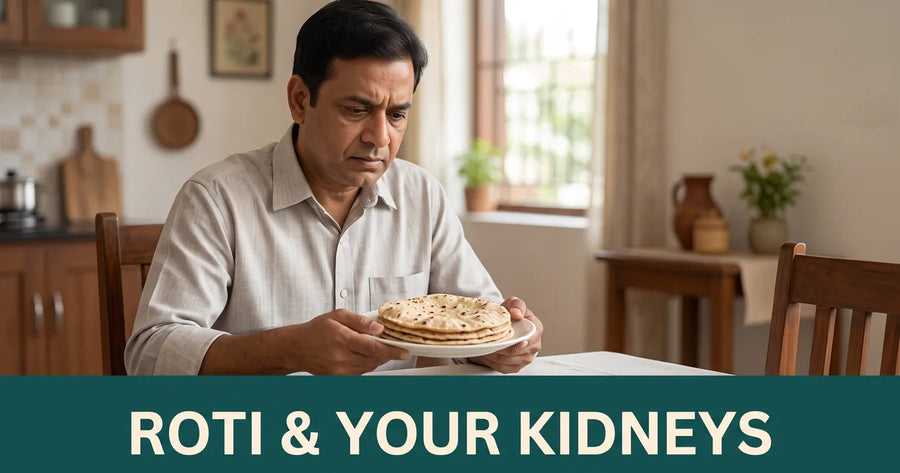
Is Wheat (Roti/Chapati) Good for Kidney Patients?
For most Indian families, the day isn’t complete without roti. So when someone in the house is told they have a kidney concern, a very practical worry follows: can I still eat my daily chapati, or is wheat bad for the kidneys?
The honest answer is “yes, in most cases — with sensible portions.” For healthy people and those with early or mild kidney concerns, wheat roti is generally a reasonable everyday grain. In advanced kidney disease, wheat carries meaningful phosphorus and potassium, so portion size and what you eat with the roti start to matter more than the roti itself. This doctor-reviewed guide explains it in plain language.
Key Takeaways
- Whole wheat is a whole grain — higher in fibre, phosphorus and potassium than polished white rice.
- For healthy people and early/mild kidney concerns, a few rotis a day in sensible portions are generally fine.
- In later-stage CKD on a phosphorus- or potassium-restricted diet, wheat is not automatically “unsafe” — but portions and side dishes matter, and your renal dietitian’s plan comes first.
- Refined maida (white flour) has less fibre and is not the healthier choice; whole atta is better for blood sugar.
- What you eat with the roti — salt, pickles, high-potassium sabzi — often matters more than the roti itself.
- Ayurvedic herbs and a balanced routine are traditionally used to support kidney wellness — food and supplements support care, they do not replace it.
Is Wheat Good for Kidney Patients? The Short Answer
For most people with mild or early kidney concerns, whole wheat roti in a moderate portion is generally fine, and usually better than refined maida because it adds fibre and is digested more slowly. Wheat is a whole grain, so it naturally carries more phosphorus and potassium than polished white rice.
If your doctor has asked you to limit phosphorus or potassium — common in later-stage chronic kidney disease (CKD) — then wheat needs portion control, and your renal dietitian’s specific advice should always outrank a general article.
Wheat Nutrition: What Matters for Kidneys
Here is what a kidney patient actually needs to look at in a whole-wheat roti (values are general guides and vary by flour and roti size):
| Nutrient | In whole wheat (general) | Why it matters for kidneys |
|---|---|---|
| Phosphorus | Moderate to high | Whole grains hold more phosphorus than white rice — watch in advanced CKD |
| Potassium | Moderate | Higher than polished rice — portion matters on a potassium limit |
| Protein | Moderate | Fine for most; count it if you are on a protein-controlled diet |
| Fibre | High | Supports blood sugar and digestion — a genuine plus |
| Sodium | Very low (before salt is added) | Low in itself — the salt you add is the real issue |
| Glycaemic load | Lower than white rice/maida | Slower sugar release — helpful, since diabetes drives much kidney damage |
So wheat is genuinely nourishing. Its only catch for kidney patients is not “toxicity” — it is simply that whole grains concentrate minerals a struggling kidney clears less easily. That is a portion question, not a ban.
Whole Wheat (Atta) vs Maida vs Rice
Patients often ask which staple is “best” for the kidneys. For kidney care specifically:
- Whole wheat (atta) — more fibre and minerals; better for blood sugar, but carries more phosphorus and potassium.
- Refined maida — lower fibre and nutrients; not a “kidney-friendly” upgrade, and worse for blood sugar. Avoid making it your main grain.
- White rice — lower in phosphorus and potassium, which is why it is often allowed even in advanced CKD.
So it isn’t “wheat good, rice bad.” In early concerns, whole wheat adds value; in advanced CKD on restrictions, controlled white rice can actually be easier to manage. See our detailed take on whether rice is good for kidney patients and compare it with millets for kidney patients.
How to Eat Roti the Kidney-Smart Way
If wheat suits your stage, a few simple habits make it easier on the kidneys:
- Watch the portion — a couple of modest rotis per meal, not an unlimited stack, especially on a phosphorus or potassium limit.
- Keep atta whole but simple — plain whole-wheat atta is fine; be cautious with “multigrain health atta” blends that add bajra, ragi, soya and seeds, which stack up phosphorus and potassium.
- Go easy on what sits on the roti — excess salt, pickles, papad and high-potassium sabzi (potato, tomato) can undo the benefit faster than the roti ever would.
- Skip phosphorus add-ons — cheese-stuffed or heavily buttered parathas and baking-powder-based breads add hidden phosphorus.
- Balance the plate — pair roti with kidney-aware vegetables and controlled protein rather than loading one food.
Fit roti into a broader kidney-friendly Indian diet chart, and stay mindful of high-phosphorus foods and high-potassium foods on the same plate.
The Ayurvedic Perspective
Ayurveda regards wheat (godhuma) as one of the more guru (heavy), nourishing and strength-giving grains — brimhana in nature, grounding and sustaining when digestion (agni) is strong. It is traditionally seen as everyday nourishing food rather than medicine, and is usually suggested freshly made and warm, in a portion the body can digest comfortably.
For kidney and urinary wellness specifically, Ayurveda leans on herbs such as Punarnava (Boerhavia diffusa) and Gokshura (Gokhru, Tribulus terrestris), which are traditionally used to support healthy fluid balance and normal urine flow. These support everyday wellness — they are not a treatment for kidney disease, which needs medical care.
How CreatiCare Fits
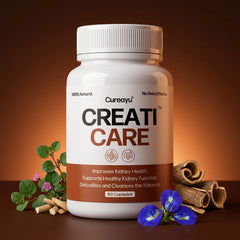
Alongside a sensible, kidney-aware diet, many people like a daily routine that supports their kidneys. CreatiCare™ Creatinine Capsules combine traditional herbs such as Punarnava and Gokshura that are traditionally used to support healthy creatinine levels and everyday kidney function as part of a balanced lifestyle. Think of it as wellness support — not a medicine, and not a substitute for your doctor’s advice. If you have kidney disease or take medication, please check with your physician before starting any supplement.
When to See a Doctor
Diet is only one piece of kidney care. See a doctor if you notice persistent swelling in the feet or face, foamy urine, unusual tiredness, changes in how much you urinate, or a rising creatinine on your reports. If a blood test has ever shown high phosphorus or high potassium, treat general food advice as secondary to your doctor’s instructions — those minerals can be dangerous when the kidneys are not clearing them.
Frequently Asked Questions
1. Can kidney patients eat wheat roti every day? In early or mild kidney concerns, a couple of modest whole-wheat rotis a day are usually fine. In advanced CKD on a phosphorus or potassium limit, keep portions small and follow your dietitian’s plan.
2. Is wheat or rice better for kidney patients? White rice is lower in phosphorus and potassium, which is why it’s often allowed in advanced CKD. Whole wheat has more fibre and is better for blood sugar. The right balance depends on your kidney stage — ask your dietitian.
3. Is maida bad for kidney patients? Maida isn’t “toxic,” but it has less fibre and nutrition than whole atta and is worse for blood sugar. It is not a kidney-friendly upgrade over whole wheat — don’t make it your staple.
4. Does wheat increase creatinine? Wheat does not directly raise creatinine. As part of a balanced, controlled diet it can be a healthy grain. Creatinine is managed through your doctor’s guidance, hydration and overall lifestyle — not one single food.
5. Is multigrain atta good for kidney patients? Not always. Multigrain blends add bajra, ragi, soya and seeds, which raise phosphorus and potassium. On a restriction, plain whole-wheat atta in a modest portion is often easier to manage — check with your dietitian.
Written & medically reviewed by Dr. Istuti, BAMS — Ayurvedic physician (Bachelor of Ayurvedic Medicine and Surgery) with a focus on kidney, urinary, liver and metabolic wellness. Dr. Istuti reviews all Cureayu health content for accuracy and compliance.
Medically reviewed on October 1, 2026.
Disclaimer: This content is for educational purposes and is not a substitute for professional medical advice. Consult a qualified physician before starting any supplement, especially if you have a kidney/prostate condition or take medication.
Sources
- National Kidney Foundation (NKF) — Phosphorus and Your CKD Diet. https://www.kidney.org/atoz/content/phosphorus
- National Institute of Diabetes and Digestive and Kidney Diseases (NIDDK) — Eating Right for Chronic Kidney Disease. https://www.niddk.nih.gov/health-information/kidney-disease/chronic-kidney-disease-ckd/eating-nutrition
- ICMR-National Institute of Nutrition (India) — Indian Food Composition Tables. https://www.nin.res.in/
- MedlinePlus — Potassium in diet. https://medlineplus.gov/ency/article/002413.htm
- Ministry of AYUSH, Government of India — Ayurveda. https://www.ayush.gov.in/
Related reading
- Is Rice Good for Kidney Patients?
- Are Millets Good for Kidney Patients?
- Is Dal Good for Kidney Patients?
- Kidney-Friendly Indian Diet Chart (Vegetarian)
Disclaimer: Educational content, not a substitute for professional medical advice. Consult a qualified physician before starting any supplement.