How Much Salt Is Safe for Kidney Health?
How Much Salt Is Safe for Kidney Health?
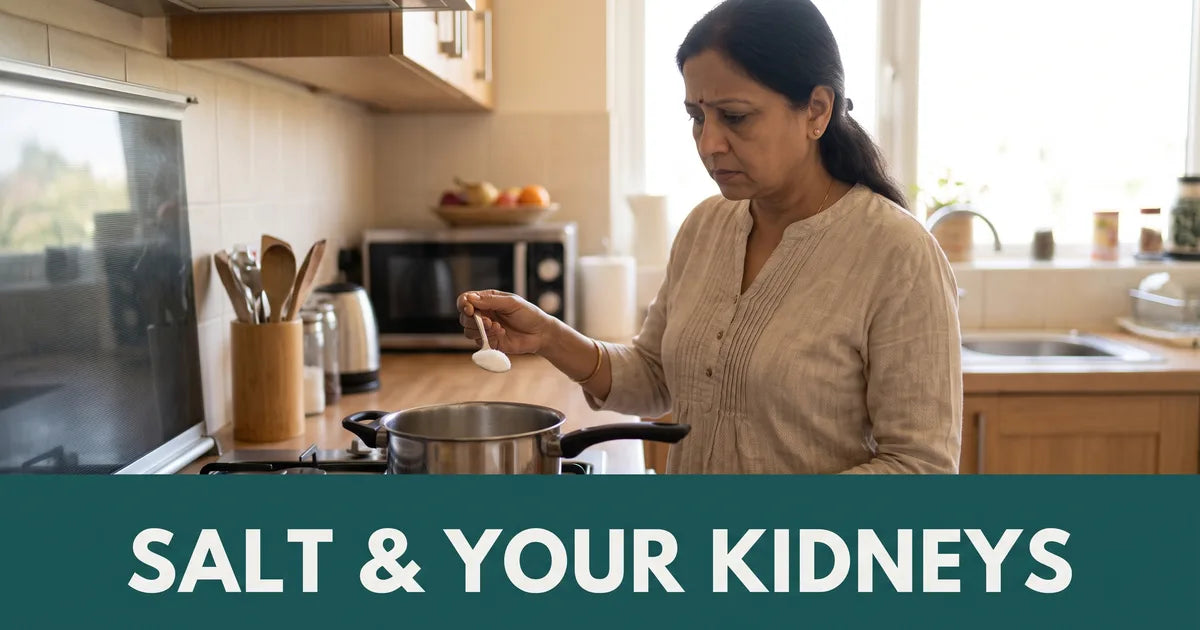
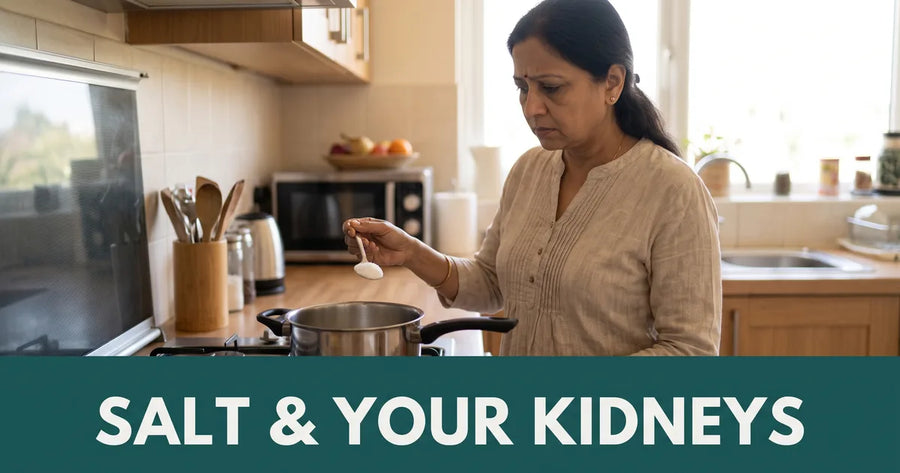
You already watch your sugar and your oil. But the one ingredient in nearly every Indian meal — namak — quietly does more to your kidneys and blood pressure than almost anything else on your plate.
If a lab report has you thinking about your kidneys, or a doctor has mentioned "cut down on salt," this guide explains exactly how much salt is reasonable, which everyday Indian foods hide the most sodium, and simple swaps that don't make your food taste like cardboard.
Key Takeaways
- Most health bodies suggest keeping salt under 5 grams a day (about one level teaspoon) — that's roughly 2,000 mg of sodium.
- For people with a kidney condition or high blood pressure, doctors often advise even less — commonly 1,500–2,000 mg of sodium a day. Your own number should come from your physician.
- The salt problem in Indian kitchens is mostly hidden salt: pickles, papad, namkeen, packaged masala, bread, biscuits and restaurant food — not just the salt shaker.
- Too much salt makes your body hold water, which raises blood pressure and makes the kidneys work harder over time.
- Small, steady swaps — more fresh cooking, more potassium-rich vegetables (if your doctor allows), herbs instead of salt — protect your kidneys far more than any single "detox."
Why salt matters so much for your kidneys
Your kidneys have one main job: filter your blood and balance the water and minerals in your body. Sodium — the part of salt that matters — is one of those minerals.
When you eat more salt than your body needs, your kidneys have to work harder to flush the extra sodium out. To do that, the body holds on to more water to dilute the sodium. That extra fluid raises the volume of blood in your vessels, which pushes your blood pressure up.
Here's the part most people miss: high blood pressure is one of the leading contributors to declining kidney function worldwide, and struggling kidneys in turn make blood pressure harder to control. Salt sits right in the middle of that loop. Cutting it back is one of the simplest, most evidence-backed things you can do to ease the load on your kidneys and keep your pressure steadier (National Kidney Foundation; NIDDK).
So how much salt is actually safe?
There's a general number and a personal number.
The general guideline. The World Health Organization recommends adults keep salt under 5 grams per day — a single level teaspoon — which works out to about 2,000 mg of sodium daily. Most of us in India eat well beyond this once pickles, papad and packaged snacks are added up.
If you have a kidney concern or high blood pressure. Guidance tightens. The National Kidney Foundation notes that people with kidney disease or high blood pressure are often advised to aim for around 1,500 mg of sodium a day, and international kidney guidelines (KDIGO) suggest keeping sodium under 2,000 mg in chronic kidney disease.
One honest caveat: the right number for you depends on your reports, your medicines and your stage. Someone on certain blood-pressure or water tablets, or with a specific electrolyte issue, may be given a different target. Always confirm your personal limit with your doctor rather than guessing.
A quick label trick: salt is about 40% sodium. So 5 g of salt is roughly 2,000 mg sodium. On packaged food, read the sodium line, not just "salt," and remember the number is usually per serving — not per packet.
The hidden-salt problem in the Indian kitchen
Only a small share of the salt most people eat comes from the shaker at the table. The bulk is already inside everyday foods. These are the usual culprits:
- Pickle (achaar), papad, and chutneys — some of the saltiest things in an Indian home.
- Namkeen, chips, sev, bhujia and other packaged snacks.
- Bakery items — bread, buns, biscuits, rusk, khari — surprisingly high in sodium.
- Packaged and instant food — instant noodles, soup mixes, ready masala, frozen snacks.
- Preserved and processed — sauces, ketchup, cheese, salted butter, canned foods.
- Baking soda and "eno"-type raising agents, and preservatives like sodium benzoate.
- Restaurant and roadside food, where salt (and hidden salt like ajinomoto/MSG) is used generously.
If you cut back on just these, you've done most of the work — often without touching the taste of your home-cooked dal and sabzi much at all.
Practical low-salt steps that work in a real Indian home
You don't need a bland, joyless plate. You need a few habits:
- Cook more at home, from scratch. Home food lets you control the salt. Restaurant and packaged food is where sodium spikes.
- Add salt at the end, and taste first. You'll almost always use less than when you add it by habit at the start.
- Lean on flavour that isn't salt. Jeera, hing, garlic, ginger, black pepper, curry leaves, coriander, lemon, kokum, amchur and green chilli make food taste full without more sodium.
- Cut the obvious offenders first. Reduce pickle to a token amount, make papad an occasional treat, and swap namkeen for roasted chana, makhana or fruit.
- Read every label. Compare two brands of the same biscuit or bread and pick the lower-sodium one. Watch out for "low fat" products that add salt for taste.
- Be careful with "healthy" salts. Rock salt (sendha namak) and black salt still contain sodium. Potassium-based "low-sodium" salt substitutes are not automatically safe for kidney patients — extra potassium can be risky for some. Ask your doctor before switching.
- Rinse canned and packaged items (like canned beans) to wash off some surface salt.
- Drink water as advised. Adequate hydration helps your kidneys, but if your doctor has put you on a fluid limit, follow that instead.
Give your taste buds two to three weeks. Food that felt "under-salted" at first starts to taste normal — and the old salty version begins to taste too sharp.
The Ayurvedic view on salt (lavana) and the kidneys
Ayurveda has long treated salt — lavana rasa — with respect and caution. Classical texts describe salt as heating and moistening: useful in small amounts for digestion and taste, but aggravating when overused. Excess lavana is traditionally linked with worsening of pitta and rakta (the blood/heat element) and with fluid imbalance and swelling (shotha) — a strikingly close match to the modern picture of salt, blood pressure and water retention.
For the urinary and kidney system, Ayurveda emphasises mutravaha srotas — the channels that carry and clear urine — and favours a diet and herbs that keep these channels flowing rather than clogged. Gentle, traditionally "diuretic" herbs such as Punarnava (Boerhavia diffusa), Gokshura (Tribulus terrestris) and Varuna (Crataeva nurvala) have been used for generations to support healthy urine flow and comfortable urinary function, alongside a light, less-salty, less-processed diet.
The Ayurvedic message and the modern one land in the same place: eat fresh, eat simple, go easy on salt, and keep your fluids moving.
When to see a doctor
Please get checked by a qualified physician if you notice:
- Swelling in the feet, ankles or around the eyes, especially in the morning.
- Blood pressure that stays high despite eating less salt.
- Foamy urine, blood in urine, or a big change in how much or how often you pass urine.
- Unusual tiredness, nausea, or breathlessness you can't explain.
- A creatinine, urea or eGFR result your doctor has flagged.
Salt control supports your kidneys — it does not replace medical care, tests or prescribed medicines. If you already take blood-pressure or heart medication, don't change your diet dramatically without telling your doctor, as your dose may need adjusting.
Where CreatiCare fits in
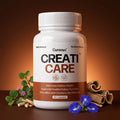
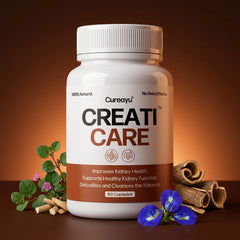
If you're already cooking lighter, cutting hidden salt and staying hydrated, an Ayurvedic supplement can sit alongside those habits as part of an overall routine. CreatiCare is formulated with traditionally used kidney-support herbs — including Punarnava and Gokshura — that Ayurveda associates with healthy urinary flow and maintaining kidney wellness.
Think of it as one supporting piece of a bigger picture: a low-salt, fresh diet and your doctor's guidance do the heavy lifting; a supplement is there to complement a healthy lifestyle, not to replace it.
Frequently Asked Questions
How much salt should a kidney patient eat per day?
Many people with a kidney condition are advised to aim for roughly 1,500–2,000 mg of sodium a day (well under one teaspoon of salt), but your exact limit should come from your own doctor based on your reports and medicines.
Is sendha namak (rock salt) or black salt safe for kidneys?
They're often seen as "healthier," but they still contain sodium and should be counted toward your daily total. They are not a free pass to eat more salt.
Are low-sodium salt substitutes good for kidney patients?
Not always. Most substitutes replace sodium with potassium, which can be unsafe for some kidney patients. Check with your doctor before using them.
Does eating less salt lower creatinine?
Cutting salt doesn't directly "lower creatinine," but it helps control blood pressure and reduces strain on the kidneys — which supports overall kidney health over time. Creatinine is best managed with your doctor's full plan.
Which Indian foods are highest in hidden salt?
Pickle, papad, namkeen and chips, bakery items (bread, biscuits, rusk), instant noodles, packaged masalas, sauces and restaurant food are the biggest hidden-salt sources.
Can I ever eat pickle or papad again?
Yes — occasionally and in small amounts. It's the daily habit and large portions that add up, not a rare treat.
Written & medically reviewed by Dr. Istuti, BAMS — in-house Ayurvedic physician at Cureayu. Dr. Istuti focuses on kidney, urinary and metabolic wellness, blending classical Ayurvedic principles with current nutrition evidence for Indian households.
Medically reviewed on August 17, 2026.
Disclaimer: This content is for educational purposes and is not a substitute for professional medical advice. Consult a qualified physician before starting any supplement, especially if you have a kidney/prostate condition or take medication.
Sources:
- National Kidney Foundation — Sodium and your CKD diet: kidney.org
- World Health Organization — Salt reduction fact sheet: who.int
- NIDDK — High Blood Pressure & Kidney Disease: niddk.nih.gov
- KDIGO 2024 CKD Guideline (sodium <2,000 mg/day): kdigo.org
Internal links: Pillar — Kidney health complete Ayurvedic guide (CreatiCare hub); Sibling — High-Potassium Foods to Avoid for Kidney Health; Sibling — Kidney-Friendly Indian Diet Chart (Vegetarian); PDP — CreatiCare Creatinine Capsules.
Disclaimer: Educational content, not a substitute for professional medical advice. Consult a qualified physician before starting any supplement.