
Is Coconut Water Good for Kidney Patients? (Nariyal Pani Explained)

Is Coconut Water Good for Kidney Patients? (Nariyal Pani Explained)
Coconut water (nariyal pani) has a healthy, natural image — light, refreshing, and something we reach for on a hot day or when we feel run-down. So when someone in the family is told to "watch their kidneys," a fair question comes up: is nariyal pani safe, or is it one of those healthy-sounding things that quietly isn't?
The honest answer is: it depends on your kidney function and your potassium levels. For a healthy person, coconut water is a wholesome drink. For someone with reduced kidney function, the same glass can carry more of one mineral — potassium — than is wise. This guide keeps it simple and practical, and points you to the one number that actually decides it for you.
Key Takeaways
- Coconut water is naturally high in potassium, the same mineral kidney patients are often told to limit.
- For healthy kidneys, nariyal pani is a hydrating, low-sugar drink — usually fine in normal amounts.
- For reduced kidney function or high blood potassium, it can be a problem and is often restricted.
- It also contains some sodium and phosphorus, and packaged versions may add sugar — read the label.
- The deciding factor is your own blood test (potassium, creatinine, eGFR) — ask your doctor before making it a daily habit.
Why coconut water is a potassium question
Potassium keeps your muscles and heartbeat steady. Healthy kidneys remove any excess through urine, so a potassium-rich drink causes no trouble. When kidney function is reduced, that clearing slows down and potassium can build up in the blood — a state called hyperkalemia — which can affect the heart rhythm.
Coconut water is genuinely rich in potassium: a single glass (about 240 ml) can carry roughly 400–600 mg, which is a meaningful share of a restricted daily budget. That's exactly why a drink most people consider "healthy" can end up on a kidney patient's limit list — not because it's bad, but because the kidneys can no longer balance what it delivers.
When coconut water is generally fine
If your kidneys are working normally and your blood potassium is in range, coconut water is a sensible choice: it's naturally low in sugar (compared with soft drinks and packaged juices), hydrating, and free of artificial additives. Enjoyed in normal amounts as part of a balanced diet, it's a better swap than sugary drinks for most healthy adults.
Two small cautions even for healthy people: choose fresh over packaged where you can (some tetra-pack versions add sugar), and remember it still contains calories and natural sugars, so it's a drink to enjoy, not to pour endlessly.
When to be cautious with nariyal pani
Be careful — and get personalised advice — if any of these apply:
- You have reduced kidney function (raised creatinine, low eGFR, or diagnosed chronic kidney disease).
- Your blood tests have ever shown high potassium.
- You are on dialysis or following a strict potassium and fluid limit.
- You take medicines that raise potassium (some blood-pressure medicines such as ACE inhibitors, ARBs, or potassium-sparing diuretics).
In these situations, coconut water is often limited or avoided — not as a punishment, but because your body can no longer offload the extra potassium safely. The right amount, if any, is a decision for your doctor or renal dietitian based on your reports.
A quick word on packaged vs fresh
Fresh tender-coconut water is the cleanest option. Packaged "coconut water" drinks can contain added sugar, preservatives, or extra sodium, and some are blends rather than pure nariyal pani. If you do buy packaged, read the label for added sugar and sodium — and if you have a kidney concern, that phosphorus and potassium content matters too.
The Ayurvedic perspective
Ayurveda has long valued narikela jala (coconut water) as a sheeta (cooling) and gently mutrala (diuretic) drink — traditionally used to cool the body in summer and support comfortable urine flow. That cooling, hydrating nature is why it feels so restorative in Indian heat.
Classical use, though, always emphasised matra (right quantity) and prakriti (individual constitution) — the idea that even a wholesome food is right only in the right amount for the right person. That principle maps neatly onto modern advice: for someone with reduced kidney function, the "right amount" of a high-potassium drink may be very small or none, decided with their doctor.
Alongside diet, certain herbs are traditionally used to support kidney and urinary wellness — such as Punarnava, Gokshura (Gokhru) and Varun. These are described as gentle, everyday support as part of a healthy routine, not as treatments for kidney disease.
Practical takeaways
- Healthy kidneys, normal potassium: fresh coconut water in normal amounts is fine and a good swap for sugary drinks.
- Reduced kidney function or high potassium: treat nariyal pani as a "limit or avoid" item until your doctor clears it.
- Always prefer fresh over sweetened packaged versions.
- Let your blood test lead. If you don't know your latest potassium and creatinine, that's the first step — not guessing.
- Never start or stop a fluid/potassium restriction, or change medication, on your own.
When to talk to a doctor or dietitian
Get personalised guidance if you have been diagnosed with chronic kidney disease, have abnormal blood tests (creatinine, eGFR, potassium), are on dialysis, or take medicines that affect potassium. A renal dietitian can tell you exactly where coconut water — and every other high-potassium food — fits into your daily limit, so you can drink with confidence instead of worry.
How CreatiCare fits
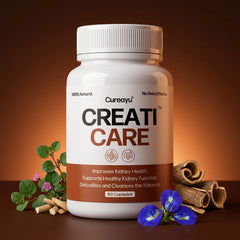
CreatiCare is our Ayurvedic supplement built around herbs like Punarnava and Gokshura that are traditionally used to support kidney and urinary wellness. It's designed to sit alongside sensible eating, good hydration within your limits, and regular check-ups — not to replace your doctor's dietary plan or medication. If you have a diagnosed kidney condition, please talk to your doctor before adding any supplement. Learn more about CreatiCare →
FAQ
Is coconut water good for kidney patients?
It depends on kidney function. Coconut water is high in potassium, so for people with reduced kidney function or high blood potassium it is often limited or avoided. For those with healthy kidneys and normal potassium, it is generally a wholesome drink. Always confirm with your doctor based on your blood tests.
Does coconut water lower creatinine?
No. Coconut water does not lower creatinine. It is a hydrating drink, but it does not treat kidney disease, and its high potassium can actually be a concern for people with reduced kidney function.
Can a dialysis patient drink coconut water?
Usually it is restricted. Dialysis patients typically follow strict potassium and fluid limits, and coconut water is high in both — so it should only be taken if, and in the amount, your nephrologist or renal dietitian specifically allows.
How much coconut water is safe per day?
For a healthy adult, one glass a day is reasonable. For anyone with a kidney concern there is no universal safe amount — it must be set by your doctor based on your potassium level.
Is packaged coconut water the same as fresh?
Not always. Packaged versions can contain added sugar, sodium or preservatives, and some are blends. Fresh tender-coconut water is the cleaner choice; if buying packaged, read the label.
Written & medically reviewed by Dr. Istuti, BAMS — in-house Ayurvedic physician at Cureayu. Medically reviewed on 13 August 2026.
Disclaimer: This content is for educational purposes and is not a substitute for professional medical advice. Consult a qualified physician before starting any supplement, especially if you have a kidney condition or take medication.
Sources:
National Kidney Foundation — Potassium and Your CKD Diet: kidney.org/atoz/content/potassium
National Kidney Foundation — Best and Worst Foods for Your Kidneys: kidney.org/newsletter/best-and-worst-foods-your-kidneys
MedlinePlus — High Potassium (Hyperkalemia): medlineplus.gov/ency/patientinstructions/000479.htm
Disclaimer: Educational content, not a substitute for professional medical advice. Consult a qualified physician before starting any supplement.